Google AI Studio has made a qualitative leap, transforming from a simple testing ground for language models into a full-stack development platform powered by what they call vibe coding. Now, by describing an application in natural language, its Antigravity agent is capable of building it autonomously. This change represents a significant advance in software development automation, promising to reduce the time to turn an idea into a deployed and functional application from days to hours.
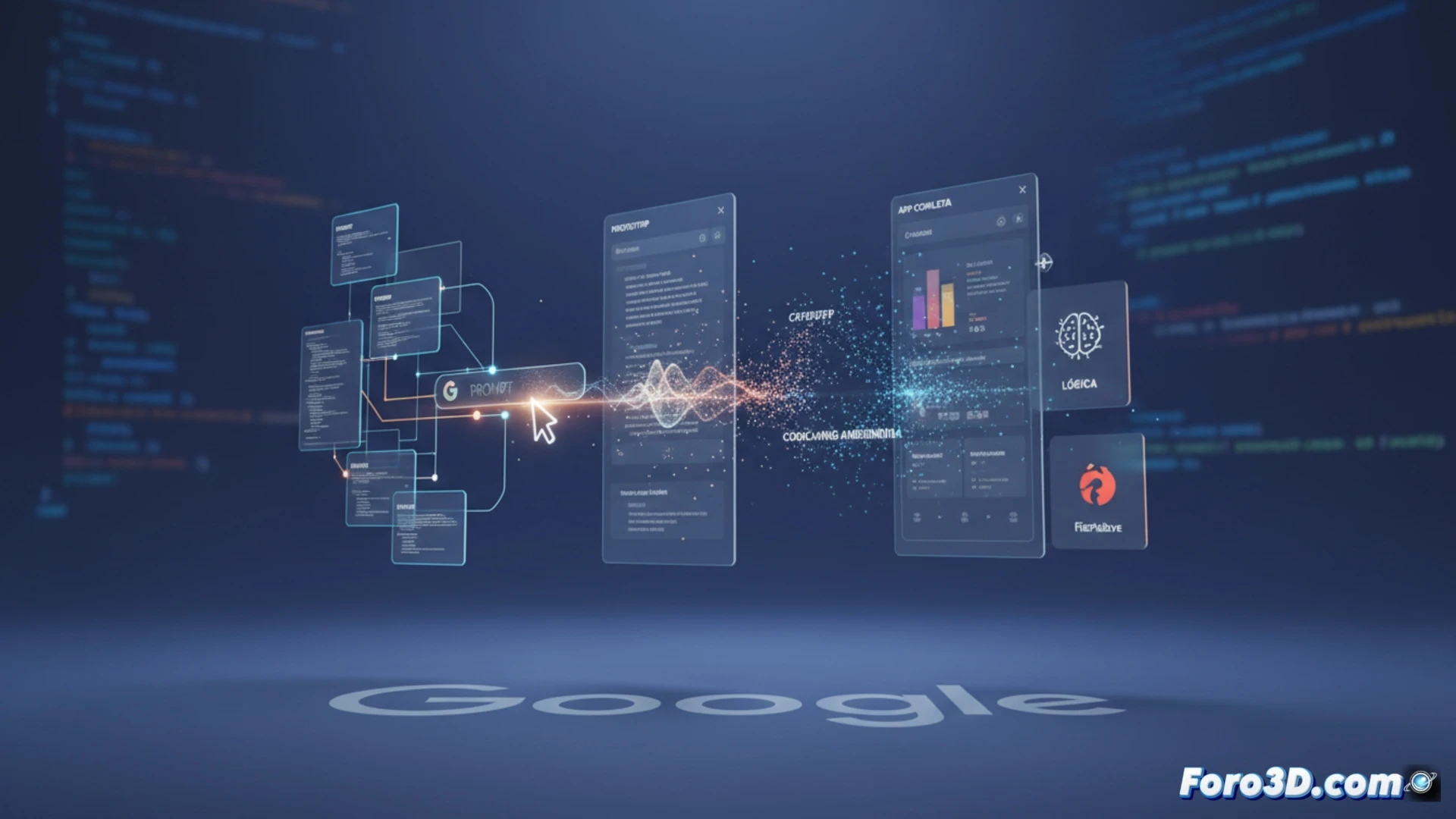
Native integration with Firebase: the key to the full stack 🤖
The true power of this evolution lies in its vertical integration with the Google ecosystem, especially with Firebase. Antigravity not only generates frontend code in React, Next.js, or Angular and backend code in Node.js, but it also automatically sets up a persistent database in Cloud Firestore and an authentication system. This solves the Achilles' heel of many AI generation approaches: the lack of state and persistence. The platform even handles connections to external APIs and automatic deployment on Cloud Run, offering a continuous flow from the prompt to production.
Democratization, dependency, and the future of code ⚖️
This paradigm, or vibe coding, democratizes the creation of prototypes and MVPs, but consolidates a deep lock-in with Google's services. While it accelerates initial iteration, its backend tied to Node.js and the need for human supervision for complex logic reveal current limitations. The crucial question is whether these tools will amplify developers' creativity or, progressively, homogenize software architecture around the ecosystems of the tech giants that control them.
How is Google AI Studio redefining the developer's role in creating AI applications, and what implications does this democratization have for digital society? 🚀
(P.S.: moderating an internet community is like herding cats... with keyboards and no sleep)