The chronicles of the conquest of the Canary Islands speak with fear of Guanche warriors of colossal stature, whose remains were found in volcanic caves. This legend, which persists in the island folklore, poses a historical and archaeological enigma. Today, digital archaeology offers the tools to investigate this mystery, allowing for precise documentation and analysis of the sites and possible bone findings, separating myth from material evidence.
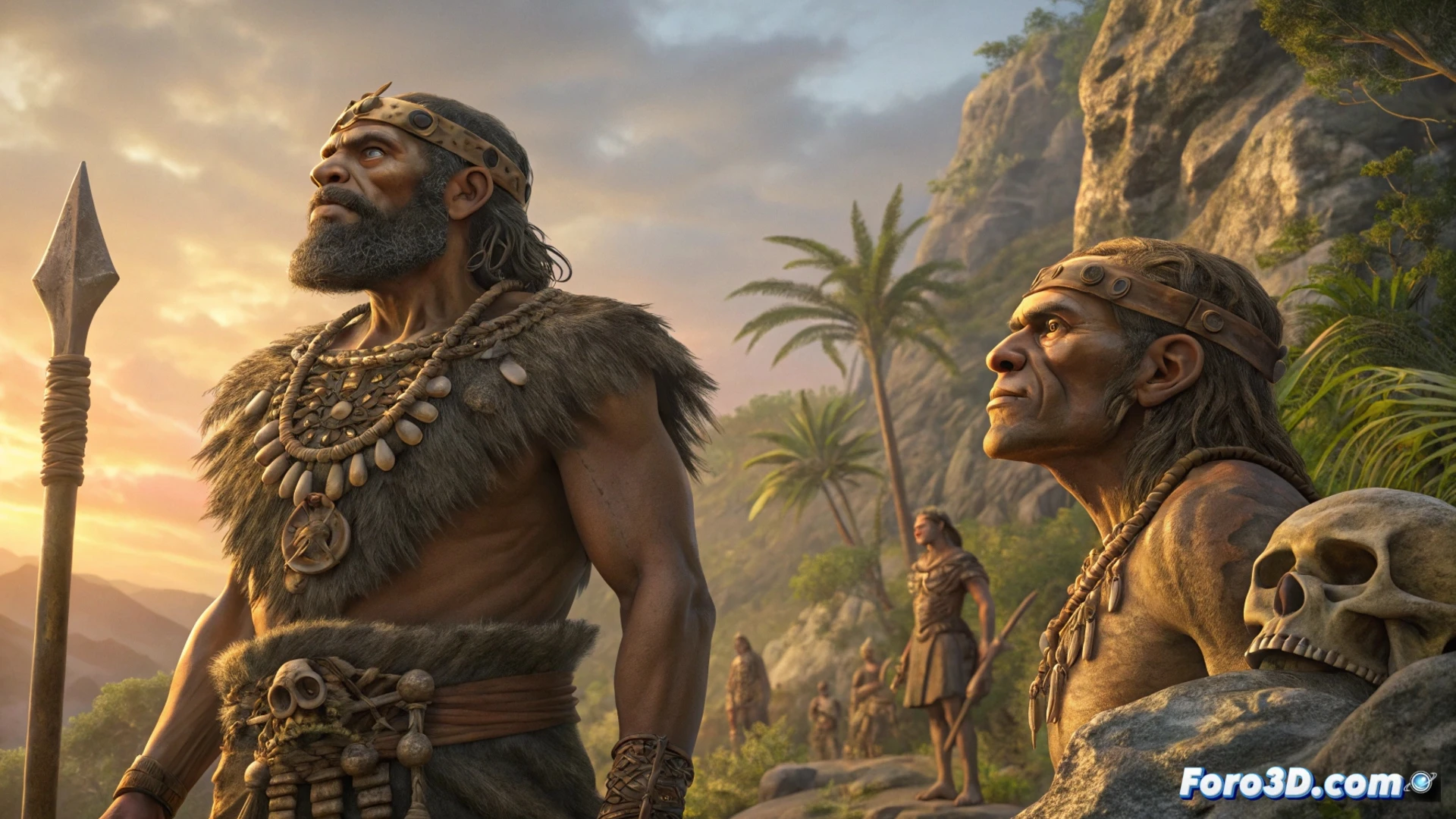
Digital Documentation: Photogrammetry and LiDAR in Volcanic Tubes 🔍
The complexity of volcanic tubes and caves, key places in this narrative, requires non-invasive documentation techniques. Photogrammetry allows the creation of hyperrealistic 3D models of the cavities and any located bone remains, capturing their context and condition. Complementarily, terrestrial LiDAR scanning can map the complete geometry of these dark and hard-to-access spaces, generating an exact metric base. These digital models are crucial for the forensic analysis of the bones, allowing precise virtual measurements of their stature and robustness, and for digitally preserving fragile and often threatened contexts.
Reconstruct to Understand and Disseminate 🧬
Beyond documentation, 3D modeling enables the hypothetical virtual reconstruction of these individuals, based on osteometric data. These recreations, carried out with scientific rigor, are a powerful dissemination tool. They allow visualizing and contextualizing the legend, fostering an informed debate. Thus, 3D technology not only serves research but also helps to revalue Canary cultural heritage, transforming a tale of ancestral fear into an object of study and fascination accessible to all.
How can 3D scanning and virtual anthropology help determine whether the supposed remains of giant Guanches correspond to individuals of exceptional stature or to a distortion of perception and legend?
(P.S.: and remember: if you don't find a bone, you can always model it yourself)