The landscape in Germany shows clear signs of deterioration. From being Europe's economic pillar, it has shifted to labor stagnation and an economy with cracks. Social discontent with the government is palpable, and distrust toward EU leadership is growing. This context raises doubts about the country's direction and its ability to regain its momentum.
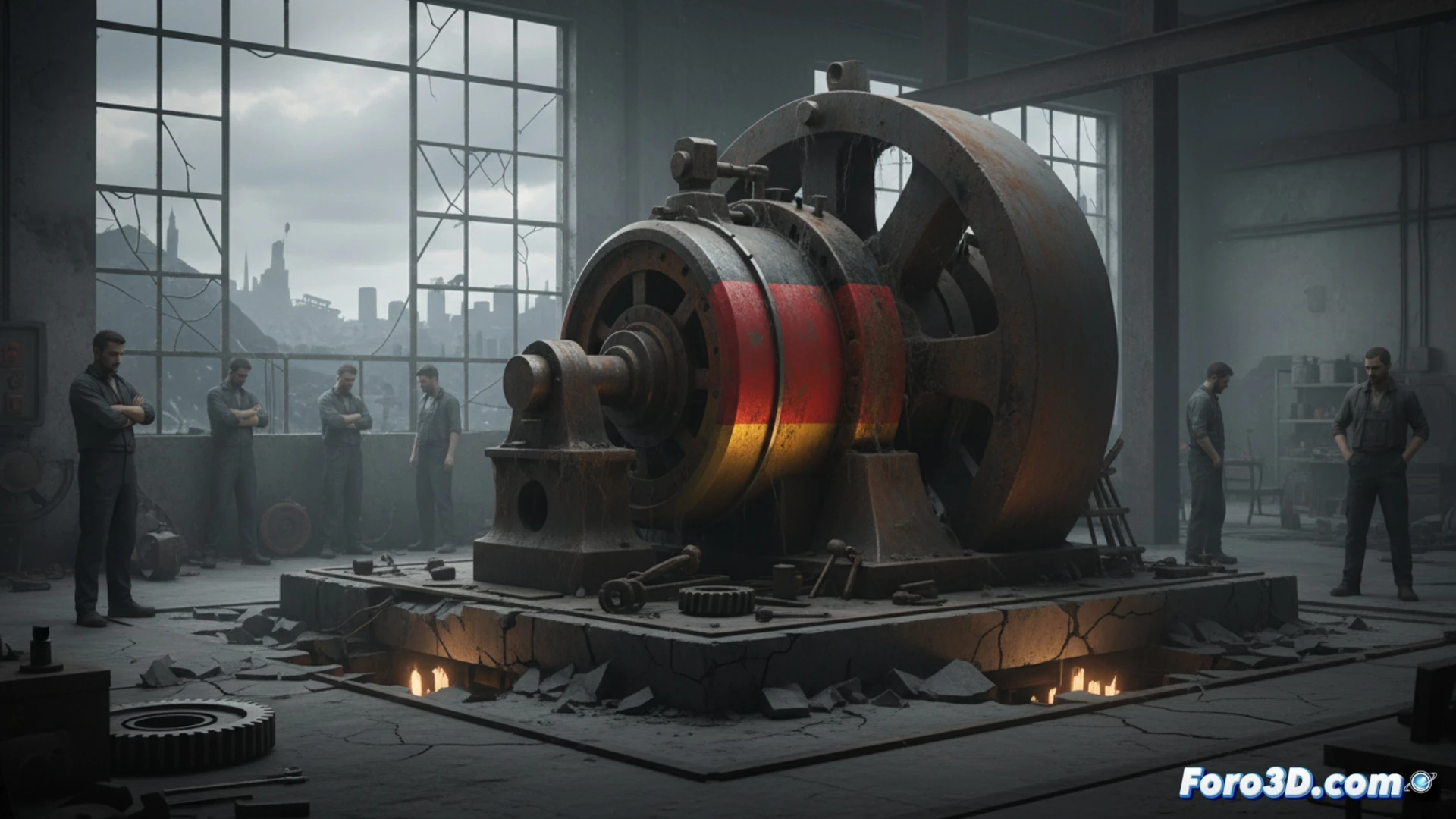
The digital gap and industrial slowdown 🏭
The stagnation has a technological component. While other countries advance in digitizing administration and connectivity infrastructure, Germany shows delays. Its powerful manufacturing industry, dependent on energy and external markets, faces bottlenecks. The transition to a greener and more digital economy requires investments and bureaucratic agility that are now scarce, hindering innovation.
Energiewende at a snail's pace and bureaucracy in overdrive 🐌
The German energy transition is an exercise in patience. While nuclear power plants are being shut down, the bureaucracy to install a wind turbine or an electrical line can exceed the lifespan of a solar panel. It seems that the famous German order is applied with more zeal to regulating the process than to completing it. A system that was once synonymous with efficiency now gives master classes on how to complicate the simple.