Germany has marked an industrial milestone with the inauguration of the world's first plant dedicated to manufacturing catalysts using 3D printing. This advance transfers simulation and optimized design from the digital realm to the physical, creating components that revolutionize chemical processes. Additive manufacturing allows materializing complex geometries previously modeled, maximizing reaction efficiency and drastically reducing energy consumption in industrial production.
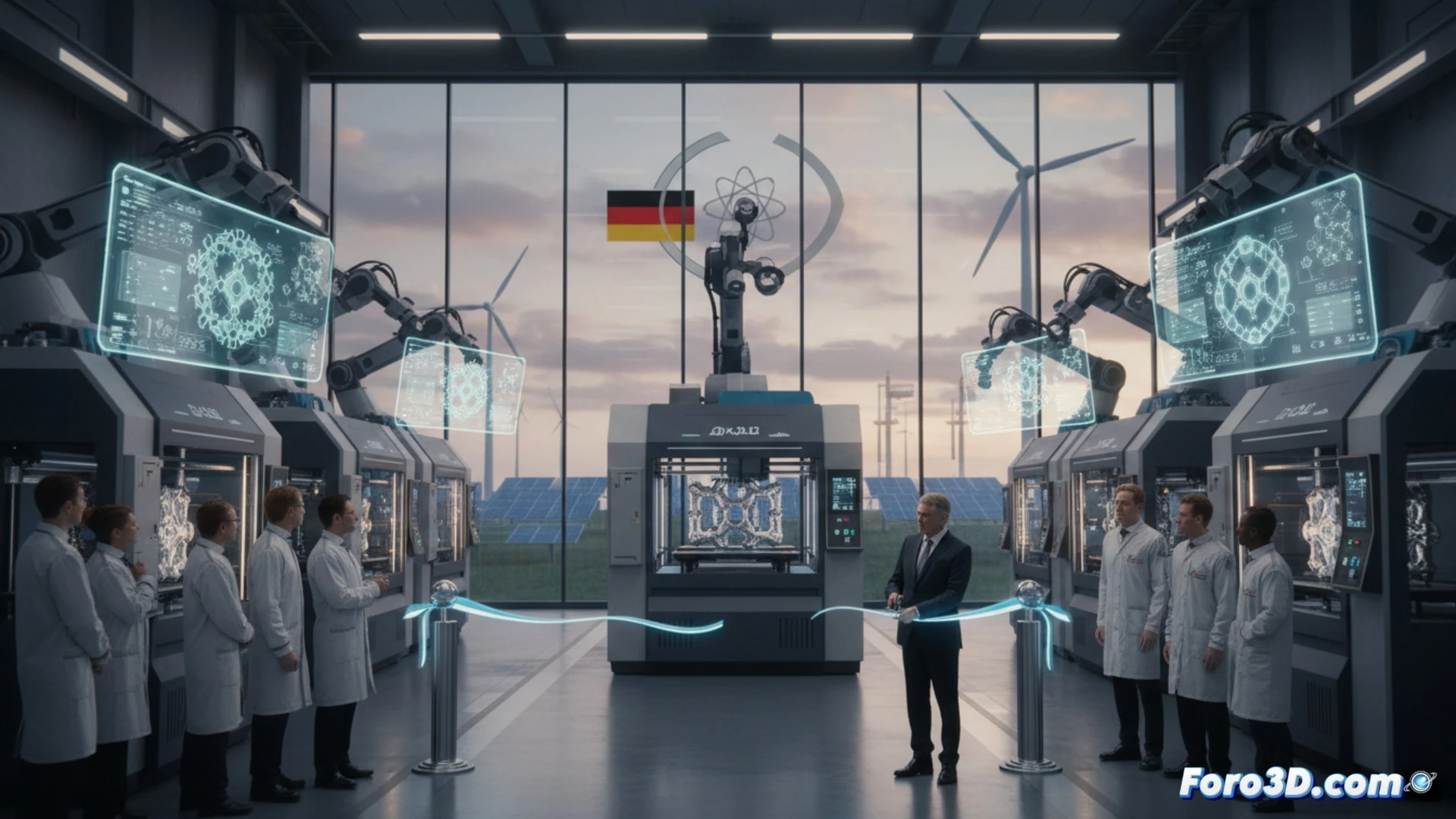
From simulation to reality: how 3D modeling optimizes catalysis 🧪
The core of this innovation lies in prior digital simulation. Engineers model the internal structures of catalysts in 3D with precision unattainable by traditional methods, such as tortuous channels or fractal surfaces. These geometries are simulated to predict and maximize the flow of reactants and the surface contact area, key to efficiency. Only after validating the design in virtual environments is 3D printing proceeded with, which faithfully materializes these complex models. Thus, additive manufacturing is the physical execution of simulation-based optimization, resulting in catalysts that accelerate reactions with less energy and less active material.
A new paradigm for sustainable industry 🌱
This German plant sets a crucial precedent: simulation and direct digital manufacturing as pillars of industrial sustainability. By demonstrating that energy footprint can be reduced through intelligent design of critical components, it opens the door to applying this methodology to other processes. The future lies in modeling and then printing not only catalysts, but any component where geometry defines efficiency, making industries cleaner and more competitive.
How can 3D printing of catalysts optimize process flows and energy efficiency in the simulation of industrial chemical reactions?
(P.S.: Simulating industrial processes is like watching an ant in a maze, but more expensive.)