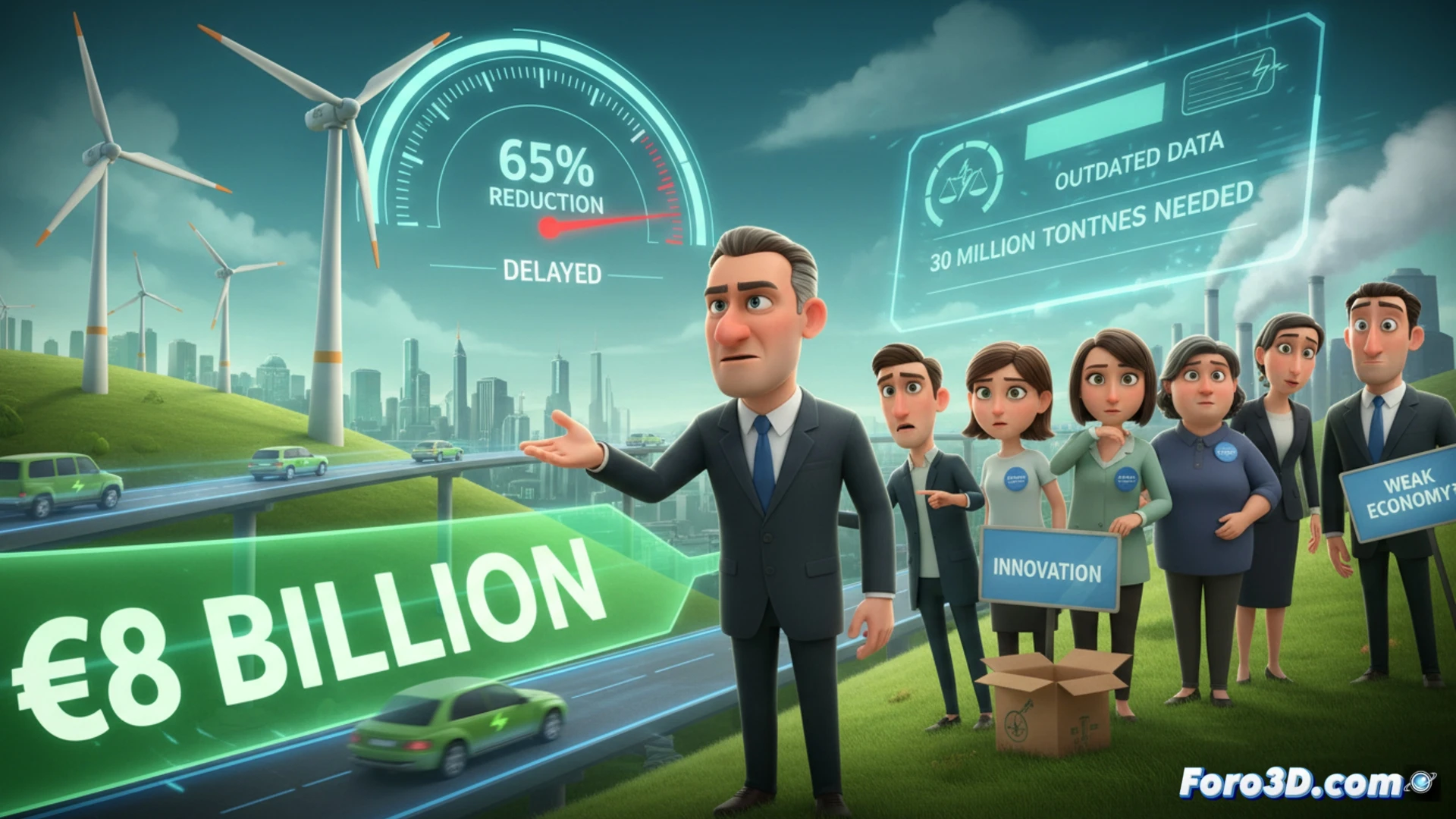
Germany has activated an 8 billion climate program with 67 measures, from wind to electric vehicles, aiming to save 27.1 million tons of CO₂ before 2030 and gain energy independence. However, experts criticize that the plan starts from outdated data and underestimates the necessary cut. This effort, beyond the environmental, is a crucial geoeconomic move that redefines Germany's global dependencies. 🌍
Visualizing the new dependency: the supply chain of critical materials 🔗
The German energy transition does not eliminate dependency, it shifts it. Modeling this chain in 3D is revealing: it requires visualizing the flow of lithium from South America and Australia, cobalt from the Democratic Republic of Congo, and rare earths mostly processed in China, towards the German industry. Each wind turbine and battery is a node in a fragile geopolitical network. The climate plan attempts to alter this geography by accelerating local energy production, but it intensifies the need to import critical materials. An interactive flow diagram would allow simulating disruptions in key routes and their direct impact on the capacity to meet CO₂ reduction targets.
Strategic autonomy or new vulnerability? ⚖️
The German program evidences the paradox of the transition: it seeks autonomy from Russian gas, but may increase dependency on other actors in the supply chain. Without a risk analysis that models these flows and geopolitical scenarios, the climate push could create new bottlenecks. True energy independence requires mapping and securing not only the flow of energy, but that of the materials that make it possible.
How does Germany's new industrial and climate strategy reconfigure the global supply chains of critical materials and clean technology in a fragmented geopolitical scenario?
(P.S.: geopolitical risk maps are like the weather: there's always a storm somewhere)