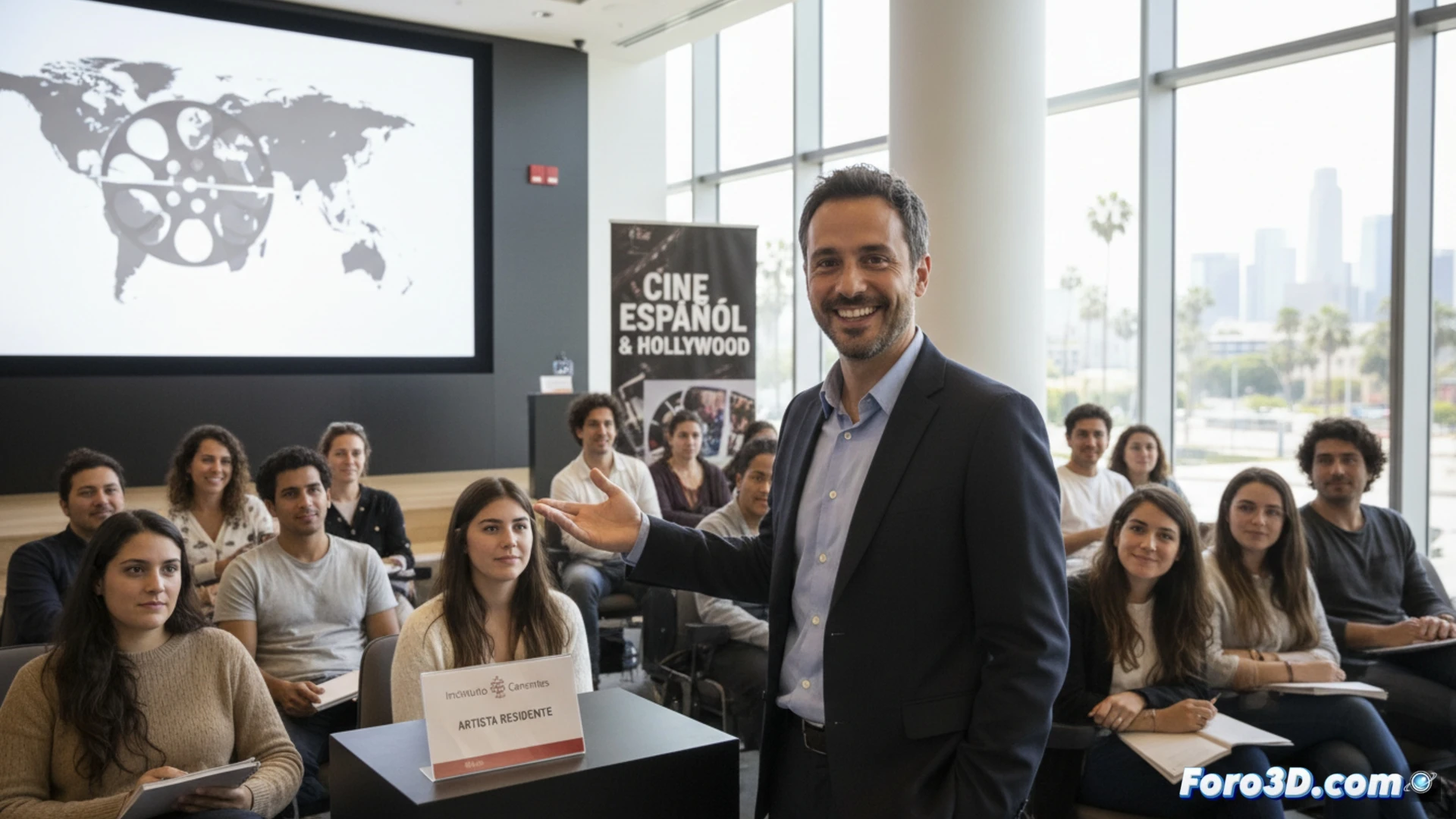
The Cervantes Institute of Los Angeles has named filmmaker Gerald Fillmore its first artist in residence, marking a new direction to build bridges between Spanish-language cinema and Hollywood. Fillmore, with his bilingual project Face Love, recorded in two independent versions, exemplifies the search for global narratives. In this context, 3D pre-production and production tools emerge as fundamental allies for filmmakers navigating between cultures and languages, ensuring coherence and efficiency in complex projects.
3D Previsualization: the visual script for two versions 🎬
Projects like Face Love, with an international cast and two linguistic versions, require meticulous visual planning. Here, 3D previsualization and animated storyboards are crucial. They allow locking sequences, defining camera angles, and designing lighting in a virtual environment before shooting. This pre-film acts as a universal visual script, understandable for all technical teams regardless of their language. Thus, both versions share a solid visual identity and resources are optimized, a key factor in co-productions with tight budgets.
Visual narrative beyond language 🌍
Fillmore's residency underscores that cultural dialogue is also built with images. 3D technologies, from previs to VFX, allow articulating narratives where the visual carries dramatic weight equivalent to or greater than dialogue. For cinema destined to connect with diverse audiences, this ability to tell stories through digitally created spaces, characters, and atmospheres is a powerful tool to transcend linguistic barriers and reinforce emotional impact universally.
How can Gerald Fillmore's artist residency at the Cervantes Institute redefine the visual narrative of bilingual 3D cinema?
(P.S.: Previz in cinema is like the storyboard, but with more possibilities for the director to change their mind.)