The recent call between King Felipe VI and Prince Mohammed bin Salman transcends formal diplomacy. It is a symptom of the high tension in the Middle East, a region that functions as the vital artery of global trade. Conflicts such as the one involving the United States, Israel, and Iran are not just political news; they are direct disruptors of global logistics. The solidarity expressed by Spain with Saudi Arabia underscores the concern for the stability of a key player in energy and commercial flows.
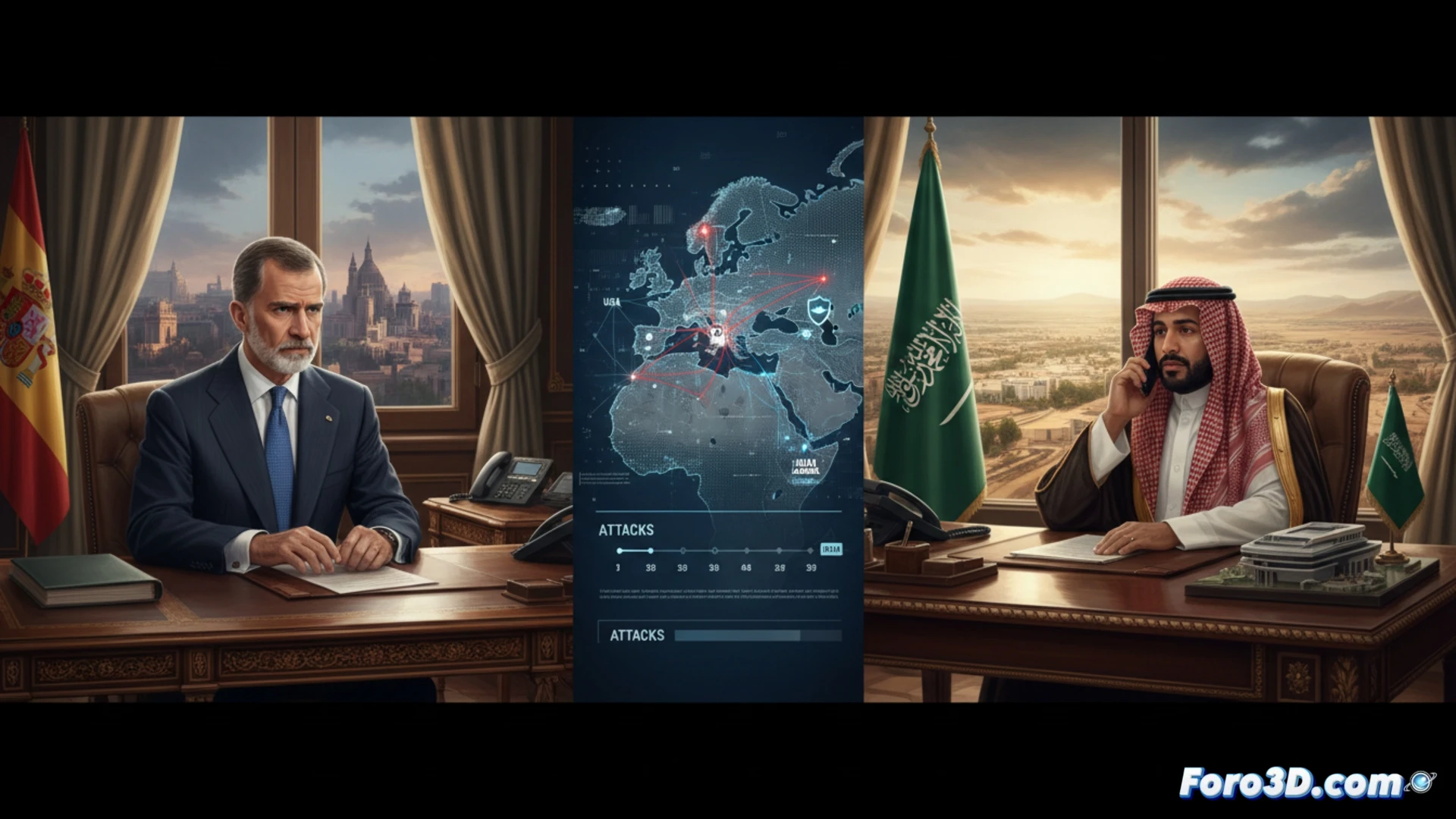
3D Visualization of Critical Routes and Risk Scenarios 🗺️
3D technology becomes an indispensable tool for quantifying this geopolitical risk. Through precise spatial models, we can visualize and simulate the impact of instability in nodes such as the Strait of Hormuz or the Red Sea. An interactive 3D map can overlay container and tanker shipping routes with conflict zones, calculate alternative times and costs due to forced diversions. Simulating scenarios, such as a temporary blockade, allows companies to plan contingencies, proactively evaluating the resilience of their supply chains based on concrete spatial data.
From Diplomatic Tension to Logistics Planning ⚙️
In an interconnected world, a statement between leaders can be the first indicator of a future logistics bottleneck. Strategic planning can no longer rely solely on spreadsheets. Integrating geopolitical analysis into 3D supply chain models transforms uncertainty into visual and measurable variables. This allows engineers and strategists to design more robust networks, where 3D technology is the critical bridge between international events and daily operations.
How would you model the global supply routes for electronic components in 3D? 🤔