Genshin Impact's Luna VI update, Celestial Moon Song, represents a significant expansion of the world of Teyvat. Beyond the new playable content, its design reflects current trends in video game development. The introduction of the Space Temple, with its environmental manipulation mechanics, and the expansion of Mondstadt's map, show a focus on environmental narrative and vertical exploration. This analysis examines the design decisions behind this version and their impact on the player experience and the game's economy. 🌙
Environmental Narrative and Space Mechanics in the New Content 🧩
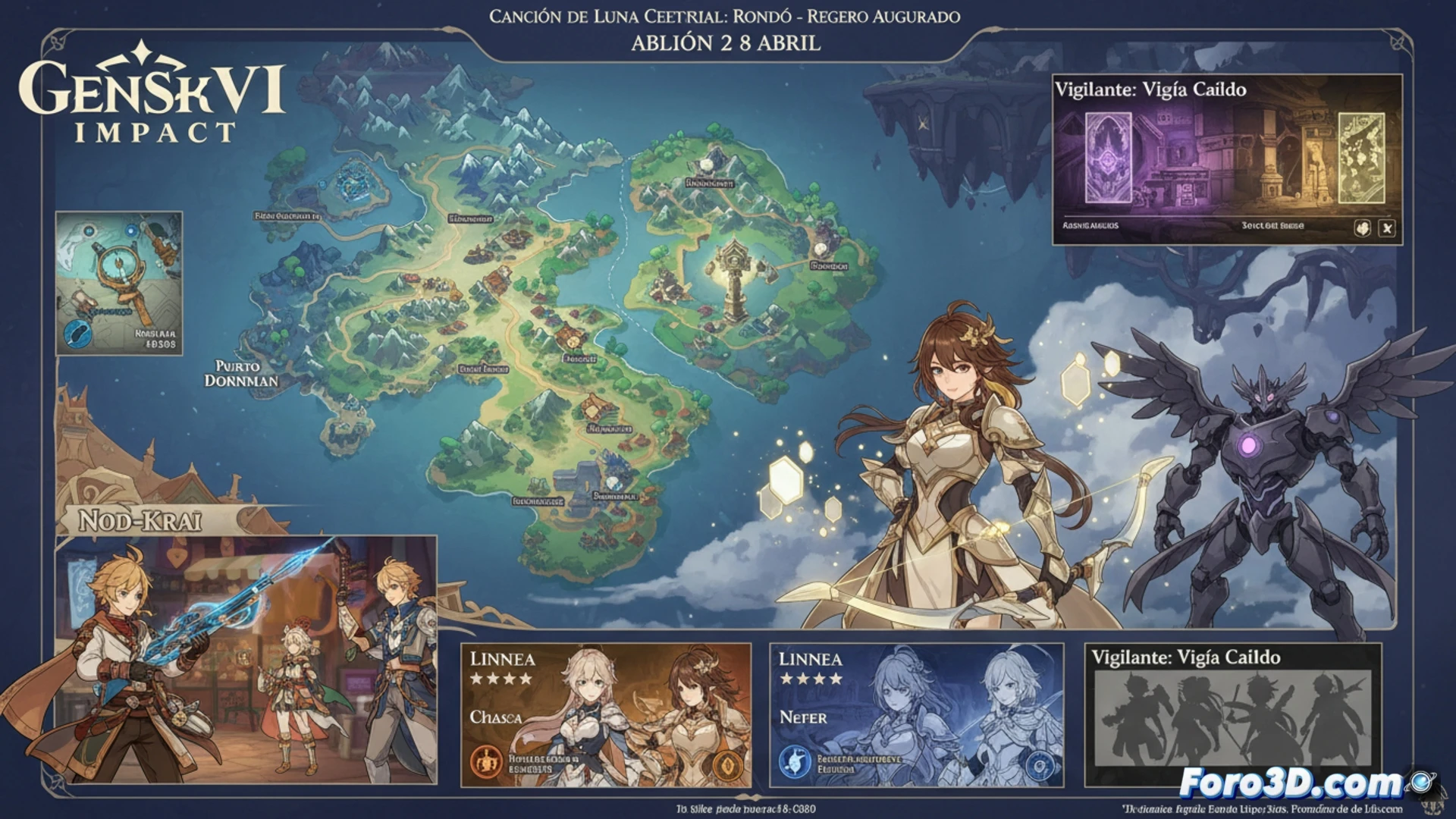
The technical core of this update lies in the Space Temple and its environmental manipulation mechanics. This level design proposes a continuous puzzle where the environment itself is the tool to progress, a trend that enhances immersion and reduces reliance on interfaces. From a development perspective, creating dynamically changing realms requires solid work on trigger systems and asset loading. Parallelly, the character Linnea introduces a novel approach to the Geo support role, enhancing the Lunar Crystallization reaction. Her kit, focused on healing and buffing, seeks to diversify the game's meta, offering a distinct team alternative and demonstrating ongoing character balancing in a live service.
Retention Strategies and the Content Cycle 🔄
Beyond pure design, the update exemplifies key strategies for games as a service. The main event, with its trade fair and cooperative challenges, structures participation in a cycle of daily and weekly activities. The key reward, the free character Jahoda, acts as a powerful engagement incentive to ensure active participation during the version. This model, combined with the launch of new gacha characters and a world boss, keeps the content cycle fresh and fosters long-term retention, demonstrating methodical post-launch content planning.
How has level design evolved in Genshin Impact's Luna VI expansion to integrate vertical exploration mechanics and spatial puzzles that redefine player interaction with Teyvat's environment?
(P.S.: shaders are like mayonnaise: if they break, you start everything over again)