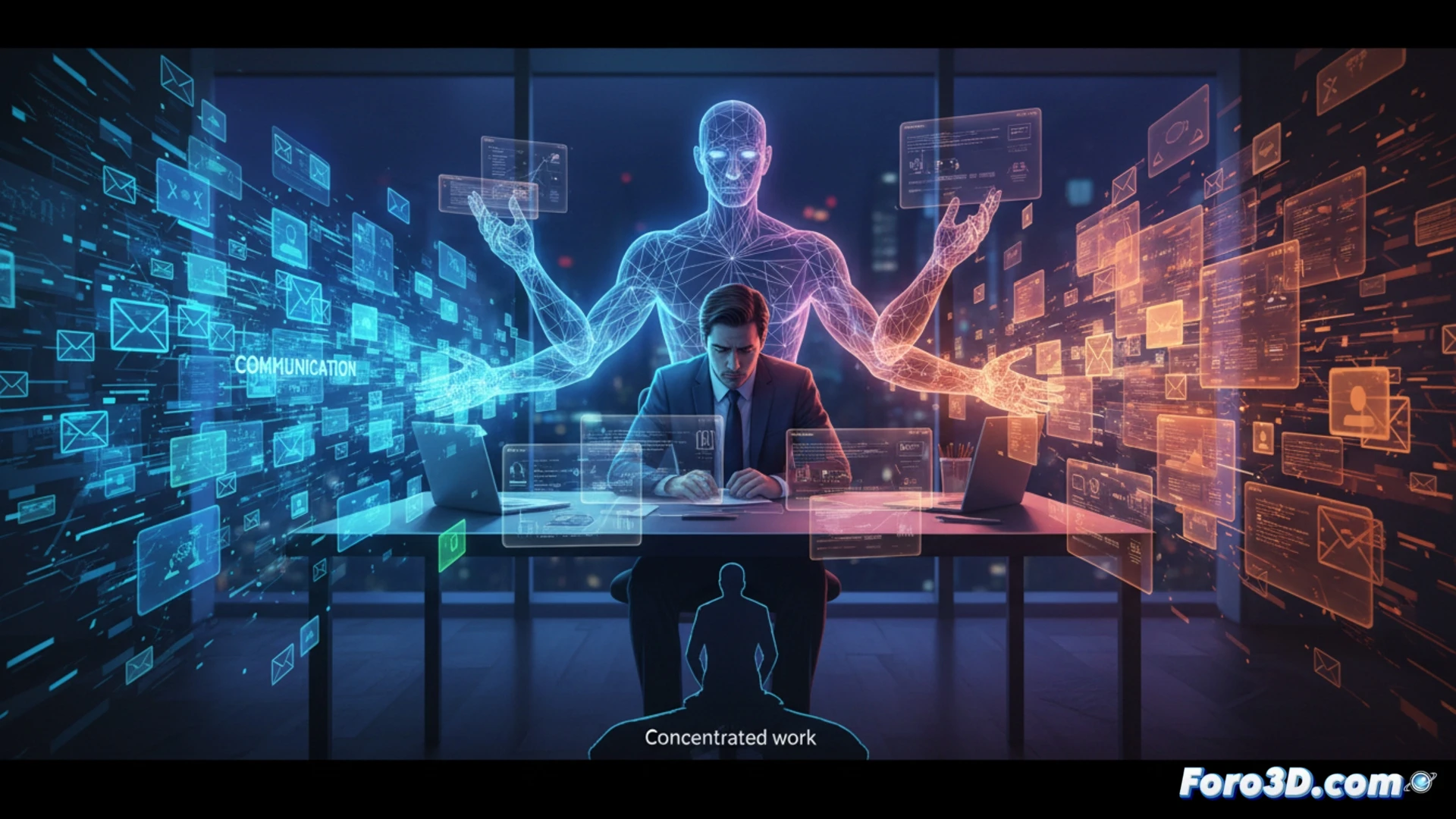
An analysis of the digital activity of more than 164,000 employees shows a result contrary to expectations. The implementation of generative AI tools in companies has increased work intensity, not alleviated it. The data reveal a strong increase in time spent on emails and chats, and greater interaction with applications, while focused work on a single task decreases.
Digital Monitoring and Work Fragmentation Metrics 📊
The research was based on the analysis of digital activity data, comparing periods before and after the adoption of AI. Time spent in communication applications, the number of task switches, and interaction with corporate platforms were measured. The key technical finding is the 9% reduction in focused work, an indicator of fragmentation. This pattern, along with the increase in digital traffic, suggests that AI generates more points of contact and review, scaling operational complexity.
AI: Your New Hyperactive Micromanaging Boss 😮💨
It seems that the promise of working less has vanished. Instead, we have an assistant that allows us to generate drafts at such speed that we can now handle twice as many chats and review three times as many documents. Productivity has increased so much that we need three screens to keep up with the fragmented tasks that it itself helps create. Ironies of progress: the tool that was supposed to free us has us running more.