Geely has unveiled the prices in Spain for its new electric SUV, the EX5. With 218 HP and an LFP battery, this 4.6-meter model arrives to compete in a highly contested segment. Beyond the commercial figures, the EX5 is a product born from modern design methodologies, where 3D modeling and simulation have been fundamental pillars to integrate its electric propulsion, optimize its space, and define its lines.
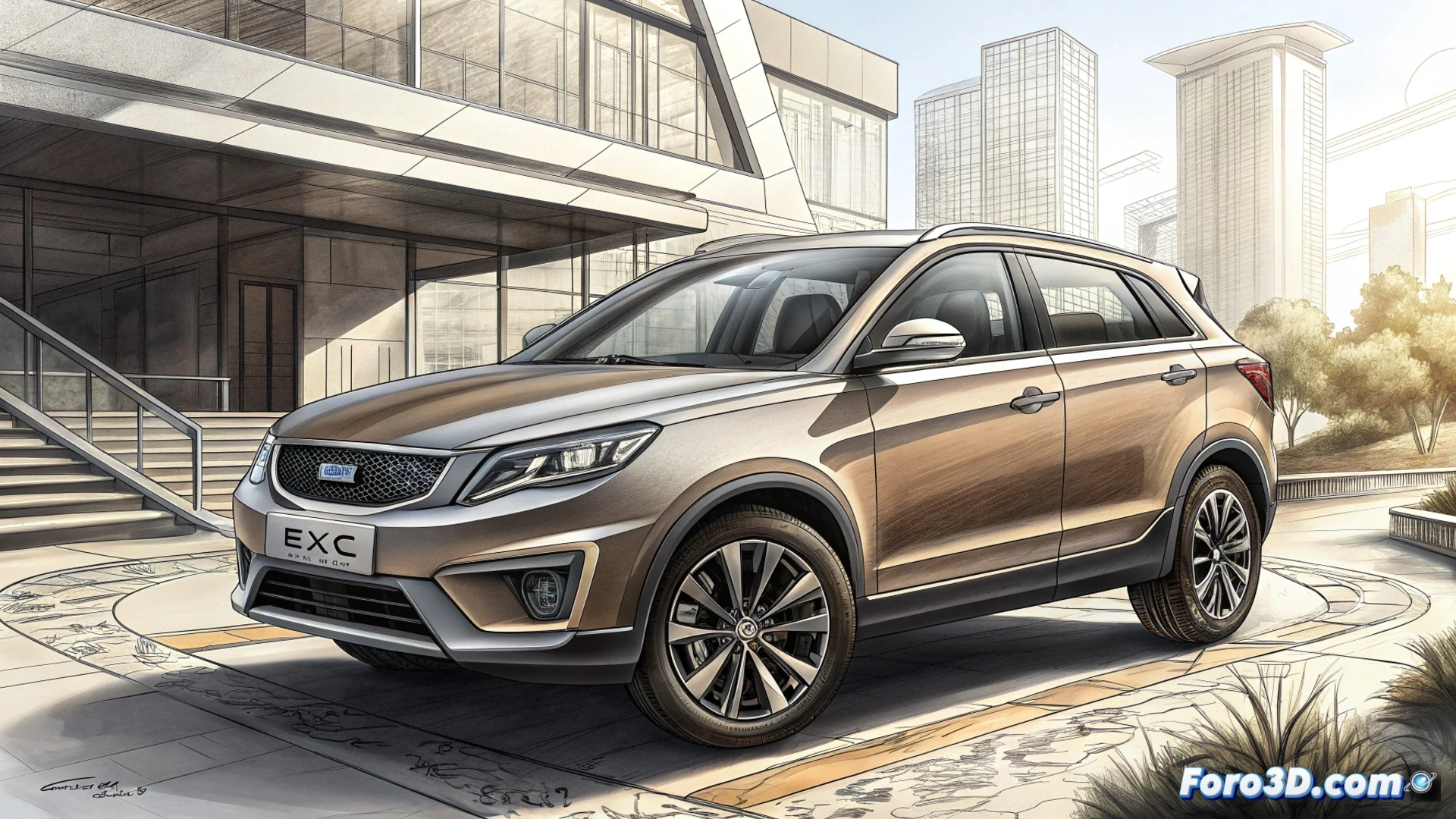
3D-Assisted Engineering: From the Battery to Aerodynamics 🌀
The development of the EX5 involves a complex integration of systems where 3D CAD is crucial. The LFP battery pack, due to its size and weight, requires precise modeling for its structural placement on the platform, affecting rigidity and safety. Aerodynamics, key to range, is optimized through CFD simulations that analyze airflow. Additionally, ADAS systems and the digital interface of the cabin are validated in virtual environments before physical manufacturing, allowing iterative adjustments that reduce costs and development times.
The Digital Twin as the Future of Automotive Design 🤖
Models like the EX5 point towards an industry where the digital twin will be standard. This virtual replica not only serves for design but can simulate component wear or battery performance over time. For professionals at Foro3D, this represents the natural evolution: from creating shapes to modeling complete systems that interact in a virtual ecosystem, anticipating every behavior of the real vehicle before its physical existence.
How is the 3D modeling of the complex organic surfaces and characteristic volumes of the Geely EX5 approached to optimize both aesthetics and aerodynamics in its digital design phase?
(P.S.: simulating an ECU is like programming a toaster: it seems easy until you order a croissant)