Paramount+ and Nickelodeon revive Garfield in its original medium: traditional 2D animation. This new series, the first 2D television adaptation since the 90s, promises to rescue the essence of Jim Davis's comic strip. The announcement is not only news for fans, but a fascinating case study on the persistence and modernization of traditional animation techniques in an industry dominated by 3D. We analyze the challenges and opportunities of this return to cartoon drawing.🎬
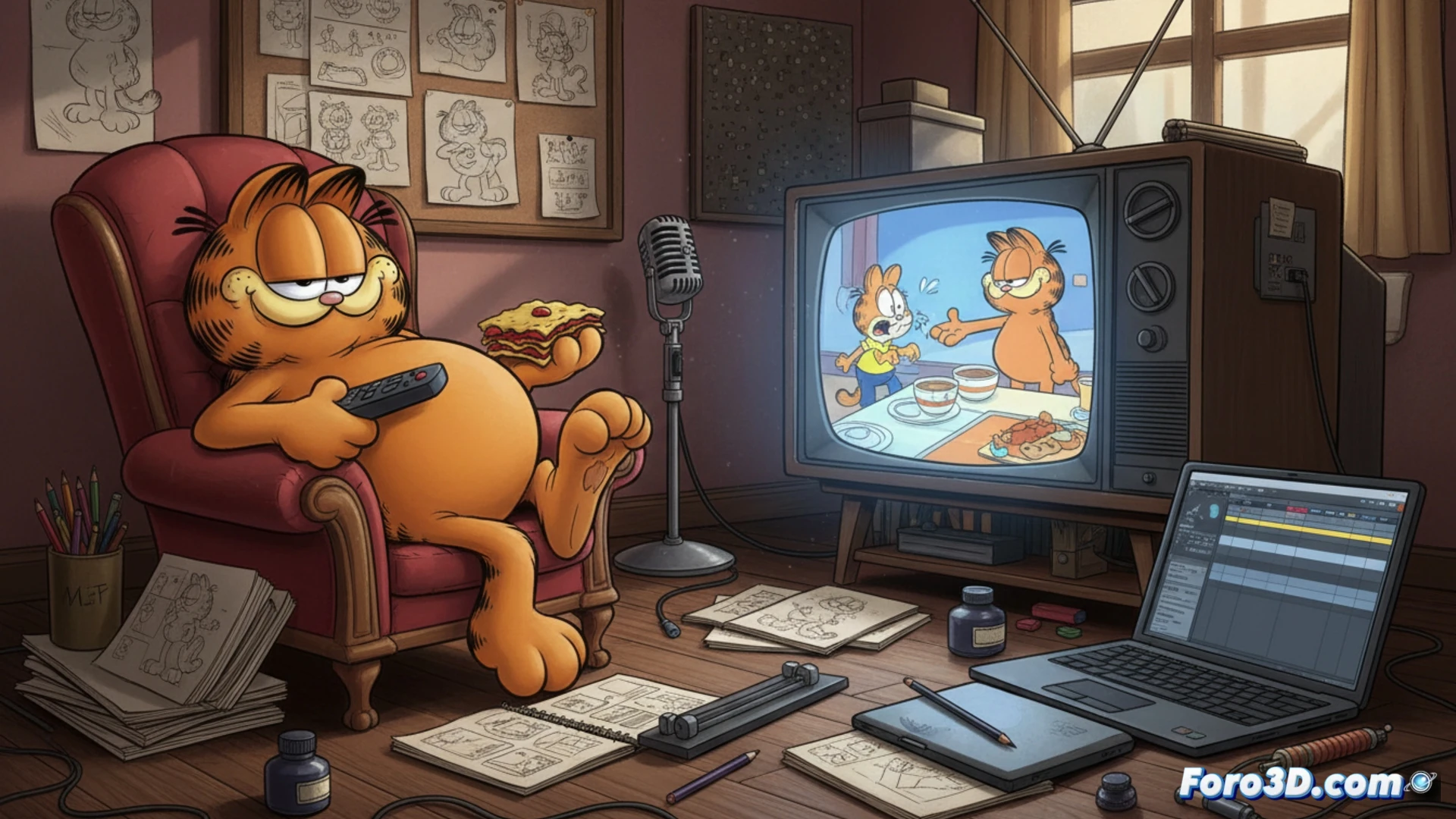
The technical challenge: modernizing a classic style🛠️
The biggest challenge for the production team will be to balance fidelity to the character designs from the comic strip and the classic series with current expectations of fluidity and dynamism. 1980s TV 2D animation, like in Garfield and Friends, operated with tight budgets and deadlines, resulting in limited movement. Today, digital tools allow a hybrid workflow: hand drawing (or with tablet) and digital post-production that can streamline processes and enrich the animation without losing the soul of the traditional stroke. The key will be in how they animate the laziness and sarcasm; economy of movement will be fundamental to convey his personality.
Design and voice: the essence of the character🎙️
Beyond the technique, success will lie in capturing the iconic cat's attitude. The design must be instantly recognizable, but with a possibly more polished line. The choice of Lamorne Morris as the voice is crucial: he must embody the disinterested cynicism without being an imitation of previous actors. In 2D animation, where facial expressions are more stylized and less literal than in 3D, synchronization between vocal acting and drawing becomes primordial. Every raised eyebrow and every lazy pause must be in perfect harmony with the voice for the character to come to life.
What traditional 2D animation techniques and digital production pipelines are being used in the new Garfield series to emulate the classic style and optimize the workflow for television?
(P.S.: Animating characters is easy: you just have to move 10,000 controls for them to blink.)