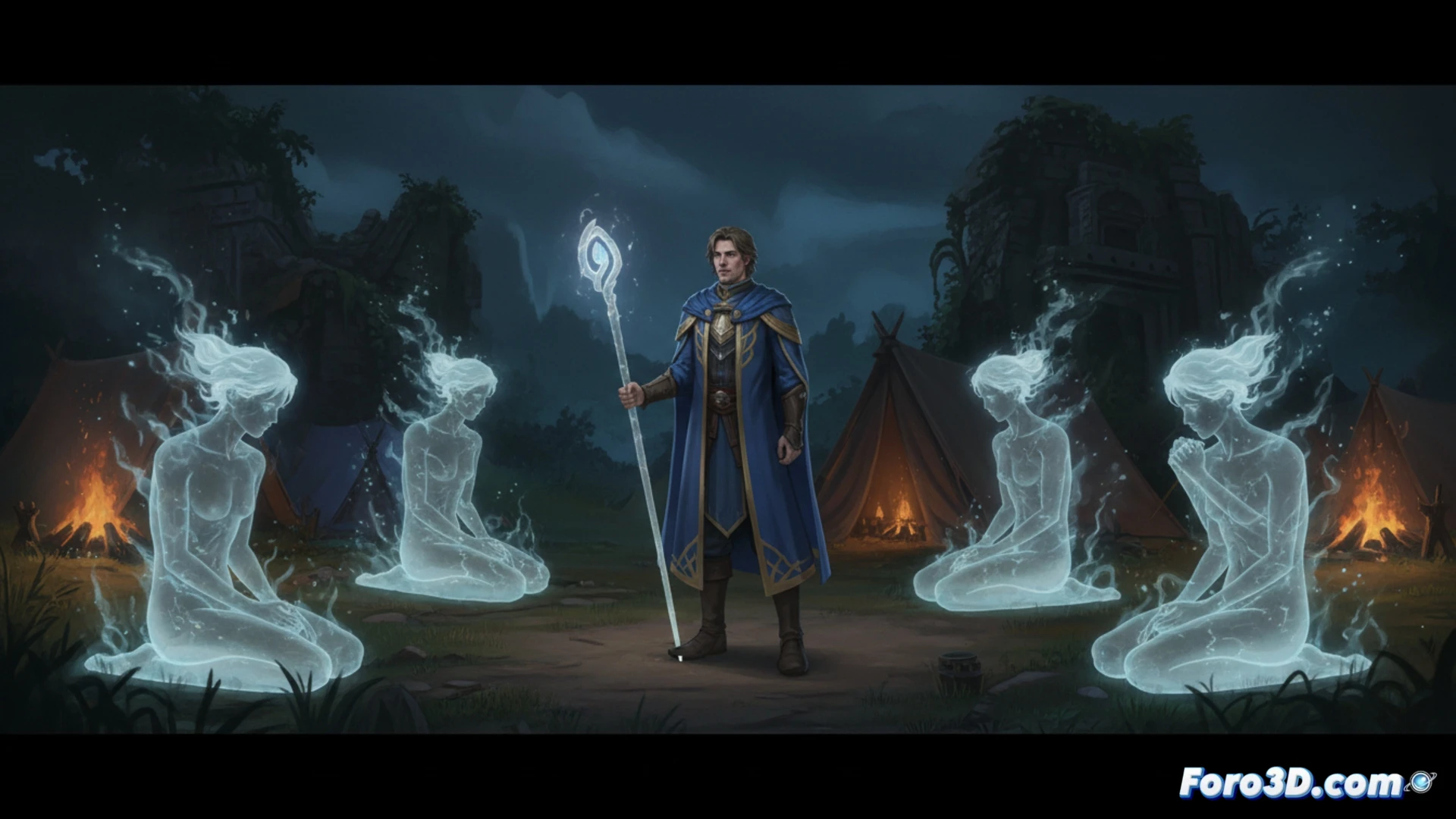
The Baldur's Gate 3 community has discovered a curious development secret. In the camp, there are four invisible and naked clones of the character Gale, always present but in an off-scene state. Initially revealed by a YouTuber, this phenomenon became visible due to a glitch that allows returning to previous areas. According to the analysis by content creator SlimX, these clones are a precautionary resource to manage a possible romantic scene with the wizard, unveiling an ingenious technical solution behind the narrative.
Asset and state management in the game engine 🛠️
This finding is a perfect example of how engines manage objects and characters. To optimize performance, elements have in-scene states (rendered and active) and off-scene states (invisible and on standby). Gale's clones exist as pre-instantiated assets for a specific sequence of his romance, probably an illusion that requires multiple versions of the character. Having them loaded but hidden avoids sudden loads during the cinematic, ensuring smoothness. The glitch that reveals them occurs when returning to a previous area, which forces the game to re-evaluate the state of these objects, incorrectly passing them to in-scene and making them visible.
Lessons from a glitch: the pipeline exposed 🔍
This incident goes beyond the anecdote. It exposes how developers anticipate complex scenarios with technical solutions that, ideally, the player should never see. The existence of specialized clones for a single scene speaks of a pipeline where narrative and technology are deeply intertwined. For the development community, it is a reminder that even the most robust systems can have unexpected leaks, and that those errors often offer the most honest glimpse into the ingenious and complex work behind an RPG of this magnitude.
How do developers use character clones and deferred loading systems to optimize the management of complex scenes in engines like Larian's Divinity?
(P.S.: 90% of development time is polishing, the other 90% is fixing bugs)