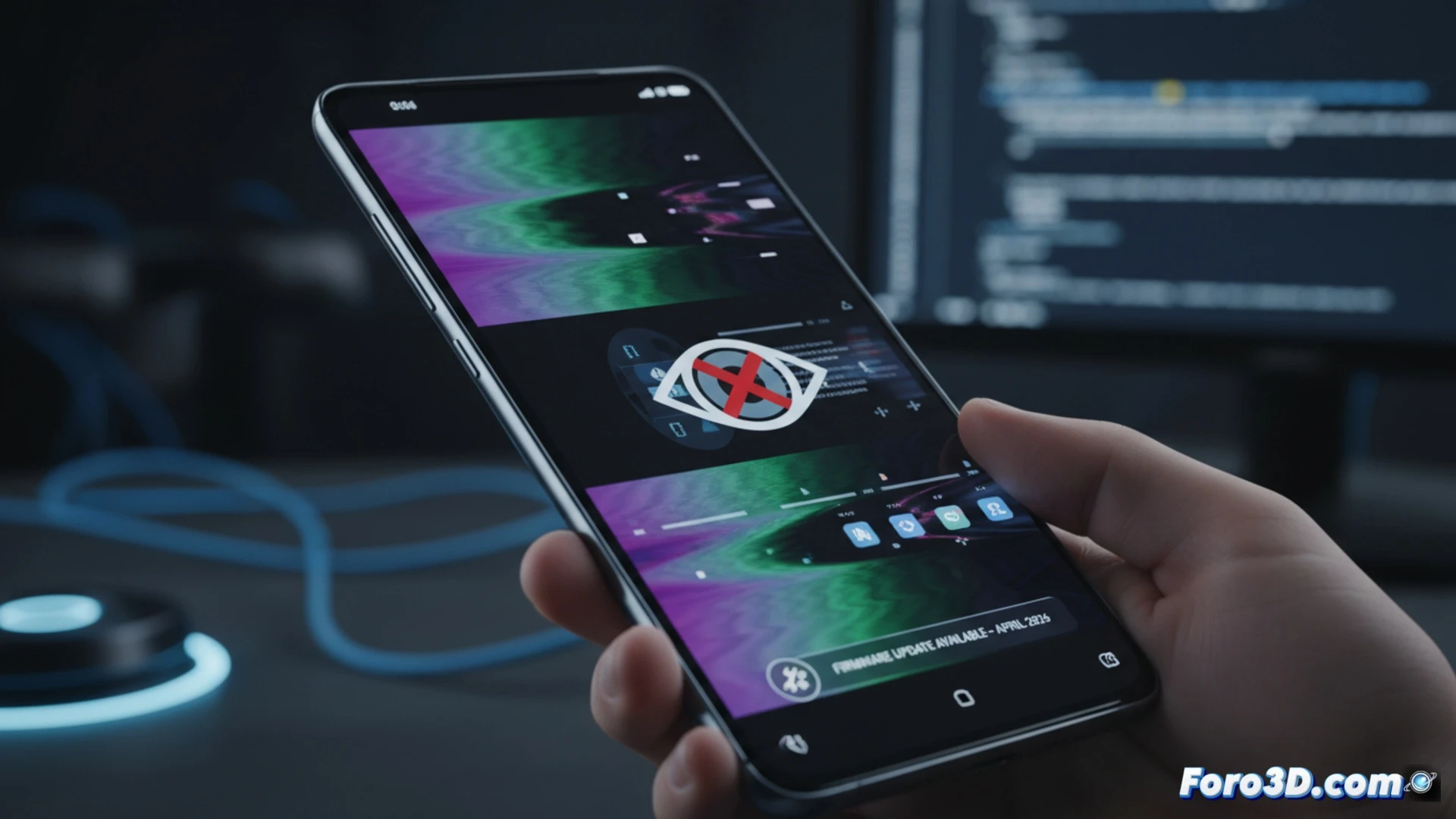
Samsung acknowledges serious issues in the screens of its new Galaxy S26 series, with user complaints about flickering, distortion, and visual fatigue. Although they promise software fixes for April 2026, the root of the problem might lie in the new Flex Magic Panel technology. For 3D professionals, whose main tool is a reliable monitor, these flaws are unacceptable and raise serious doubts about the suitability of this mobile hardware for prolonged precision visual tasks.
Technical Analysis: PWM Flickering and Visual Fatigue in Marathon Sessions 🤔
The reported flickering is usually related to pulse width modulation (PWM) for brightness control. In 3D modeling or digital sculpting, where the eyes are fixed for hours on subtle details, this flickering can cause headaches and drastically reduce productivity. Image distortion compromises the precise evaluation of textures, lights, and shadows. The Flex Magic Panel technology, focused on privacy, could alter the subpixel structure, affecting clarity and contributing to fatigue. A firmware update may smooth the flickering, but it is unlikely to correct the panel's physical limitations.
Conclusion: Secondary Tool, Never Primary ⚠️
After the updates, the Galaxy S26 Ultra could serve as an occasional mobile viewing device for quick presentations. However, for a serious 3D workflow, it cannot compete with the stability, color accuracy, and visual comfort of a calibrated professional monitor. Investing in a panel with factory issues, even if mitigated, is an unnecessary risk when visual precision is the foundation of creative and technical work.
Can a 3D professional trust the color accuracy and screen stability of the Galaxy S26 Ultra for critical modeling and rendering tasks?
(P.S.: If the computer starts smoking when opening Blender, maybe you need more than a fan and faith)