In current development, shortening the distance between an idea and its technical implementation is a constant goal. FunctionGemma presents itself as a language model specialized in interpreting natural language instructions and translating them into executable calls to functions, APIs, or external tools. Its main function is to act as a bridge, eliminating layers of boilerplate code and allowing more direct interaction with services and utilities.
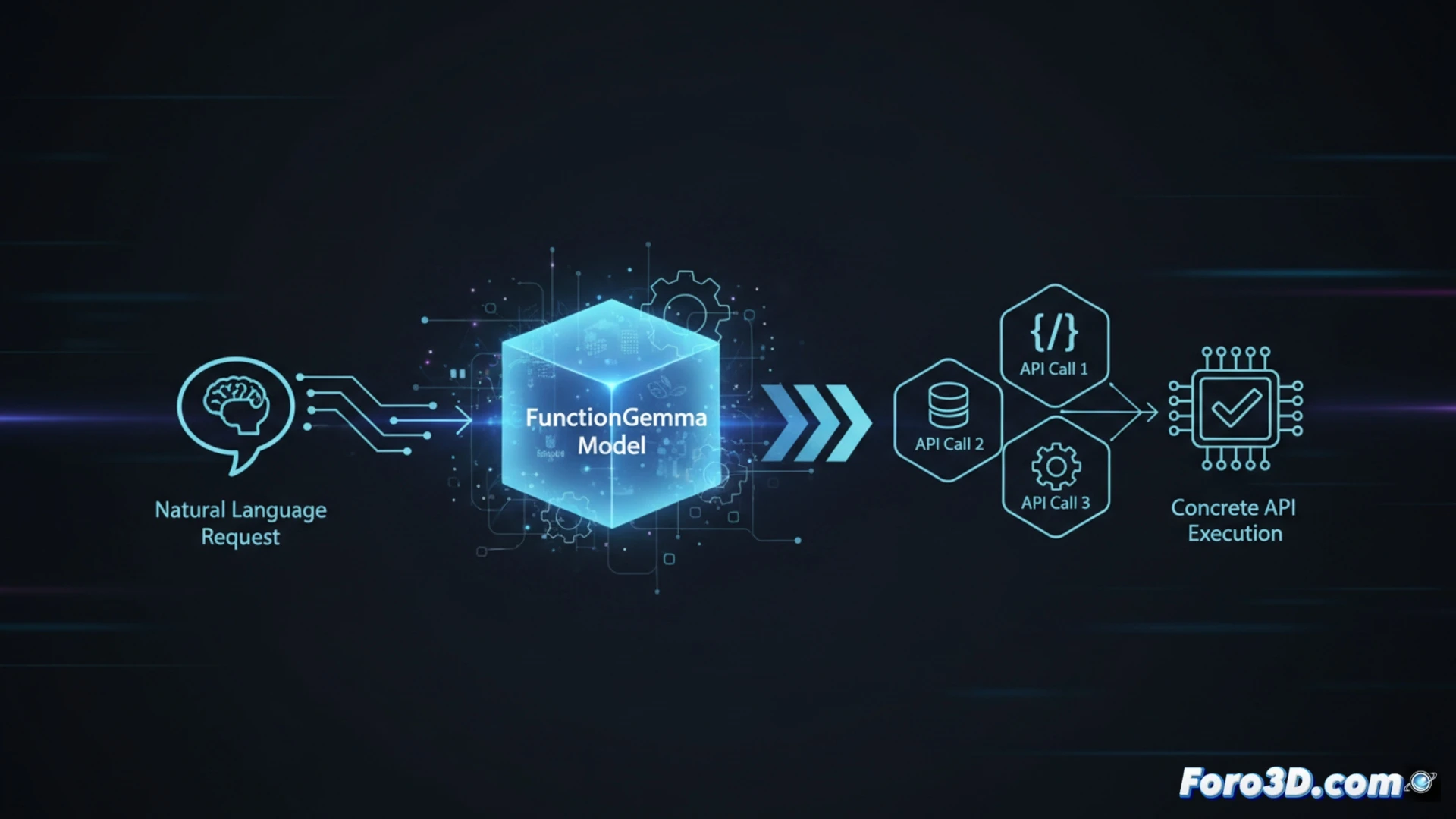
Invocation mechanics and tool definition 🔧
The core of FunctionGemma operates through a schema of defined tools. The developer describes the available functions (their name, parameters, and purpose) in a structured format. When the model processes a user query, it analyzes the context and decides if one of the defined tools can satisfy it. If so, it generates the specific call with the arguments already populated, typically in JSON format, ready to be sent to a runtime or external system that executes the actual function.
Your new intern who never argues about requirements 🤖
The relationship with FunctionGemma has something of working with an extremely literal junior developer. You tell it make it warmer here and, without questioning the logic of heating an office via API, it obediently invokes the smart thermostat endpoint. Don't expect it to warn you that it's August and you're wearing a sweatshirt; its mission is to execute, not reflect. It's the team member that turns your it would be interesting to see this data into an AWS bill before you finish the sentence.