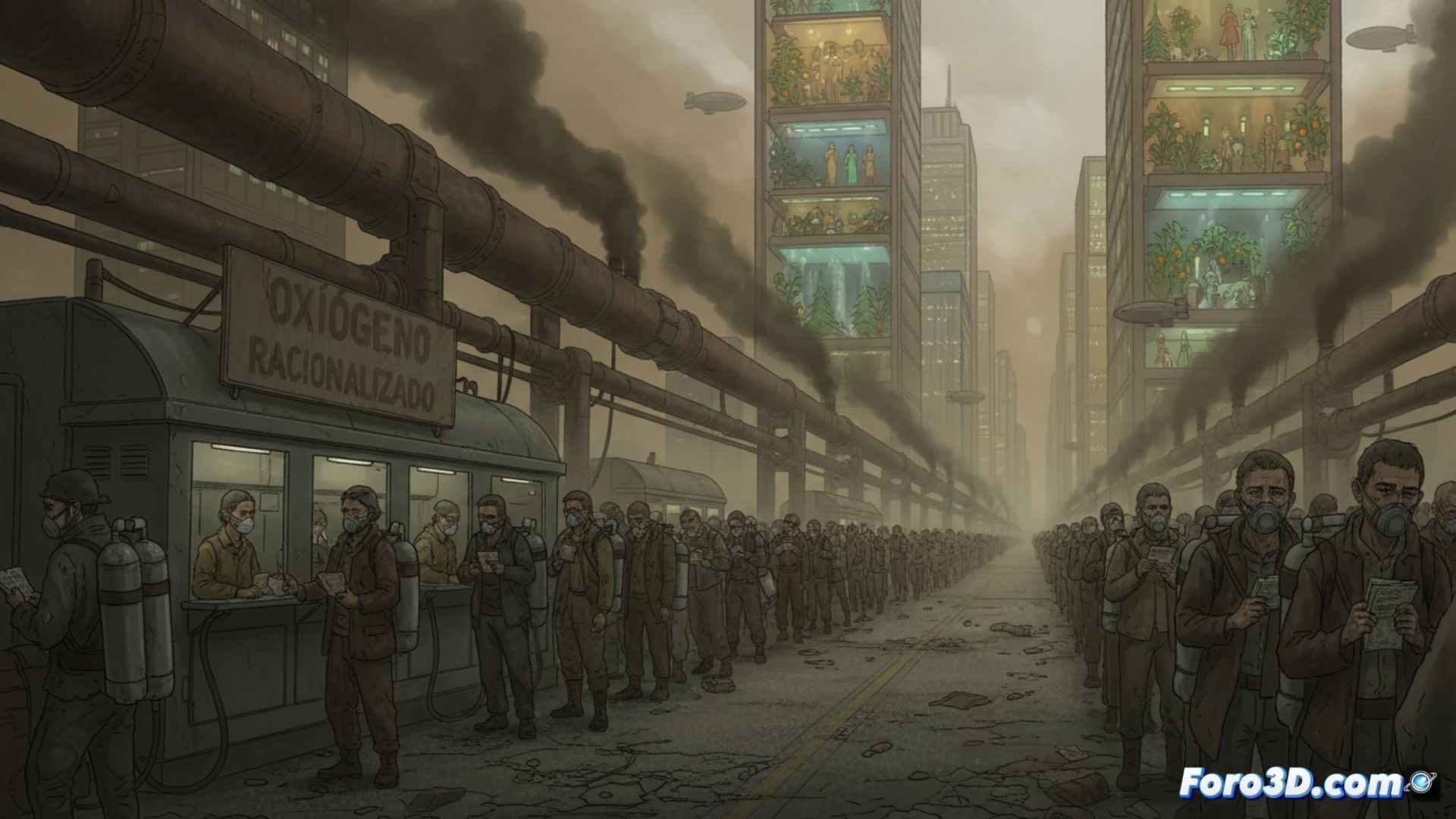
The concept of The Rationed Oxygen Line is pure visual narrative. This script, which fuses the imagery of bread lines during the Great Depression with a toxic futuristic megacity, is born to be seen. This is where the 3D pipeline becomes fundamental. Before any real shot, previsualization and concept art tools allow materializing that crucial contrast: the gray and suffocating atmosphere of the street versus the immaculate glass skyscrapers. 3D is the first step to breathe life into this dystopia.
3D World-Building: Assets, Environment, and Visual Planning 🏗️
Building this world requires meticulous design assisted by 3D. Modeling the custom oxygen tanks and ration cards is not just creating assets; it's designing icons of daily oppression. Sculpting and texturing tools define their wear: dirty on the street, impeccable at the heights. Environments are blocked out in 3D to plan shots that narrate inequality: low angles that emphasize kilometer-long lines and aerial views that show the luxury bubble. Volumetric lighting simulates the toxic fog and clean light beams in the towers, establishing the mood before turning on a real camera.
Previsualization as Narrative Guide 🎬
Beyond aesthetics, 3D previsualization is the visual technical script. It allows experimenting with the sequence's rhythm, testing how a slow traveling shot along the line conveys hopelessness, or how a sharp cut to citrus in an elite's glass underscores the contrast. This stage is crucial for communicating the vision to the director, cinematographer, and art department, aligning the team on a coherent and powerful image that translates the literary idea into planned and effective visual impact.
How can 3D modeling and lighting be used to build a believable and emotionally charged dystopian atmosphere, starting from a narrative concept as powerful as the rationed oxygen line?
(P.S.: Previz in cinema is like the storyboard, but with more chances for the director to change their mind.)