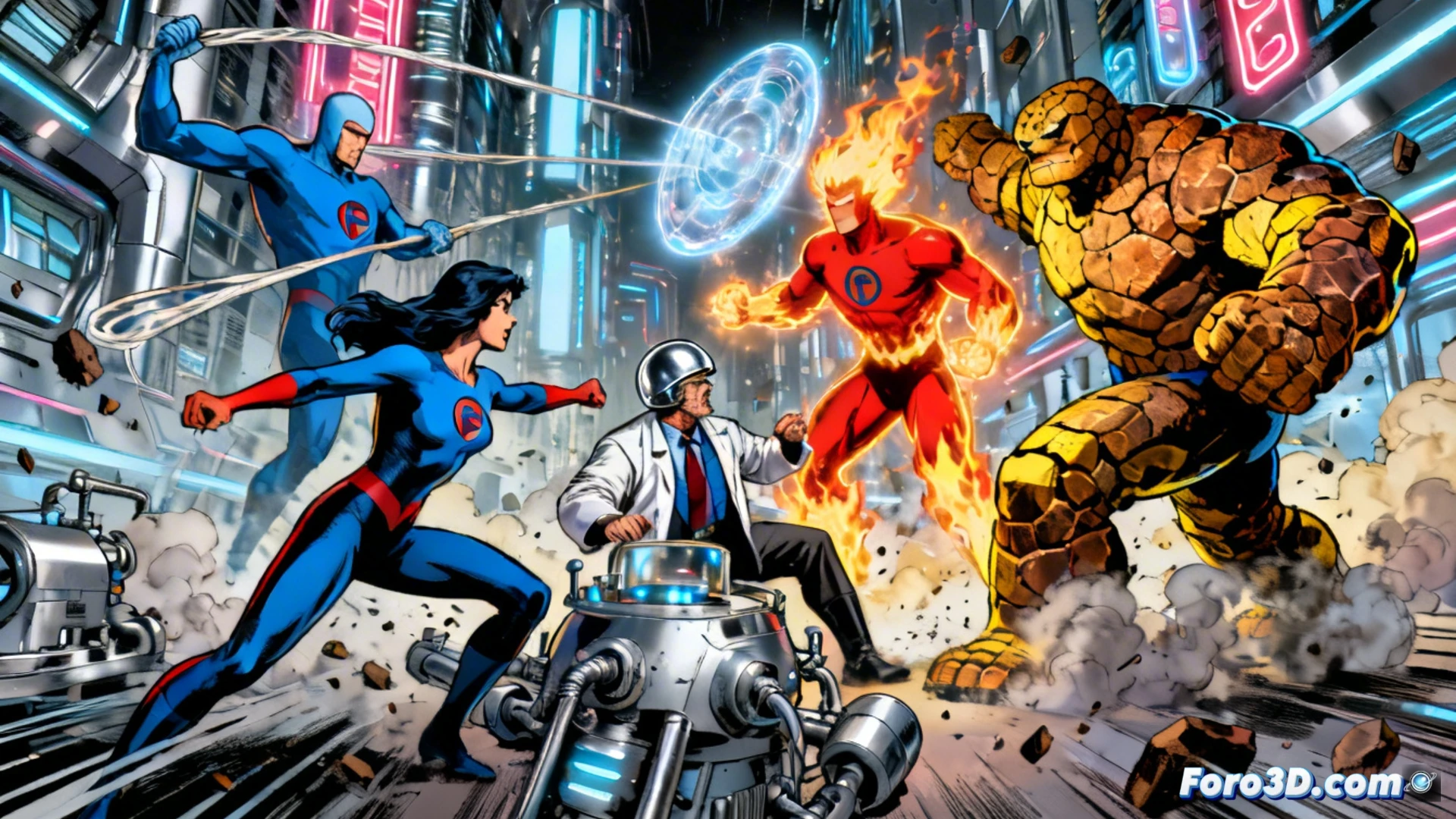
Marvel has turned discarded material into official lore. The comic The Fantastic Four: First Foes #1, published in March 2026, canonizes a battle against the Mad Thinker from the Earth-828 universe, a scene that was only briefly seen in the montage of the movie The Fantastic Four: First Steps. This move not only expands the cinematic universe but also illustrates a key phenomenon in modern visual production: the second life of content generated in early development phases, from storyboards to 3D previsualizations.
3D Previs and Storyboarding: the Idea Bank of the Expanded Universe 🎬
The now-canonized scene was born, almost certainly, in the digital pre-production phase. 3D previsualization and animated storyboarding tools allow directors and VFX teams to plan complex sequences, test angles, and choreograph actions at reduced cost and time. This pipeline generates a huge volume of narrative and visual material that, although it doesn't make it to the final cut, constitutes a solidly developed idea bank. When a studio decides to expand the saga to comics, novels, or series, this pre-existing and already worked-on content becomes the perfect resource to ensure coherence and enrich the lore without starting from scratch, optimizing the initial creative investment.
The Flexible Canon: When Discarded Material Defines the World 🔄
This case evidences a change in intellectual property management. The canon is no longer defined solely by what appears on screen, but by a coordinated transmedia ecosystem. Visual production tools, by creating early digital representations of scenes and characters, establish a truth that is visual and narrative and can be recovered. Thus, the line between discarded and official material blurs, demonstrating that in the era of the digital expanded universe, no good idea is completely lost; it only awaits its medium to be canonized.
How does the recovery of discarded scenes influence the construction of official lore and the transmedia narrative of franchises like Marvel?
(P.S.: Previs in cinema is like the storyboard, but with more chances that the director will change their mind.)