Luis García Montero's next novel, The Best Age, poses a perfect narrative challenge for cinema: a story of reunion, guilt, and redemption with temporal jumps between 1975 and the present. Adapting this work will require meticulous visual planning to differentiate eras and convey its emotional weight. This is where 3D pre-production tools prove their indispensable value, allowing the translation of literary complexity into a coherent and powerful visual language for a possible audiovisual adaptation.
3D Previsualization: Planning Emotions and Times 🎬
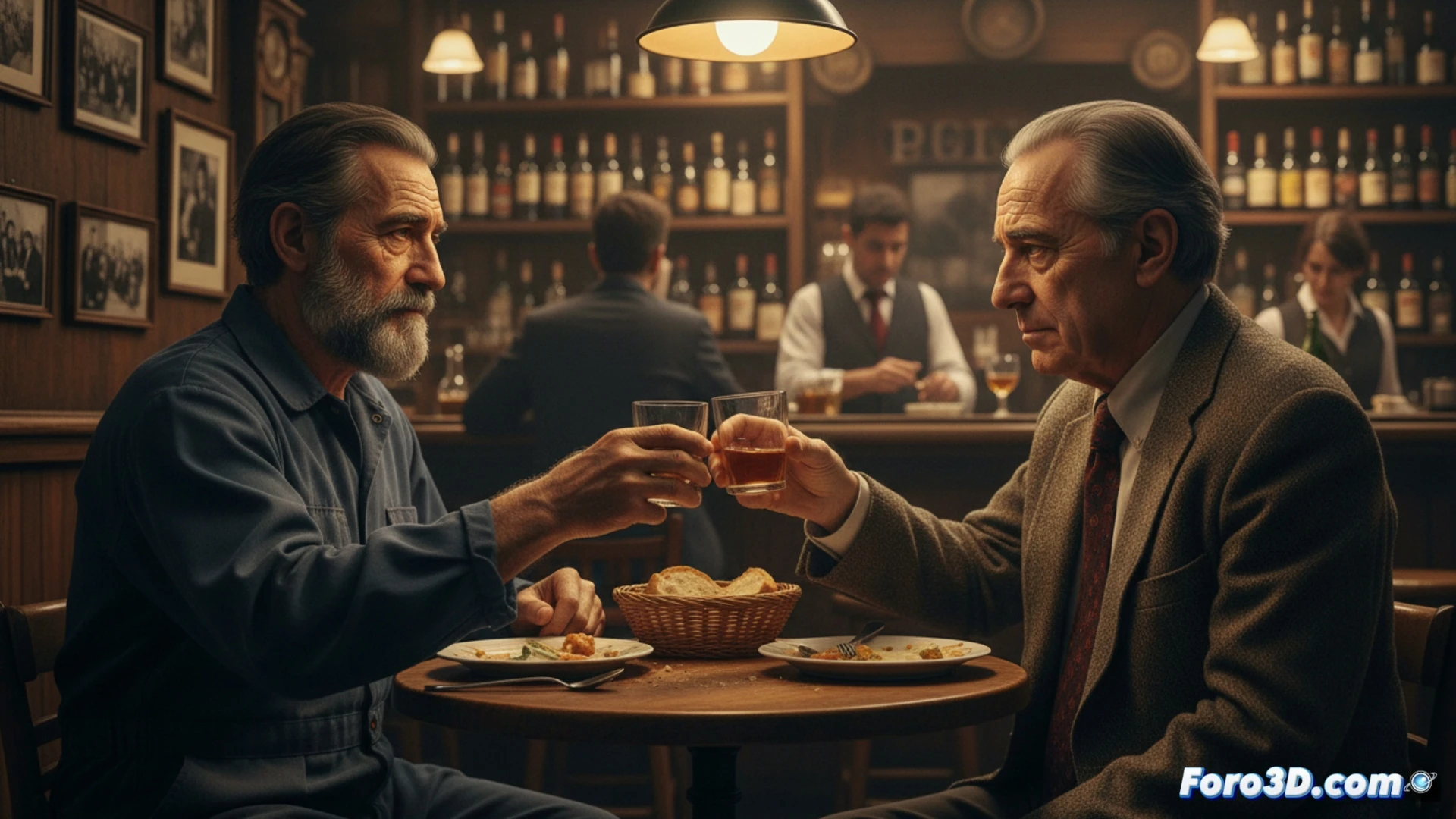
The strength of The Best Age lies in the contrast between two lives marked by an unjust sentence. Tools like 3D storyboarding and animatic previsualization are crucial for mapping this duality. An art director and a previs artist could digitally build the two key spaces: the austere courtroom of the 70s and the cozy bar of the present. This allows experimenting with framing, lighting, and transitions, visually defining the coldness of the judicial past and the warmth of the current reunion. Additionally, modeling young and aged versions of the characters in 3D helps plan characterization work and ensure continuity in flashbacks, making the passage of time and the weight of the story tangible on their faces.
Technology at the Service of Human Narrative 🤖
Beyond logistics, 3D in pre-production serves to delve into the human aspect. By visualizing complex scenes, such as the reunion in the bar, the team can focus on actor direction and emotion, having technically resolved angles and pacing. Technology is not an end, but a bridge so that the essence of the novel, its exploration of second chances and wounds from the past, arrives intact and with greater force on the screen, demonstrating that digital art is today an essential ally for telling deeply human stories.
How can 3D transcend the spectacular effect to become a narrative tool that visualizes memory and inner time in the cinematic adaptation of a literary novel like The Best Age?
(P.S.: Previz in cinema is like the storyboard, but with more chances that the director will change their mind.)