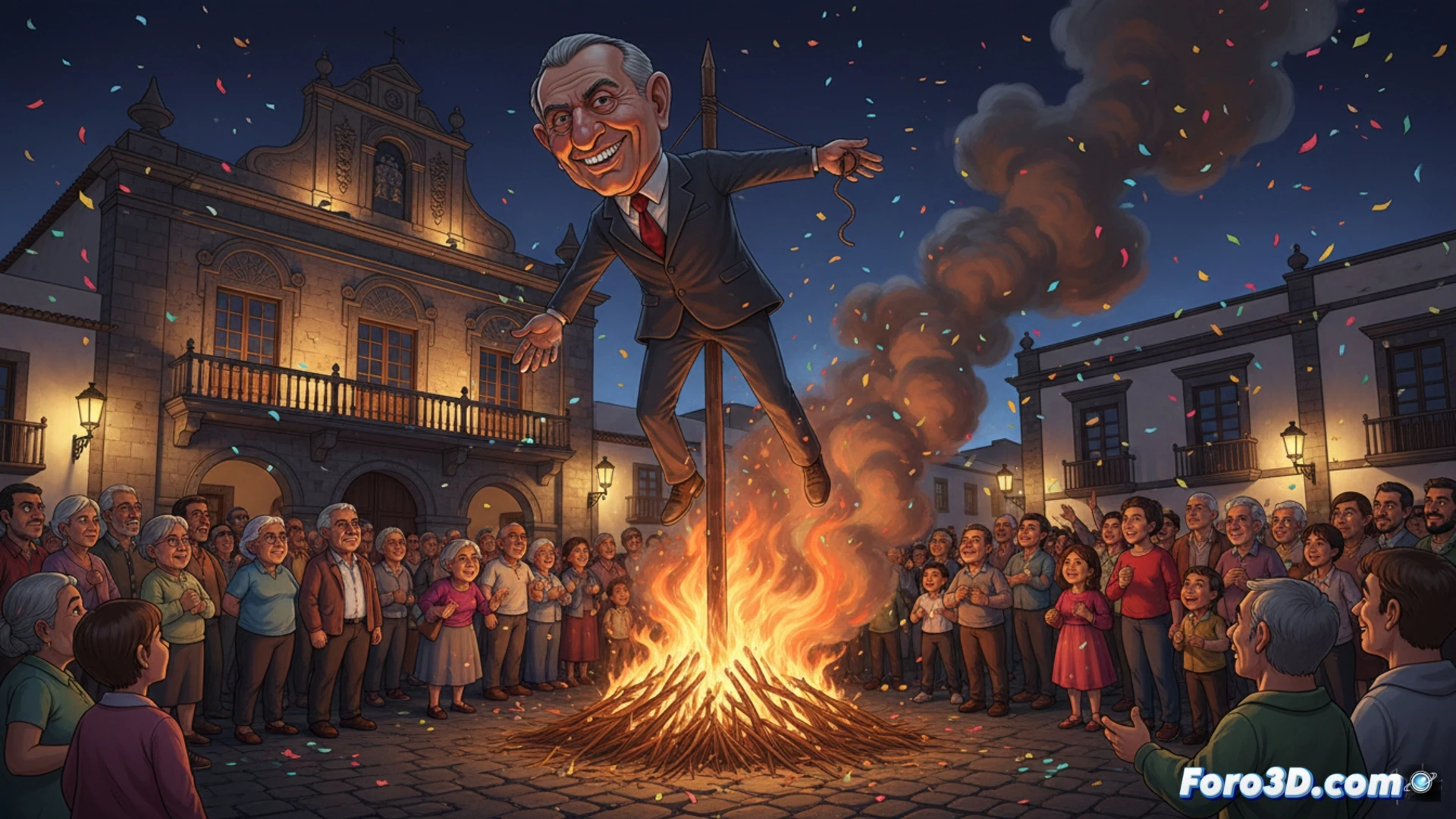
The traditional Judas Burning in Teror, where a satirical effigy is consumed by flames, is a powerful example of folk art as social critique. This ritual, which purifies through humor, finds a fascinating parallel in the digital realm. Today, 3D modeling, scanning, and animation tools allow transferring this symbolic act to the virtual space, creating digital Judases that can be replicated, modified, and burned in infinite environments. This evolution amplifies the message and raises new questions about artistic activism in the digital era.
Techniques for 3D Satire: Modeling, VFX, and Viral Diffusion 🔥
Modernizing this tradition involves a specific technical pipeline. First, character creation: through 3D modeling from scratch or using photogrammetry to capture the likeness of a public figure. Then, the burning transforms into a visual effects (VFX) sequence with fire simulations, particles, and digital disintegration, renderable in hyperrealistic videos or in real-time for streams. The key lies in diffusion: digital activism is completed by sharing these assets or videos on social networks and forums, allowing remixes and extending the lifecycle and reach of the critique far beyond a single physical event.
Digital Limits: Satire or Cyberbullying? ⚖️
This amplifying power entails greater ethical responsibility. While physical burning is an ephemeral community act, a satirical 3D model can persist online, leading to harassment campaigns. The digital artist must reflect: where is the line between legitimate social critique and hate speech? Technology is not neutral, and transferring protest traditions to the digital world requires rethinking their rules, seeking a balance between artistic freedom of expression and individual rights in a borderless space.
How can 3D modeling and digital animation transform and globalize traditional satire and social critique practices, like the Judas Burning, for contemporary activism?
(P.S.: pixels have rights too... or at least that's what my last render says) 😉