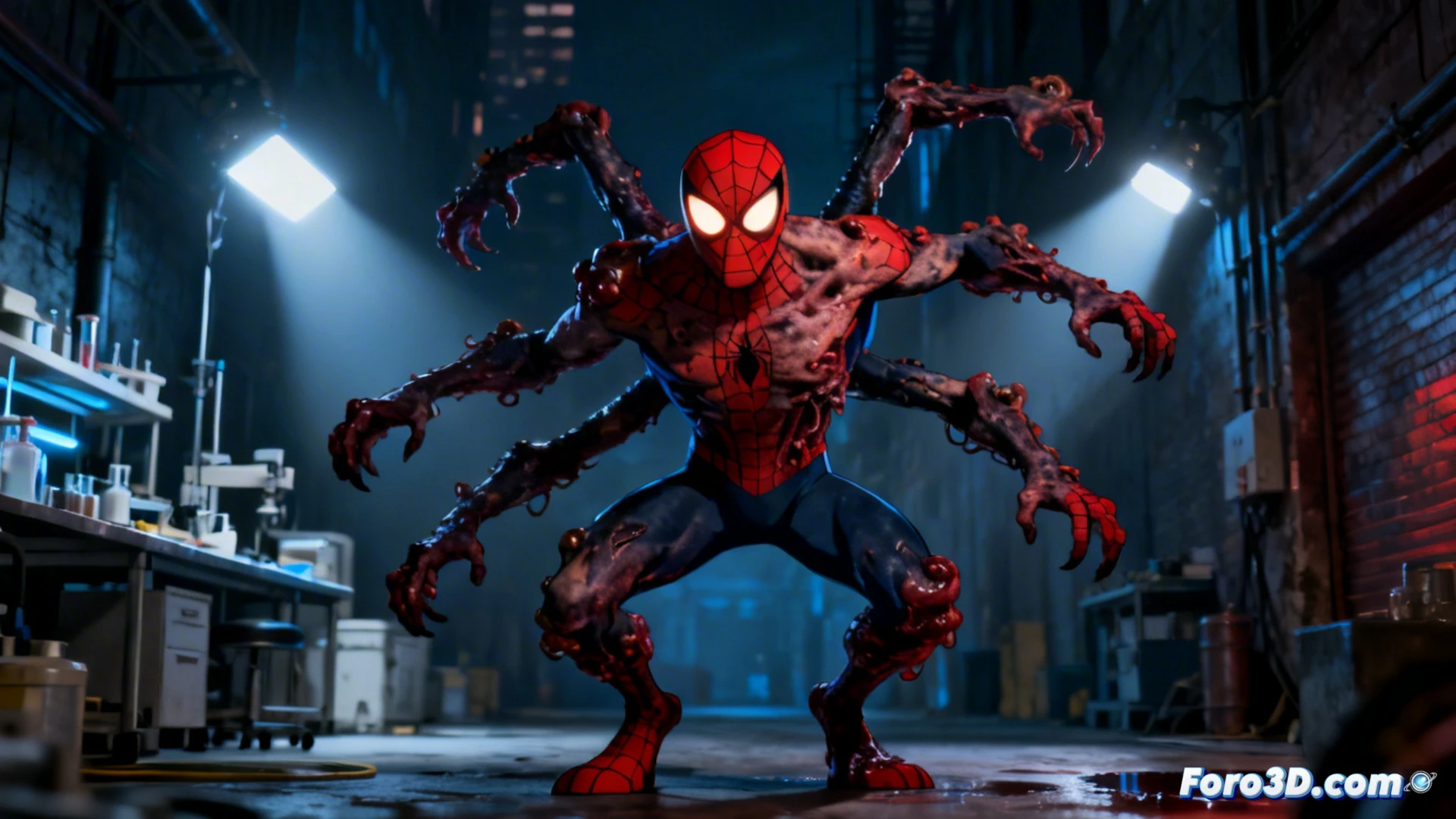
The most grotesque episode of Spider-Man: The Animated Series, where Peter Parker mutates into a six-armed creature, was not just an isolated narrative arc. Now, it emerges as the possible conceptual storyboard for Spider-Man: Brand New Day in the MCU. This analysis explores how the preview and design of that 90s animated series, with its unique body horror, is laying the technical and narrative foundations for the next cinematic evolution of Tom Holland, marking a radical turn directly inspired by that material.
Technical Adaptation: From Animated Sketch to 3D Conceptual Art for Live-Action 🎬
Translating Spider-Man's monstrous metamorphosis from animation to the realism of the MCU is a key pre-production challenge. Here, 3D conceptual art and previsualization are fundamental tools. The animated series design serves as a high-level first storyboard, defining the silhouette, the alien movement of six limbs, and the atmosphere of panic. Visual development artists must now reinterpret those principles in a live-action context, using 3D modeling and rigging tests to explore the anatomy, skin texture, and credible visual integration of the mutation, maintaining the grotesque essence but anchoring it in the physics of the established cinematic universe.
Visual Narrative: When Design Drives Dramatic Conflict 🎨
This adaptation is not just a design exercise, but one of visual narrative. The body horror of the animated series was the dramatic engine of its story. By adopting this concept, the movie proposes that Peter's physical transformation be the central conflict. The 3D conceptual art must, therefore, communicate not just a creature, but the trauma and loss of humanity. Each iteration of the mutant model must tell a story of agony and monstrosity, using visual form to deepen the character's arc and elevate the drama beyond a conventional villain.
How did Spider-Man's grotesque six-armed mutation from the 90s animation influence the visual representation of bodily trauma and loss of humanity in subsequent superhero cinematic adaptations?
(P.S.: Previz in cinema is like the storyboard, but with more chances of the director changing their mind.)