The evolution of additive manufacturing with composite materials, highlighted at events like JEC World, is redefining the role of the 3D designer. It is no longer enough to create a visually appealing model or prototype. Convergence with traditional industrial processes requires that digital files (STL, OBJ, STEP) be prepared to become final structural parts, integrating considerations of continuous fiber, reinforcement, and hybrid processes from the modeling phase.
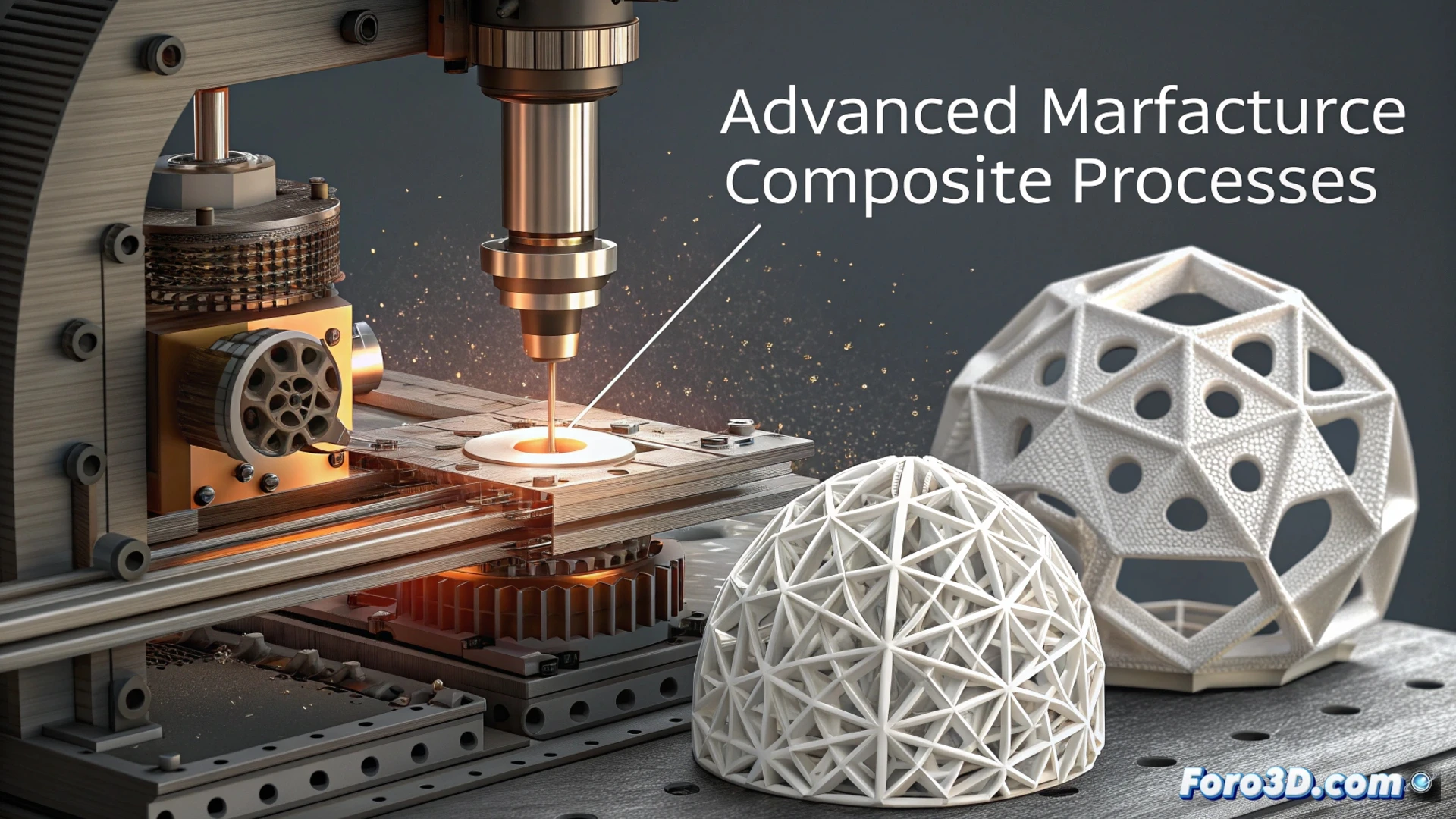
Implications in Design: Fibers, Hybrids, and File Preparation 🧩
Trends toward materials like continuous fiber-reinforced thermoplastics impose new requirements on the design workflow. Fiber orientation, critical for strength, must be considered in the model geometry. In hybrid processes, where 3D printing is combined with molding or fabric placement, the file must be broken down into components: which part is printed and which part is manufactured traditionally. This directly affects the definition of tolerances, bonding surfaces, and supports in the digital model, aiming to optimize strength and minimize post-processing.
Repeatability as the Goal of the Printable Model 🔄
The biggest challenge for the designer is to overcome the prototype phase. The transition to series production requires 3D files that ensure repeatability and inherent quality control. The model must be robust, with geometries that minimize printing failures in composite materials and facilitate automated inspection. The upcoming standardization underscores the need to collaborate with process engineers, closing the gap between digital design and reliable physical results.
How is additive manufacturing of composite materials transforming the design and functionality of 3D printable models for high-performance applications in 2026? 🚀
(P.S.: don't forget to level the bed, or your print will look like abstract art)