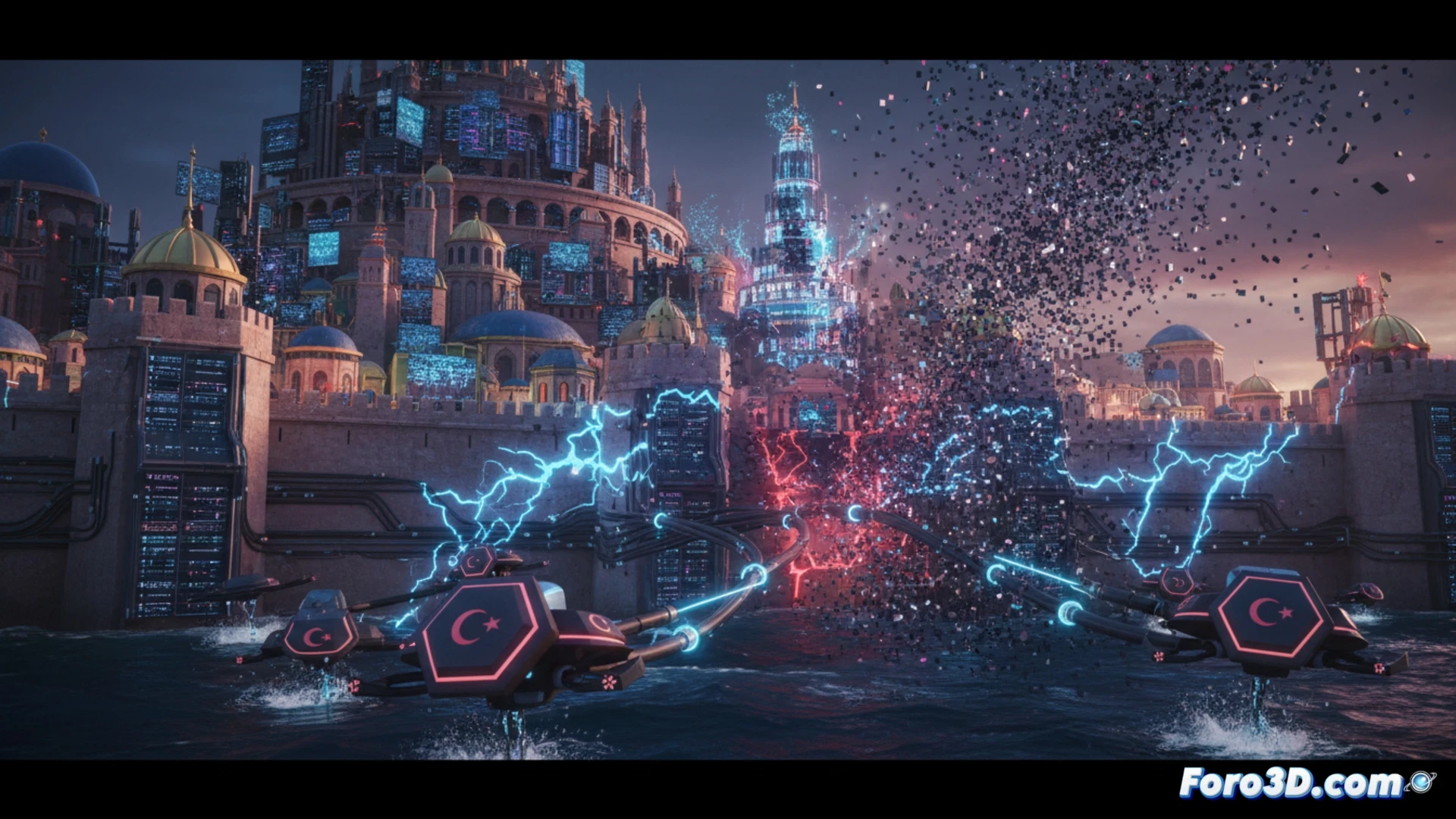
History and technological dystopia merge in a fascinating cinematic concept: The Last Bit of Constantinople. This script transports the historical siege of 1453 to a future where the city is the last server of the free internet. Cannons are replaced by a cryptographic attack, and its fall is visualized as a rain of black pixels. More than news, it's a visual pitch that calls to be developed with 3D tools to preview its impact and viability.
3D Previsualization: Building the Digital Siege 🎬
The power of this idea lies in its imagery, and that's where the 3D pipeline becomes essential. A previsualization artist could use Unreal Engine or Blender to block the key scene: Ottoman drones cutting luminous underwater cables in the Bosphorus, while on holographic screens the data walls crack. An animated 3D storyboard would allow defining the pacing, angles, and transition between the physical and the digital. This previz not only sells the idea but serves as a technical guide for VFX departments, estimating the complexity of simulating the pixelated disintegration of the Byzantine library.
Visual Narrative: When the Concept is King 👑
This project underscores that great cinematic ideas today are born from a strong visual conception. 3D technology in preproduction democratizes the ability to show, not just tell. A pitch accompanied by a solid previsualization of that rain of black pixels transcends the descriptive and becomes an emotional experience for producers and studios. It is proof that, in the digital era, the first line of the script can actually be written with a viewport.
How can the technological dystopia of The Last Bit of Constantinople be used to explore and challenge the visual narrative conventions of historical cinema?
(P.S.: Previz in cinema is like the storyboard, but with more chances that the director will change their mind.)