The history of the Pepsi logo is a masterclass case study in visual identity evolution. From its origin in 1893 as Brad's Drink with an irregular typography, to the iconic red, white, and blue globe, each iteration reflects not only aesthetic changes, but strategic adaptations of the brand. This journey, from a crude imitation of Coca-Cola's script to an autonomous and global symbol, illustrates the fundamental principles of product design: refinement, recognition, and adaptation to the cultural and commercial context of each era.
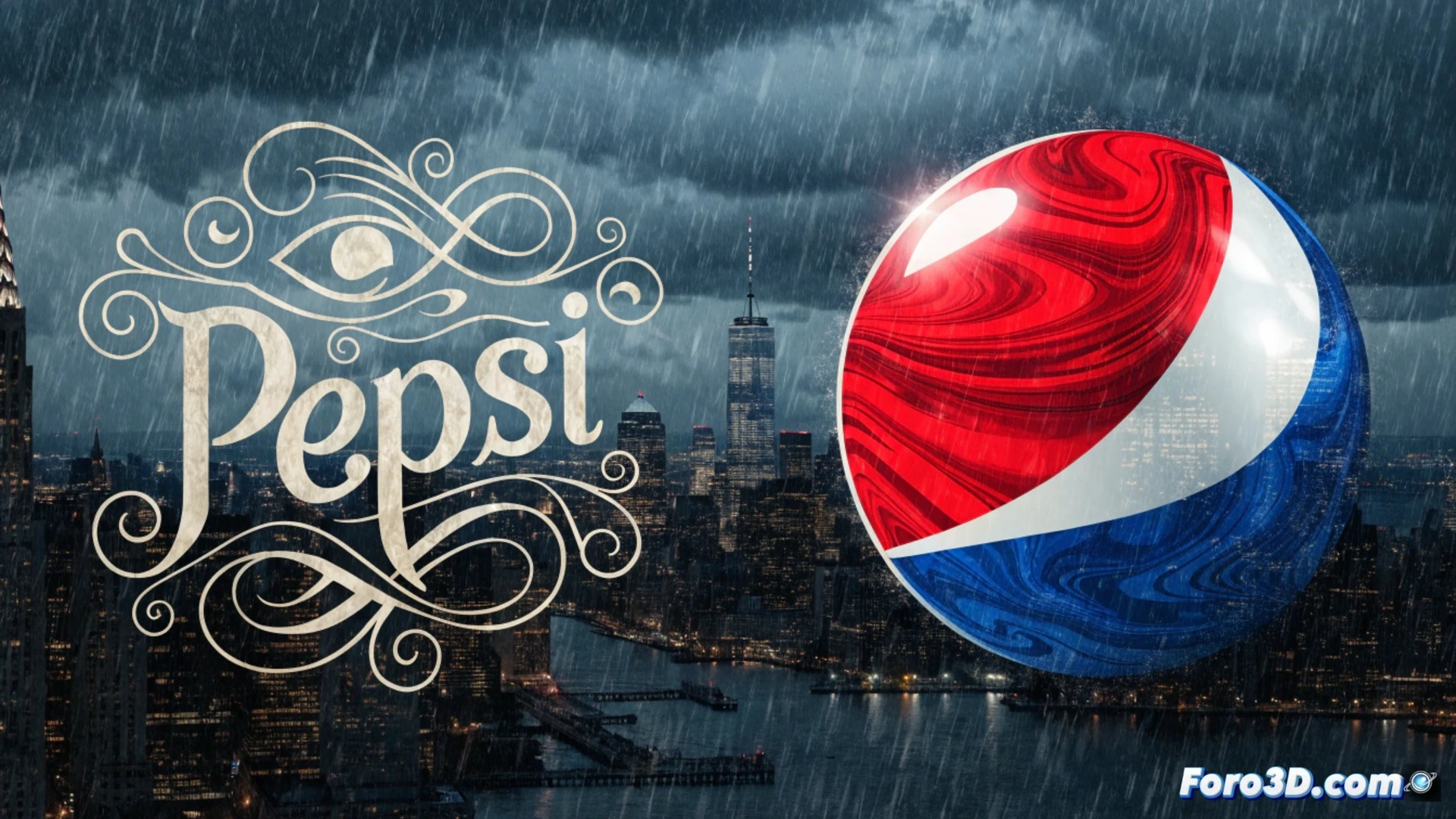
Historical Prototyping: How 3D Would Have Revolutionized Each Iteration 🧪
Imagine applying current tools to each logo change. In the early stages, 3D modeling and photorealistic rendering would have allowed rapid prototyping and testing of variations in the cursive script and the iconic flag in the 'C', visualizing them on virtual bottles and posters before physical production. For the critical redesign toward the globe, 3D software would have been crucial for exploring volumetrics, light behavior on the sphere, and stripe integration. Today, 3D modeling of the logo is essential: it is generated as a precise volumetric object for animations, virtual packaging, integration into augmented reality environments, and mass customization, where depth, reflection, and shadow are as important as flat color.
From Graphic to Volume: Identity as a 3D Object 🎯
The final lesson for the product designer is clear: modern identity is no longer flat. Pepsi's journey culminates in a logo that is, intrinsically, a three-dimensional object. Its current application demands thinking in terms of meshes, curvatures, materials, and how it interacts with virtual scenes. Designing a brand icon today involves conceptualizing it from the start as a 3D asset, capable of living with equal power on a physical can, in a rendered ad, or in the metaverse, demonstrating that design evolution is, inevitably, an evolution toward spatial dimension.
How can 3D product designers apply the principles of geometric and symbolic evolution observed in the Pepsi logo to develop three-dimensional brand identities that endure and adapt over time?
(P.S.: Designing a product in 3D is like being an architect, but without having to worry about the bricks.)