The news about the script The Curse of the Pharaoh's Virus is not an archaeological find, but a brilliant cinematic story concept. It takes an iconic historical event, the opening of Tutankhamun's tomb by Howard Carter, and reinvents it as the patient zero of a digital pandemic. The curse is not spiritual, but a computer virus that rewrites reality with Ancient Egyptian cosmology. It is a high-speculation premise, perfect for a visual cinema movie.
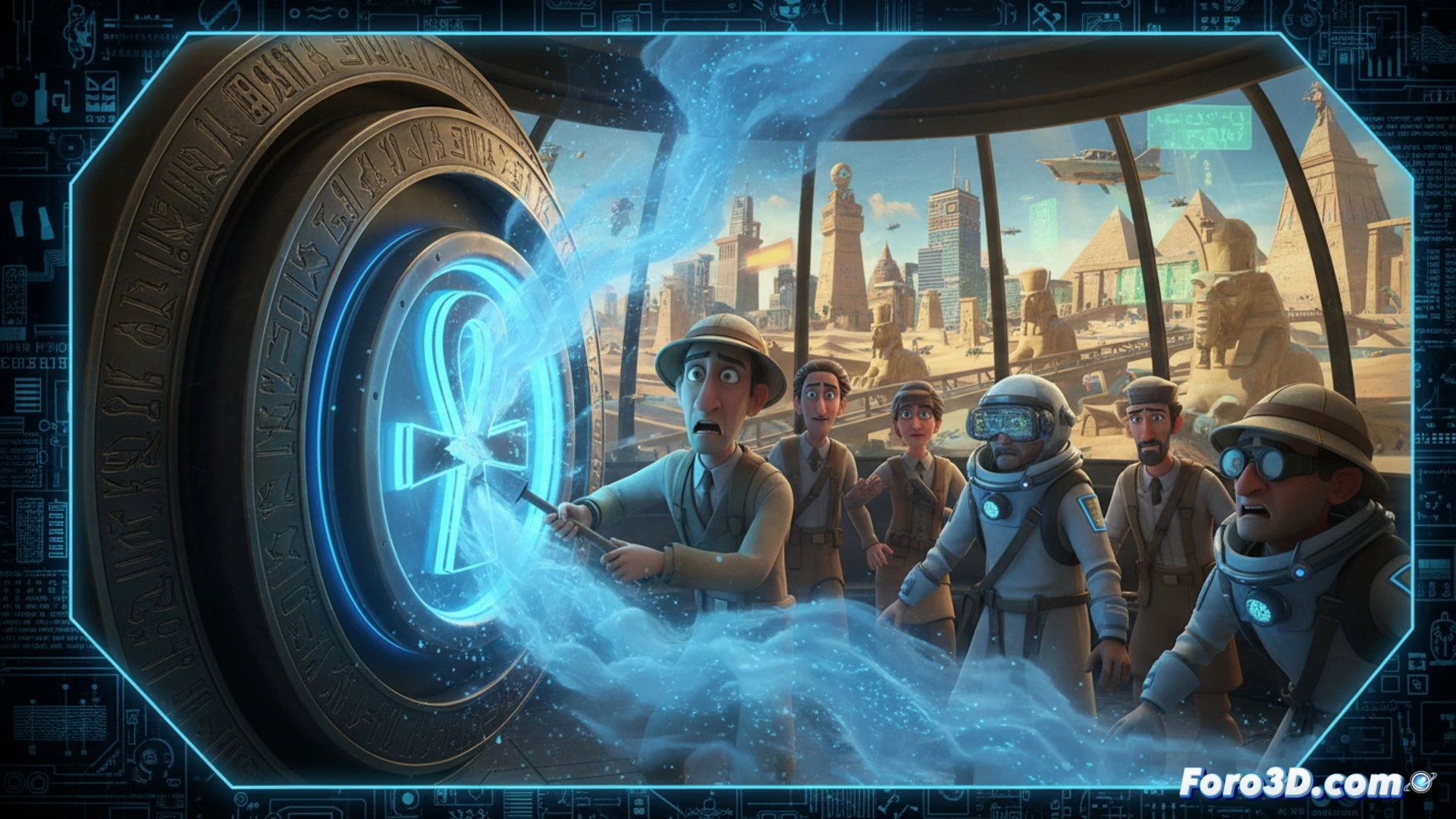
3D Visualization: Designing the Containment Capsule and the Infection 🧪
This is where 3D tools become essential for preproduction. Concept art and 3D previs would be crucial for designing the tomb not as a funerary chamber, but as an ancient-looking biological containment capsule. Modeling the broken seal releasing compressed digital air, a visual effect combining dust particles with code geometry, would be the core of the scene. Additionally, animated storyboards and FX previz would allow planning the global infection sequence: how Egyptian glyphs and zoomorphic gods overwrite the world's digital interfaces in real time.
Visual Narrative as the Project's Backbone 🎬
This concept underscores that the boldest ideas need a solid visual language before shooting. 3D technology is not just for postproduction, but a fundamental narrative tool. It allows the director and art team to test ideas, establish visual rules for the Egyptianization of the world, and communicate the scale of the event in a tangible way. The premise lives or dies by its visual execution, and it is in the design phase where the story concept becomes a viable cinematic plan.
How can a credible and visually impactful cinematic dystopia be built by transplanting the mythology and aesthetics of Ancient Egypt into a post-apocalyptic technological future?
(P.S.: Previz in cinema is like the storyboard, but with more chances for the director to change their mind.)