Jude Smith's trajectory, senior artist at Respawn Entertainment, challenges the dichotomy between traditional and digital art. His training began in Virginia with local painters, mastering oils and watercolors. This classical foundation, far from being an anachronism, constitutes the basis of his current work on the core team of Apex Legends. His story is a case study on how the discipline of analog art enriches the creation of digital worlds.
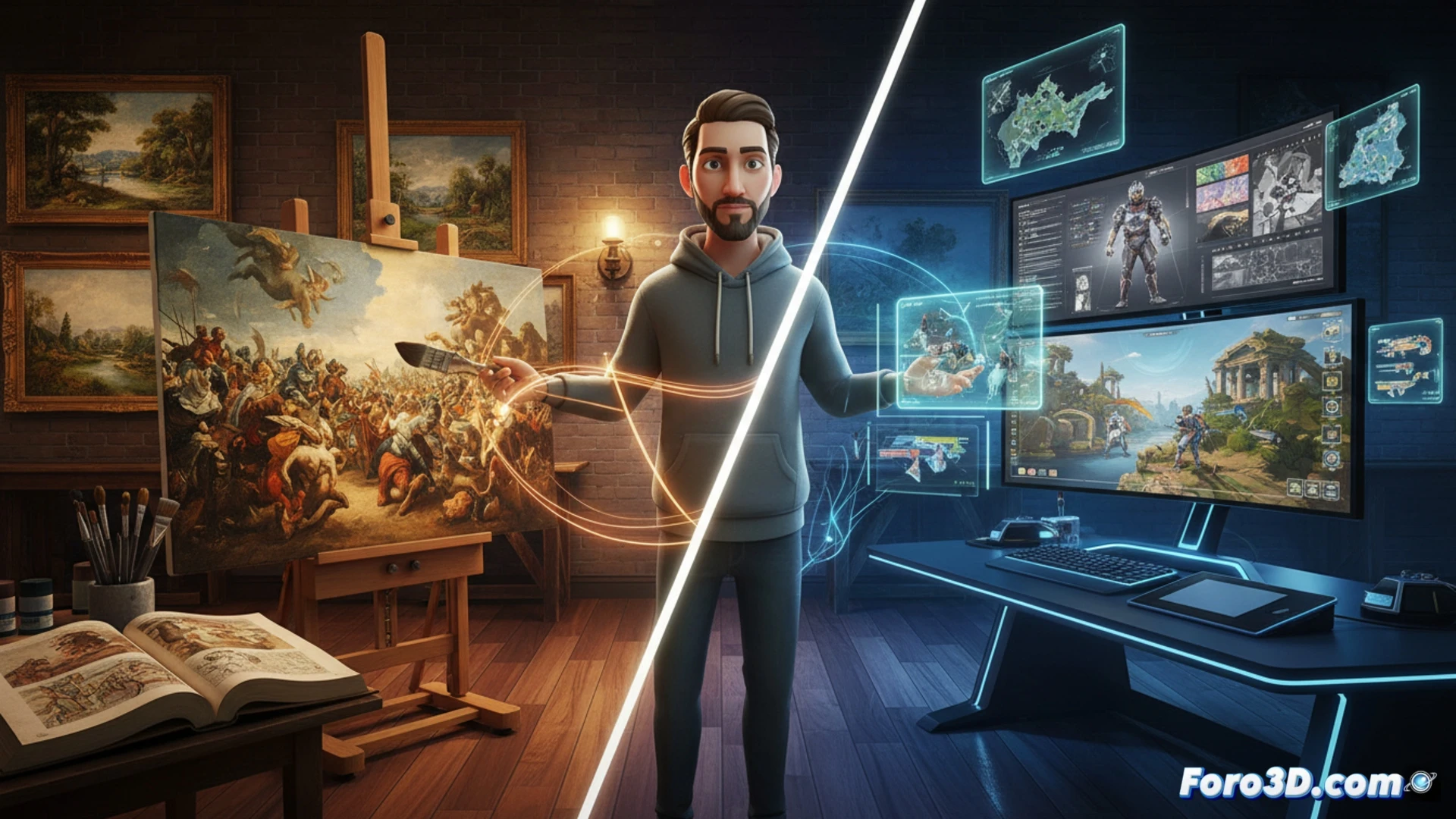
The technical translation: from painting to pixel 🎨
The influence of his training is tangible in his workflow. The knowledge of light, composition, and color theory acquired with physical media transfers directly to digital software. Additionally, his professional turning point came upon discovering Ryan Church's concept art for Star Wars, understanding the artist's role as a world architect. This combination, pictorial tradition and cinematic conceptual vision, allows him to create assets and environments for Apex Legends with distinctive depth and visual narrative, where every element communicates a story.
Lesson for the new generation of artists 👨🎨
Smith's path underscores a crucial truth for aspiring video game artists: digital tools are just the medium. The foundation in traditional artistic fundamentals provides a solid and timeless visual language. In an industry that advances at great speed, this classical training becomes the differentiator that enables creating works with greater authority and cohesion, demonstrating that the future of digital art is, in part, rooted in the past.
How does training in classical art techniques, such as oil painting, influence the design of characters and environments for a contemporary action video game like Apex Legends?
(P.S.: 90% of development time is polishing, the other 90% is fixing bugs)