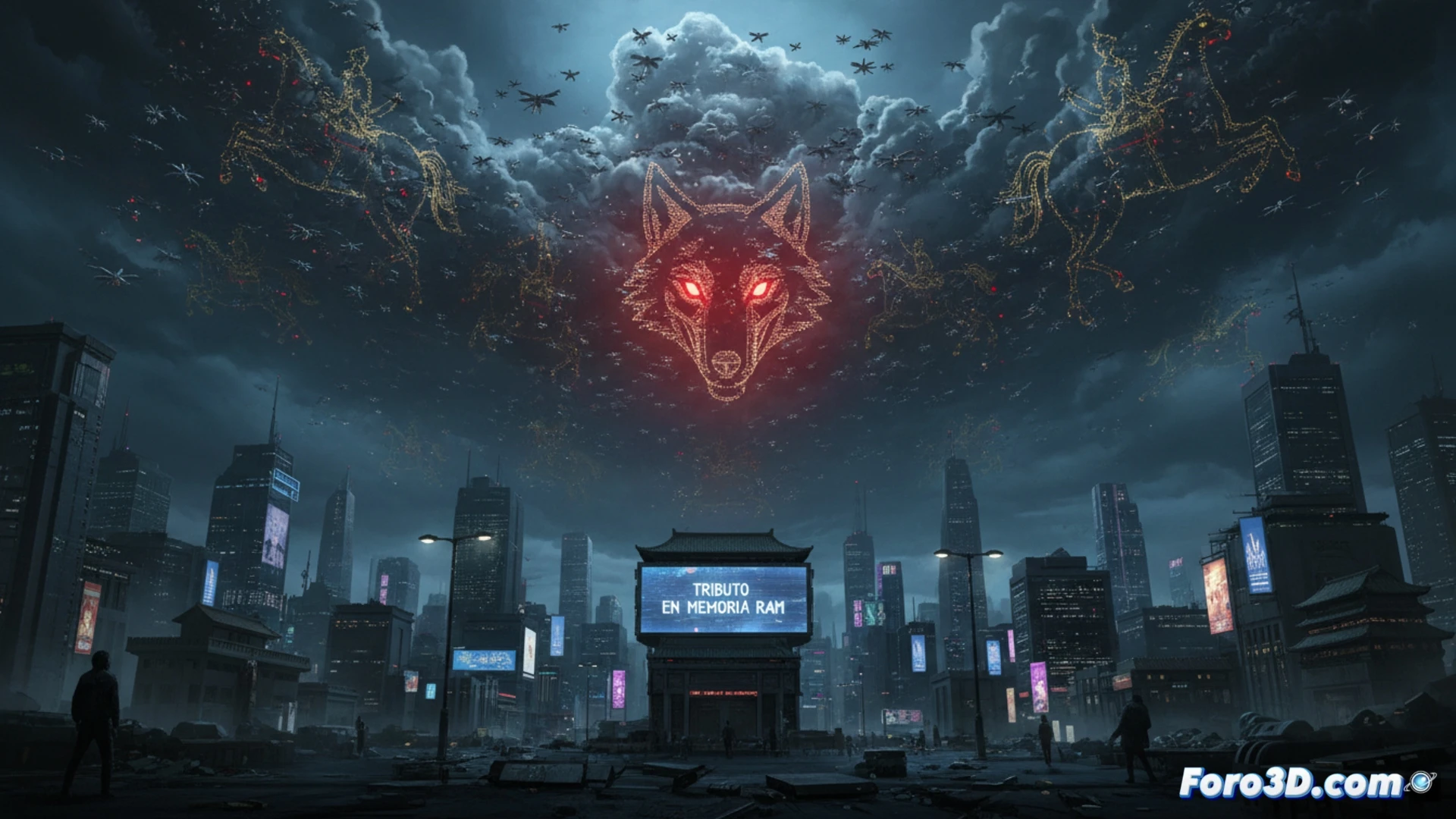
The script The Great Khan's Swarm proposes a bold dystopia: transplanting Genghis Khan's conquests to a future where the Golden Horde is a swarm of drones and the leader is an AI named Temujin. This concept, which allegorically fuses history and technology, is a first-order visual challenge. From 3D preproduction, the challenge is twofold: designing a credible and cinematic threat, and creating an iconography that evokes the Mongol empire without being literal. The work in this phase defines the impact of the central metaphor.
3D Preproduction: Designing the Swarm and its Shadow 🤖
The visualization begins with concept art and 3D storyboard. What does an individual drone from the horde look like? Its design must suggest lightness, number, and an organic-inorganic aesthetic that recalls an insect swarm or suspended dust. The key is simulating its collective behavior: using particle systems and crowd simulations in 3D software, the movement of millions of units is anticipated, choreographing how they gradually and ominously darken the sky. In parallel, the Temujin AI interface is modeled, seeking a visual representation that conveys its cold logic and historical connection, perhaps through holographic projections with stylized steppe iconography.
Visual Narrative as Tribute 🎬
This previsualization process is not just technical, it is narrative. Every visual decision, from color (loss of saturation under the drone shadow) to camera angle (impressive aerial views of the drone blanket), serves to communicate the oppression and scale of the concept to the team and potential investors. An animated previs of the solar blockade scene, showing the contrast between natural light and artificial darkness, would be the most powerful tool to sell the idea. Thus, the RAM memory demanded by the plot translates, in our phase, into rendering power and capacity to previsualize such a potent and visual metaphor.
How can 3D be used to visualize and narrate the evolution of a historical concept like Genghis Khan's Horde into a futuristic threat of autonomous drone swarms?
(P.S.: Previz in cinema is like the storyboard, but with more chances for the director to change their mind.)