China's 15th Five-Year Plan, in effect until 2030, has omitted an explicit mention of additive manufacturing, an apparently drastic change from its predecessor. This absence is not a deprioritization, but a signal of strategic maturation. 3D printing is no longer an end in itself, but a fundamental technological layer integrated into larger systems. The new approach positions it at the critical convergence between artificial intelligence, digital infrastructure, and advanced manufacturing, paving the way for its essential role in industrial Digital Twins.
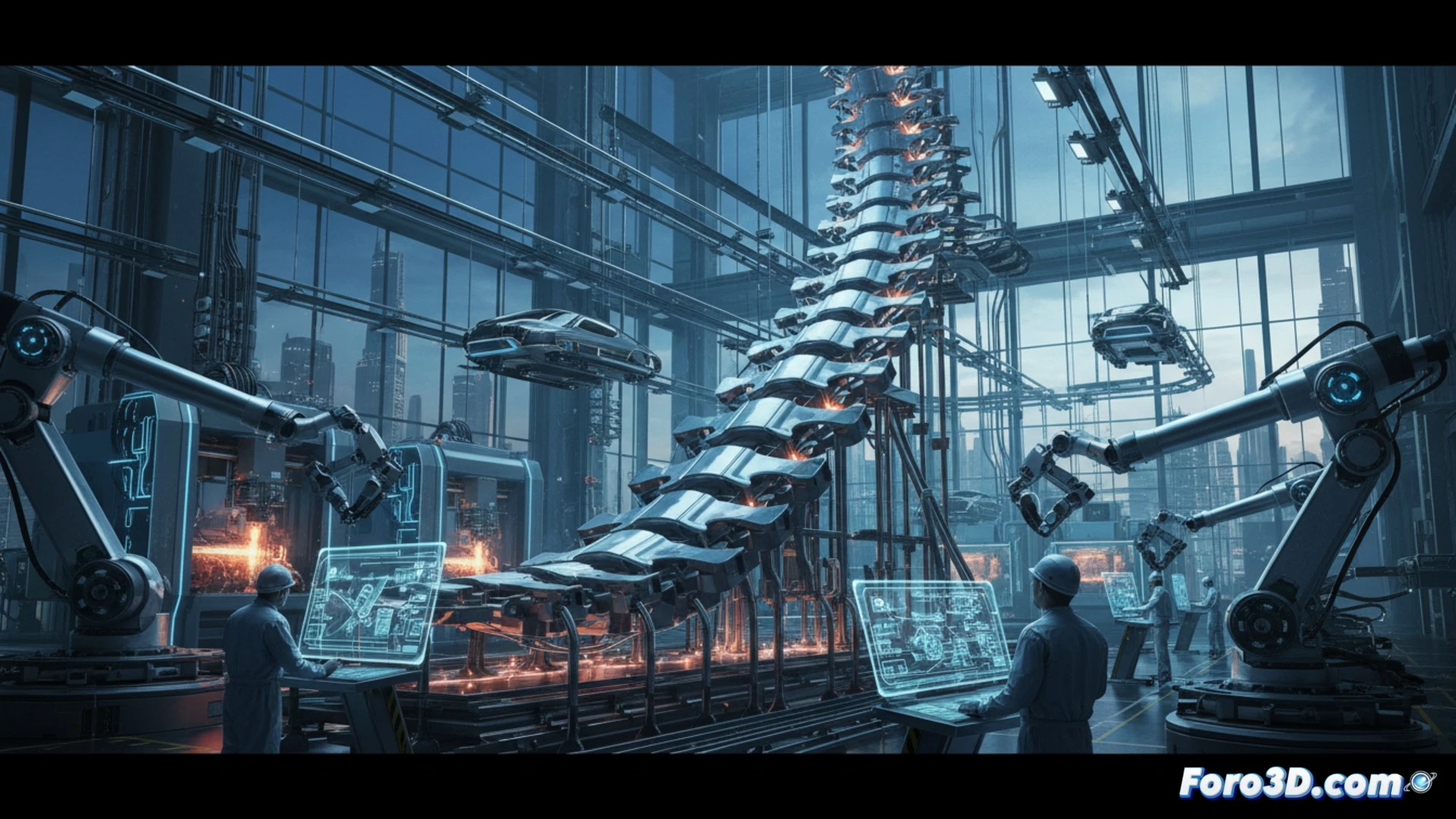
Systemic integration: AI, data, and 3D as pillars of the digital twin 🧩
The plan shifts the objective from building basic 3D printing capabilities to deploying them to achieve productivity at scale. This is where the Digital Twin concept becomes operational. Additive manufacturing becomes a critical node within an integral virtual model. This twin, powered by real-time data and optimized by AI, replicates not only a product, but the entire supply chain and manufacturing process. 3D printing provides the flexibility and ability to materialize complex digitally optimized designs, allowing simulation and validation in the virtual environment before large-scale physical production, reducing risks and accelerating innovation.
The silent maturity of a key technology 🤫
The lack of explicit mention in the official document is, paradoxically, the greatest demonstration of the importance it has acquired. Additive manufacturing has ceased to be an isolated initiative to become an assumed structural component, like electronics or robotics today. Its integration into frameworks such as AI Plus and supply chain security demonstrates that its value no longer lies in the technology per se, but in its ability to enable industrial Digital Twins. China does not promote it; it uses it as an invisible backbone for manufacturing transformation.
How is China redefining its advanced manufacturing strategy by prioritizing Digital Twins over additive manufacturing in its national planning, and what implications does this shift have for the global 3D industry?
(P.S.: My digital twin is currently in a meeting, while I'm here modeling. So technically, I'm in two places at once.)