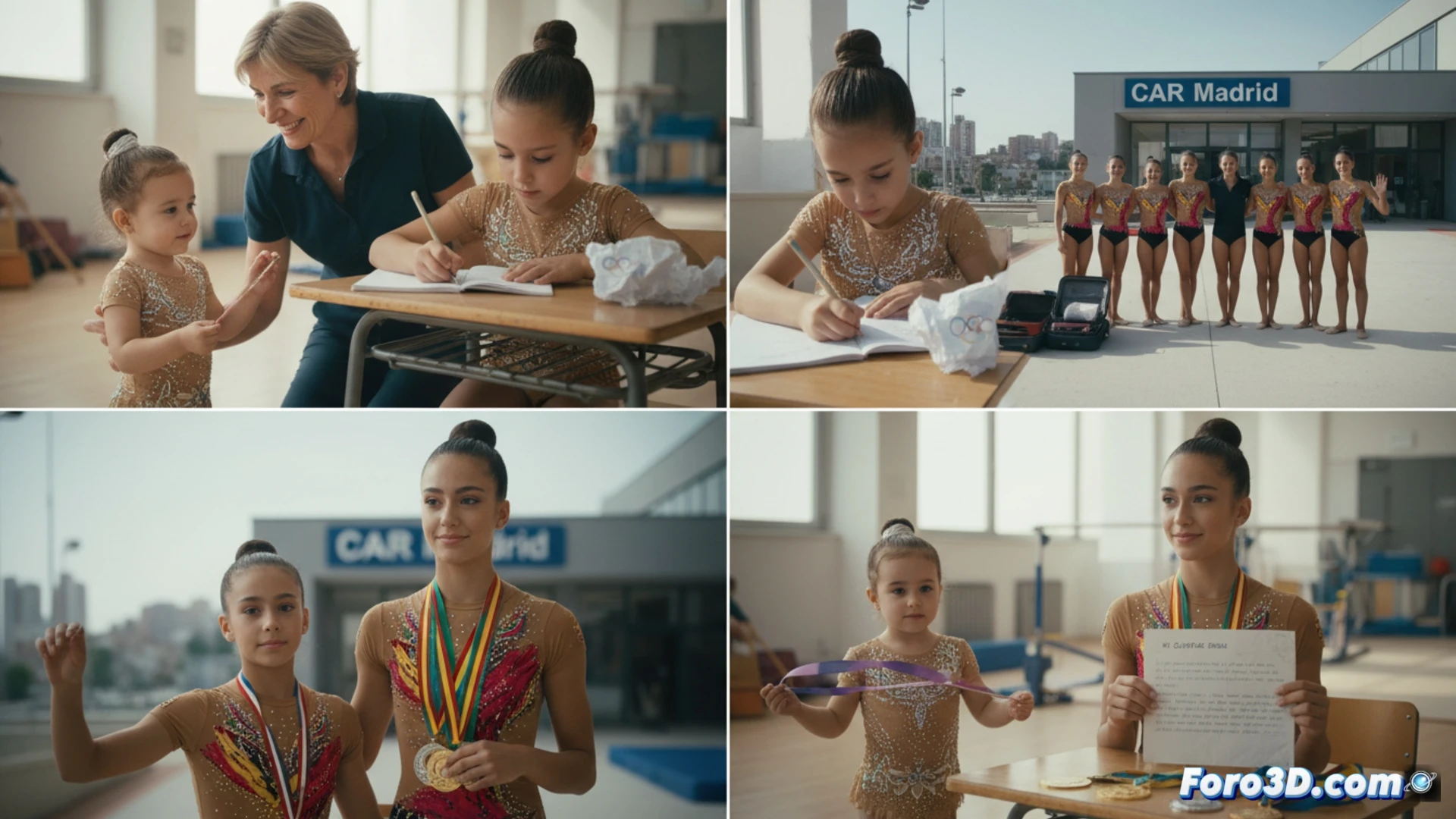
The story of Inés Bergua, Spanish rhythmic gymnastics champion, is a tale of sacrifice and determination. At just thirteen years old, she left her native Huesca to join the CAR in Madrid, pursuing an Olympic dream written at ten. Today, with a palmarés full of medals, her trajectory exemplifies the pursuit of excellence. On this path, beyond talent and dedication, technology has become an indispensable ally to achieve the perfection demanded by the elite.
3D Biomechanics: the digital map to technical perfection 🗺️
High-competition training can no longer be understood without 3D biomechanical analysis. Motion capture systems and reconstruction software allow decomposing every jump, turn, and balance of a gymnast like Bergua. This technology generates an exact digital model that quantifies angles, speeds, and forces. Coaches can thus optimize technical gestures with millimeter precision, identify energy inefficiencies, and work on injury prevention by analyzing joint loads. Visualizing the ideal routine in 3D provides a clear reference for the athlete.
When the dream is built with data and dedication 💎
The journey from that school essay to the international podium symbolizes the fusion between human dream and technological precision. 3D tools do not replace the illusion, sacrifice, or gym hours, but they offer a smarter and safer path to utopia. They allow translating the coach's intuition and the athlete's sensation into objective data. For elite athletes, this synergy between passion and technology is what transforms an aspiration, like Inés's, into a tangible medal.
How is 3D scanning and printing technology revolutionizing the design and customization of apparatus in rhythmic gymnastics to maximize athletes' performance?
(P.S.: player tracking is like following your cat around the house: a lot of information and little control)