The massive success of Ossessione by Samurai Jay at Sanremo 2026 is not just a musical phenomenon. Behind its music video inspired by From Dusk Till Dawn and its visual impact lies a production process where 3D technology is key. This case exemplifies how digital scenography and previsualization have become indispensable for creating audiovisual pieces that capture global attention and dominate digital platforms.
3D Previsualization and Mapping: Planning a Viral Phenomenon 🎬
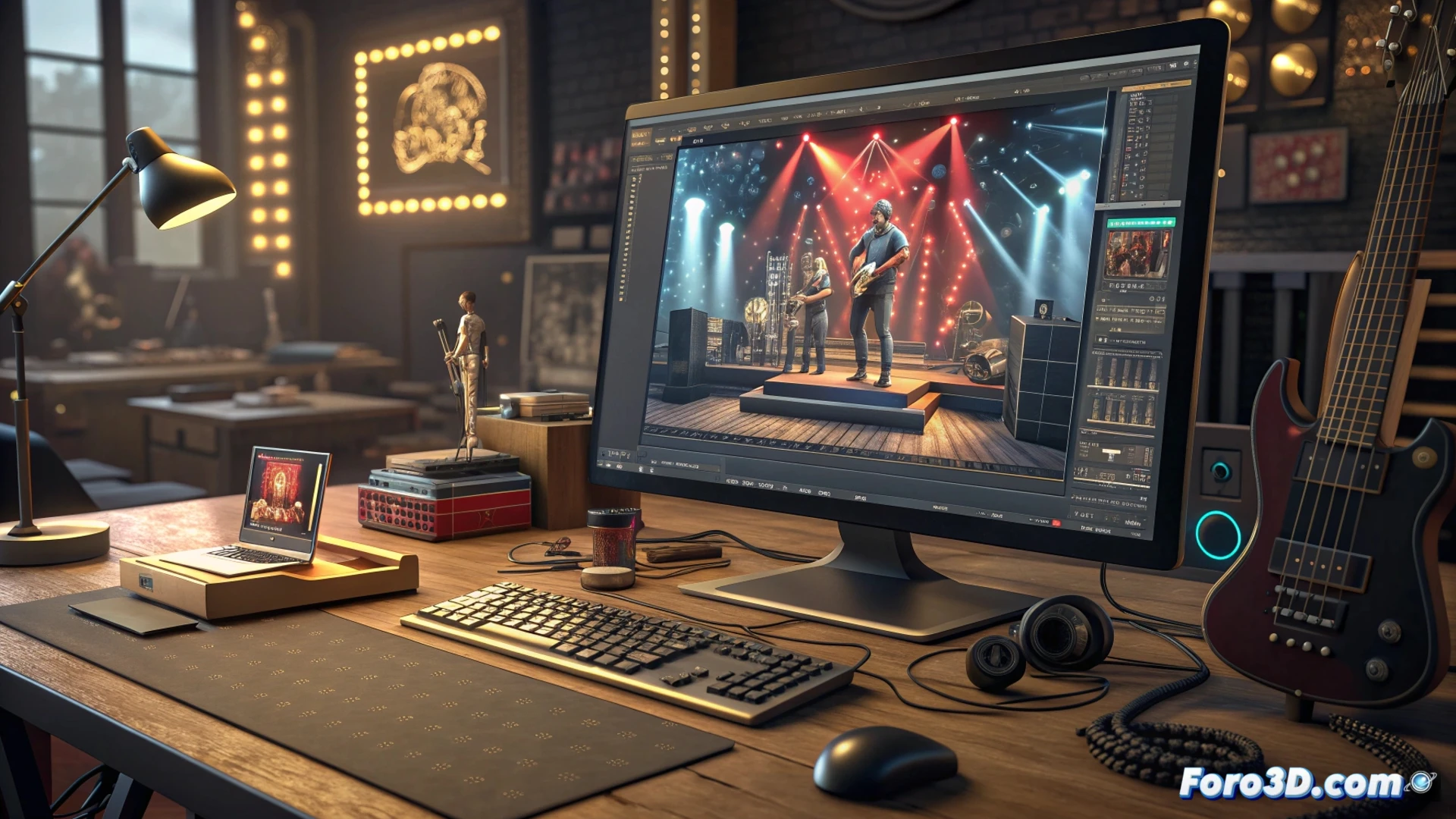
Before shooting a scene, 3D previsualization tools allow designing and testing every shot, angle, and transition in the music video. For a concept as specific as one inspired by a movie, modeling virtual sets is crucial to define the atmosphere and ensure visual coherence. Additionally, video mapping projected onto real stages, common at festivals like Sanremo, extends this aesthetic to the live show. This meticulous technical planning is what allows transferring a complex idea into a digital format optimized for viralization on TikTok and YouTube, where visual impact is paramount.
The New Scenography: Where 3D Design Meets the Global Audience 🌍
The case of Ossessione demonstrates that scenography is no longer limited to the physical stage. It is a workflow that begins in a 3D environment and culminates on the screens of millions of users. The technology not only allows creating immersive worlds but also planning how they will be shared on social media. Thus, 3D design becomes the fundamental bridge between the original artistic vision and its consecration as a massive digital cultural phenomenon.
How are 3D modeling techniques, virtual lighting, and particle simulation integrated to create immersive digital scenographies that emotionally connect with the audience and go viral?
(PS: lighting simulation always looks better than reality... like Tinder photos)