The Six Nations tournament closed with a historic spectacle: France defeated England 48-46 in a duel with thirteen tries, where Louis Bielle-Biarrey scored four. This match, with constant changes in the score, is the perfect case study for applying 3D technology. Beyond the result, imagine how three-dimensional visualization and biomechanical analysis could break down each key play, offering a deep understanding of the performance and tactics employed on the field.
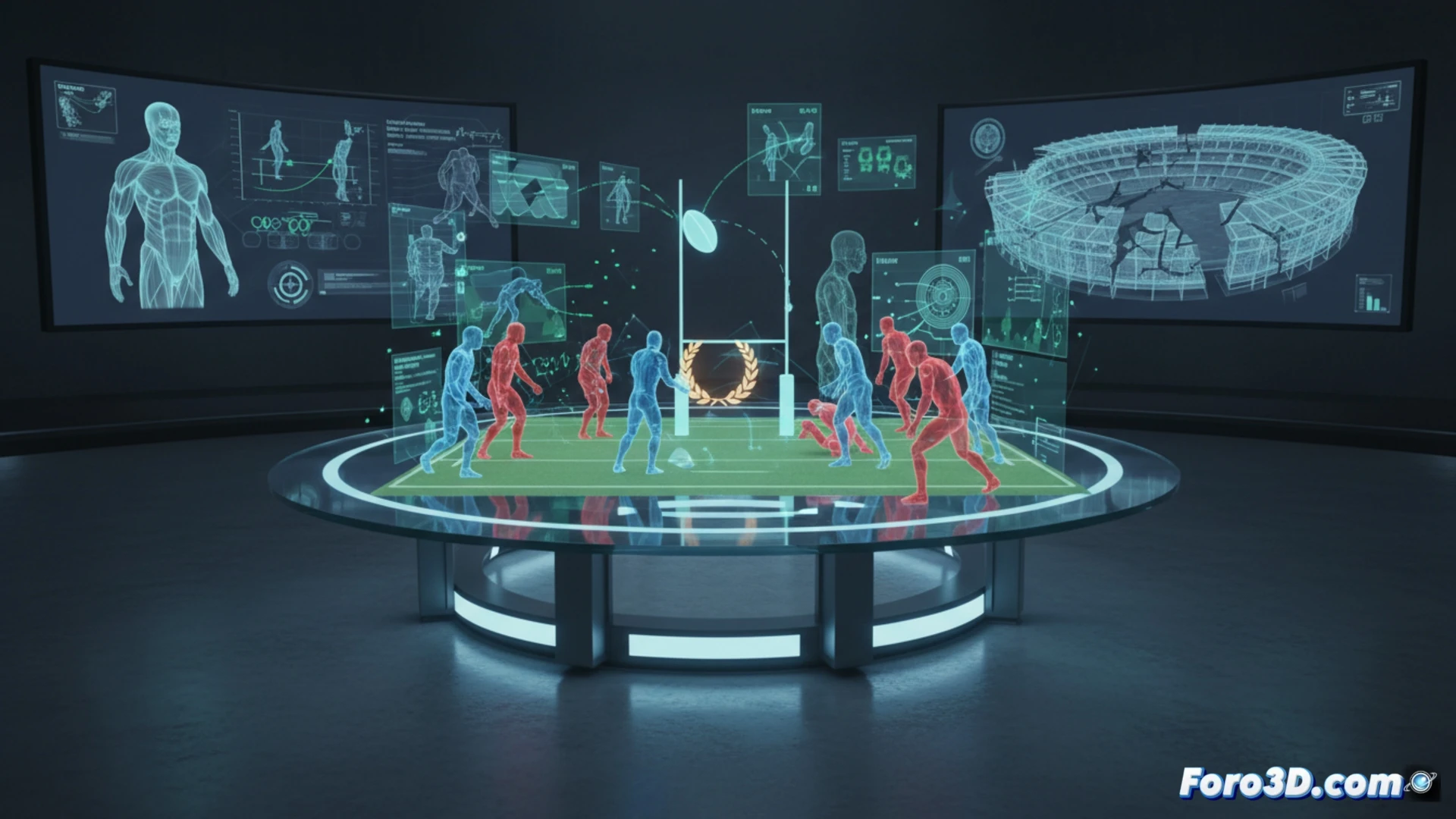
3D Visualization and Digital Twins for Tactical Analysis 🏉
The tactical richness of a match like this demands advanced analysis tools. A digital twin of the stadium, fed with tracking data, would allow recreating in 3D each of Bielle-Biarrey's tries, analyzing running angles, defensive positions, and pass lines. We could simulate tactical variants in real time. Additionally, a 3D trajectory analysis system would precisely show how the teams moved in the plays to regain the lead, identifying patterns and spaces exploited. This technology not only enriches the work of technical staff but also transforms the fan experience, bringing them onto the field.
Beyond Statistics: The Revolution in Sports Understanding 📊
Wales' victory after 1,099 days without winning also has a technical story to tell. 3D technology is not limited to illustrating what happened; it allows diagnosing the why. A 3D biomechanical reconstruction of key actions can evaluate the efficiency of a pass or the power of a tackle. Integrating this data into predictive models would help teams prepare better. The future of sports analysis lies in turning flat data into immersive three-dimensional experiences that reveal the complexity and beauty of sports like rugby.
How could 3D modeling and computer simulation help us analyze and optimize the key plays that defined France's victory in the Six Nations?
(PS: 3D tactical simulation never fails, players on the field do)