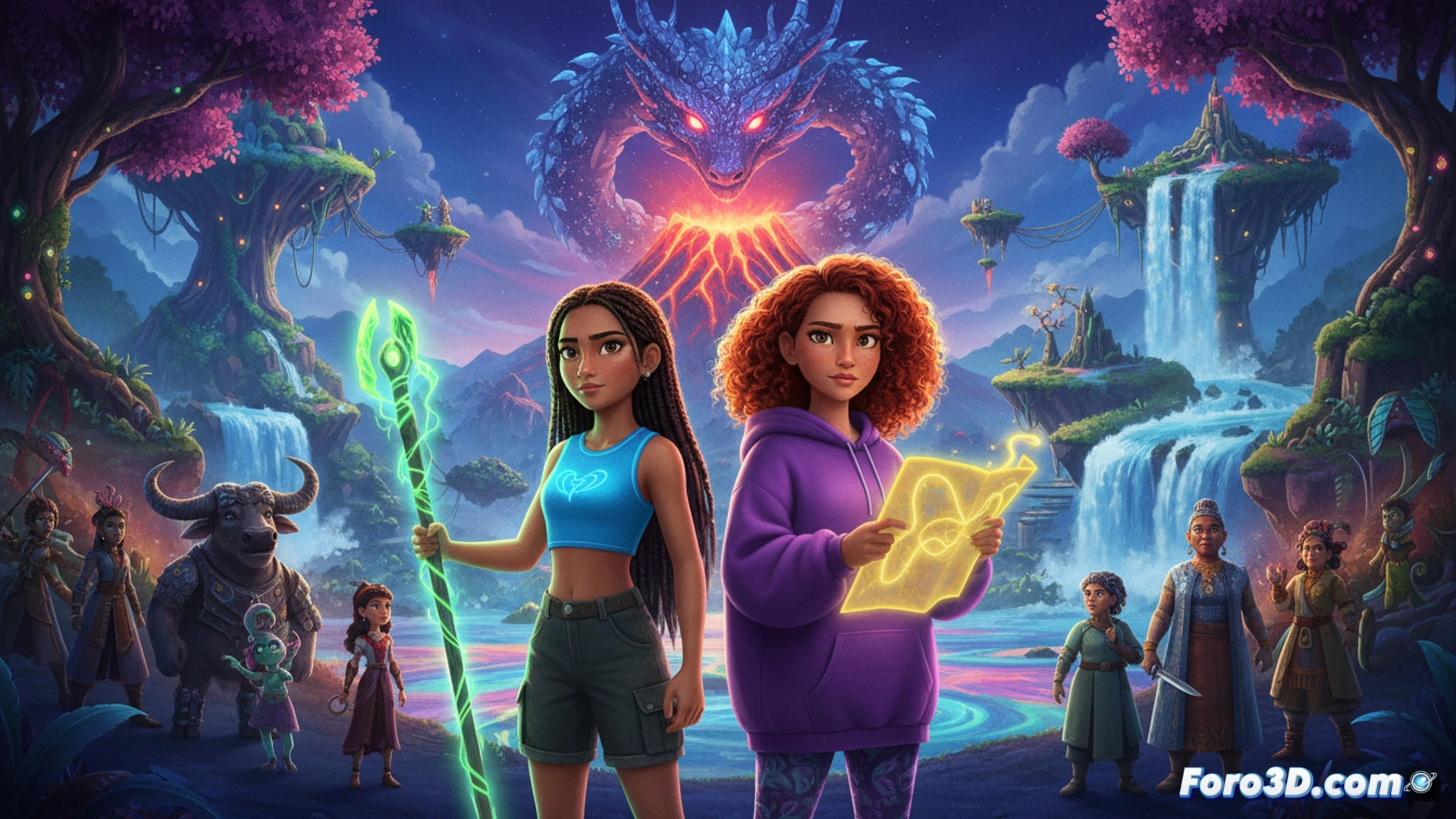
DreamWorks Animation unveils the trailer for Forgotten Island, an original adventure that transports two friends to a magical world based on Filipino folklore. Following the success of Puss in Boots: The Last Wish, the team is betting once again on a deeply emotional narrative, where the price of returning home is forgetting. Technically, the film promises a bold fusion of CGI with a pictorial and neon aesthetic inspired by the 90s, a production challenge that we analyze.
Hybrid Pipeline: From Pictorial to Neon in CGI 🎨
The decision to combine CGI with a pictorial texture and neon palettes is not merely decorative. It involves a complex rendering and compositing pipeline, where shaders and light passes are manipulated to break digital perfection and emulate brushstrokes and analog luminescence. This approach, evolved from the style of The Last Wish, requires very precise 3D previsualization to balance the fantasy of the world of Nakali with the emotional palette of the story. The inspiration from Filipino folklore translates into character and environment designs that must work both in a volumetric 3D model and in stylized shots.
Technology in Service of Emotional Conflict 💡
The core of the story, the dilemma between returning home or preserving memories, finds a parallel in the techniques used. A neon and dreamlike aesthetic can visualize the transience of memory, while a warmer pictorial finish could represent the solidity of the bond. Thus, technical decisions on lighting, texturing, and compositing become direct narrative tools, demonstrating that in cutting-edge animation, art and technology are a single language to move the viewer.
How does Forgotten Island use cinematic lighting to visualize memory and folklore as active narrative elements?
(P.S.: Previz in film is like the storyboard, but with more chances for the director to change their mind.)