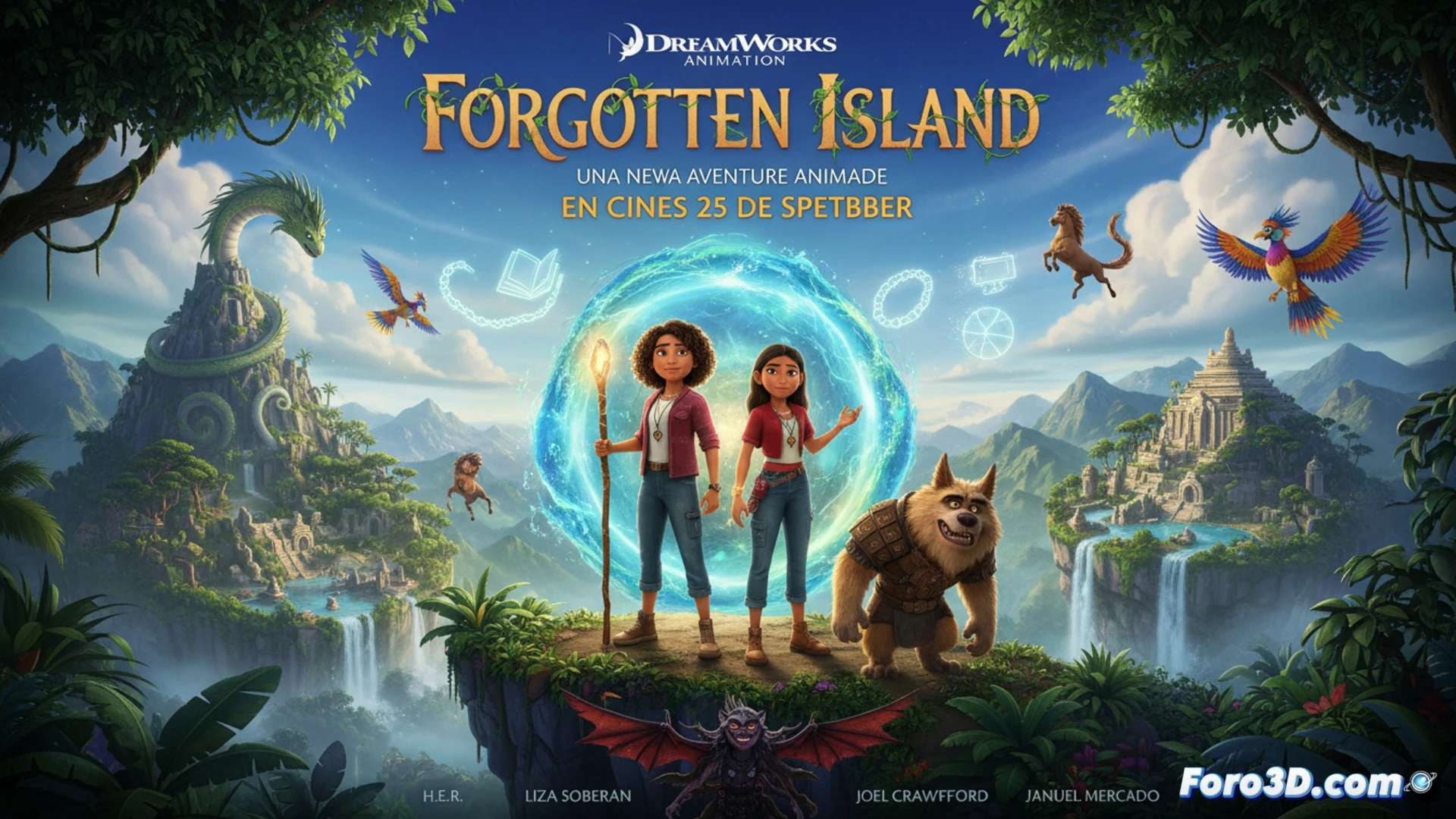
DreamWorks Animation has unveiled Forgotten Island, its upcoming adventure arriving in September. Directed by Joel Crawford and Januel Mercado, the duo behind the visually groundbreaking Puss in Boots: The Last Wish, the film transports two friends to the mythical island of Nakali. This setting, populated by beings from Filipino mythology, represents a fascinating testing ground for 3D design and character animation, promising a style as distinctive as it is emotional.
From 2D art to 3D models: designing mythological creatures 🎨
The greatest technical and artistic challenge lies in translating into 3D beings like the fearsome Manananggal or the clumsy werewolf dog. This process requires an exhaustive conceptualization phase, respecting folkloric origins, to then build digital models with topologies that allow expressive and dynamic animations. The team's legacy, accustomed to blending pictorial styles with fluid animation in The Last Wish, suggests we will see an innovative visual treatment. Texturing and lighting will be key to bringing to life a fantastic ecosystem that must feel both organic and magical.
Animation as a vehicle for memory and emotion 💫
Beyond technical virtuosity, the visual narrative must sustain the central conflict: friendship against forgetting. Animation allows exaggerating expressions, creating visual metaphors, and using the color palette to reflect emotional states. The protagonists' journey in a spectacular 3D world will serve to contrast with the harshness of their dilemma, using the medium not only to amaze, but to move and delve into universal themes.
How can DreamWorks' Forgotten Island redefine the representation of non-Western mythology in mainstream animation without falling into cultural appropriation?
(P.S.: Previz in film is like the storyboard, but with more chances for the director to change their mind.)