The tragic attack by a great white shark in Peake Bay, South Australia, represents a complex event to analyze. Beyond the human impact, research seeks to understand the exact dynamics of the incident. Forensic 3D reconstruction technology emerges as a key tool to objectively document and analyze the scene, allowing a precise virtual recreation that helps unravel the facts without revictimization.
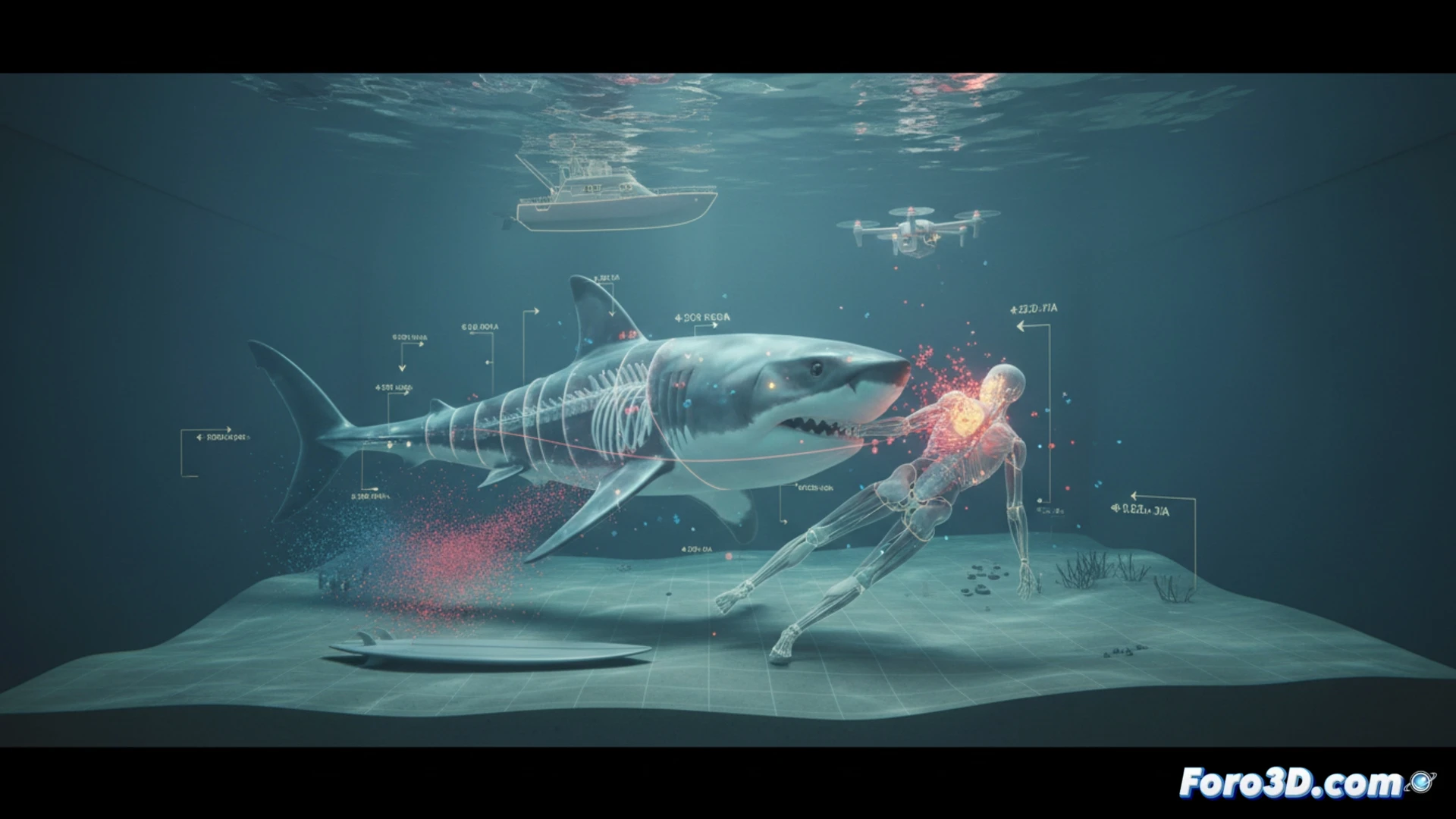
Methodology for a precise virtual recreation 🔍
The reconstruction would begin with capturing environmental data using aerial and terrestrial photogrammetry, generating a georeferenced 3D model of the beach, coastline, and bathymetry of shallow waters. Historical environmental condition data (tides, visibility) would be integrated. Using game engines, avatars of the victim and witnesses would be positioned according to statements, calculating their fields of vision and distances. The shark's trajectory and size would be modeled based on ichthyology experts. This allows simulating the sequence from multiple angles, evaluating hypotheses about the animal's approach and visibility from the shore.
Beyond the scene: evidentiary and preventive value ⚖️
This 3D model becomes a enduring technical document that can be reviewed by experts, judges, and biologists. It facilitates a clear understanding of the facts in a trial, moving away from sensationalist descriptions. Additionally, spatial analysis can identify patterns or specific environmental risk factors in the area, contributing to more scientific prevention strategies for swimmer safety, transforming the tragedy into applicable knowledge.
How can forensic 3D reconstruction be used to determine the exact sequence of events and the dynamics of the attack in the Peake Bay incident?
(P.S.: In scene analysis, every scale witness is an anonymous little hero.)