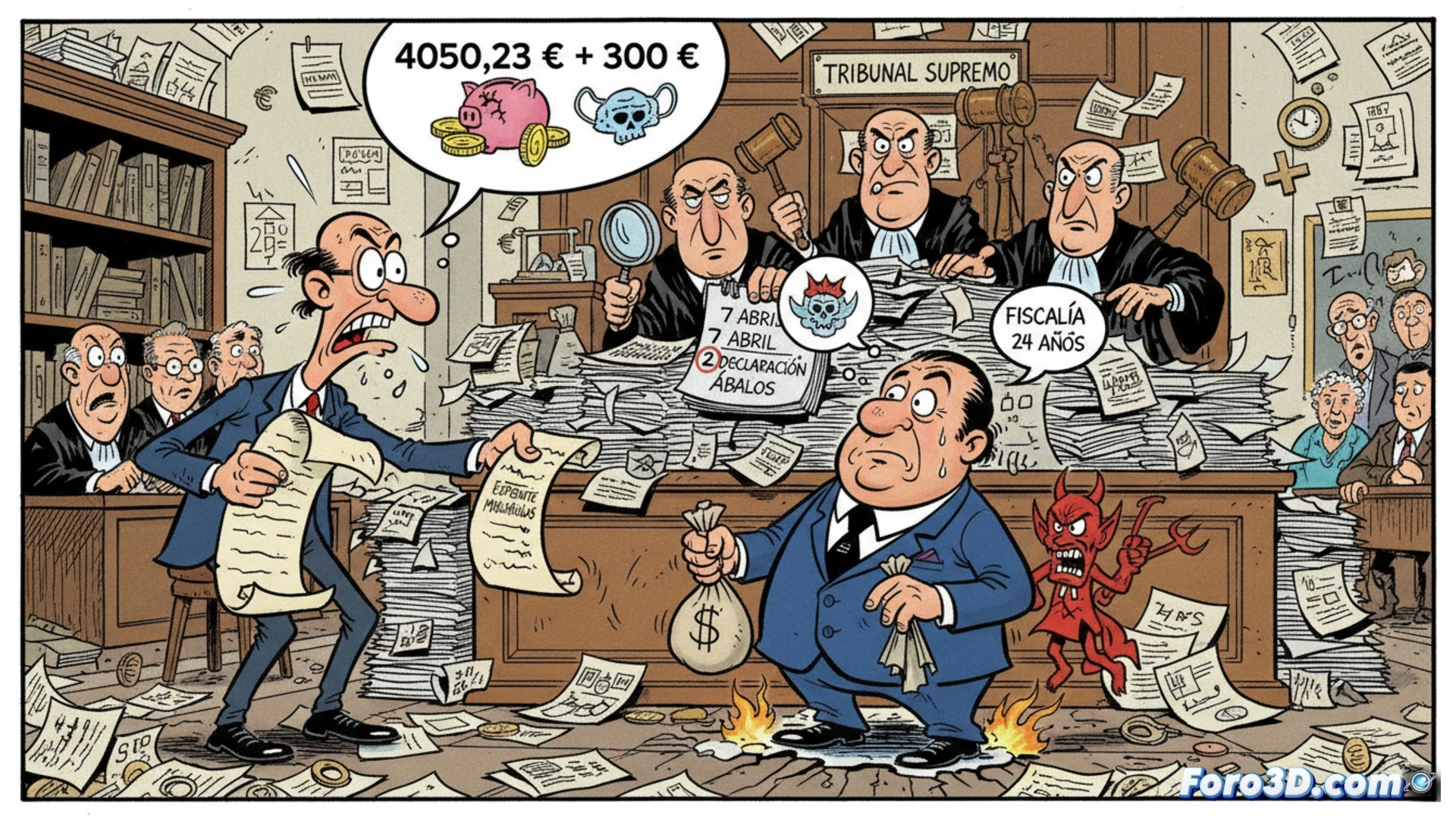
The recent debt claim against former minister José Luis Ábalos, within the masks mega-trial, exemplifies the procedural complexity of these cases. Beyond the news, a technical question arises: how can we visualize and comprehensively analyze these legal networks with multiple ramifications? The answer may lie in forensic 3D documentation and reconstruction methodologies, transferred from the analysis of a physical crime scene to the recreation of a digital legal and financial scene.
Procedural Digital Twin: Integration of Evidence and Timeline in 3D 🧩
Imagine an interactive 3D model of the case. Not of a physical place, but of its legal structure. An environment in Unreal Engine or Unity where central nodes represent the accused and institutions. From them, three-dimensional timelines would branch out linking milestones: the payment request for €4050, the declaration date in the Supreme Court, the prosecutor's request for 24 years. Each node would have attached scanned documents georeferenced at their exact moment. Economic transactions would be visualized as flows between actors, created from investigation data. This reconstruction allows non-linear navigation, discovering connections that in a physical file might go unnoticed.
Technical Precision for Public Transparency 🔍
This approach is not a speculative simulation, but a precision tool based on documentary evidence. Just as photogrammetry captures every detail of an object, this digital twin would integrate every judicial order, invoice, and statement. Its value is twofold: for experts, it offers a visual analysis of causalities; for citizens, it transforms an opaque case into an understandable narrative. 3D technology thus demonstrates its potential to raise the standard of clarity in justice.
How can the metric precision and evidentiary reliability of a forensic 3D reconstruction generated from flat documentation, such as plans and photographs of a judicial case, be validated?
(PD: In scene analysis, every scale witness is an anonymous little hero.)