The recent appeal verdict in the murder case of Professor Samuel Paty has focused the debate on the intentionality of the acts. Justice must discern between a simple criminal association and complicity in a terrorist crime, a subtle but crucial distinction. In this context, forensic 3D reconstruction technology emerges as a fundamental tool. It allows judges and juries to visualize and analyze the scene with objective precision, helping to determine the real extent of each defendant's involvement beyond testimonies.
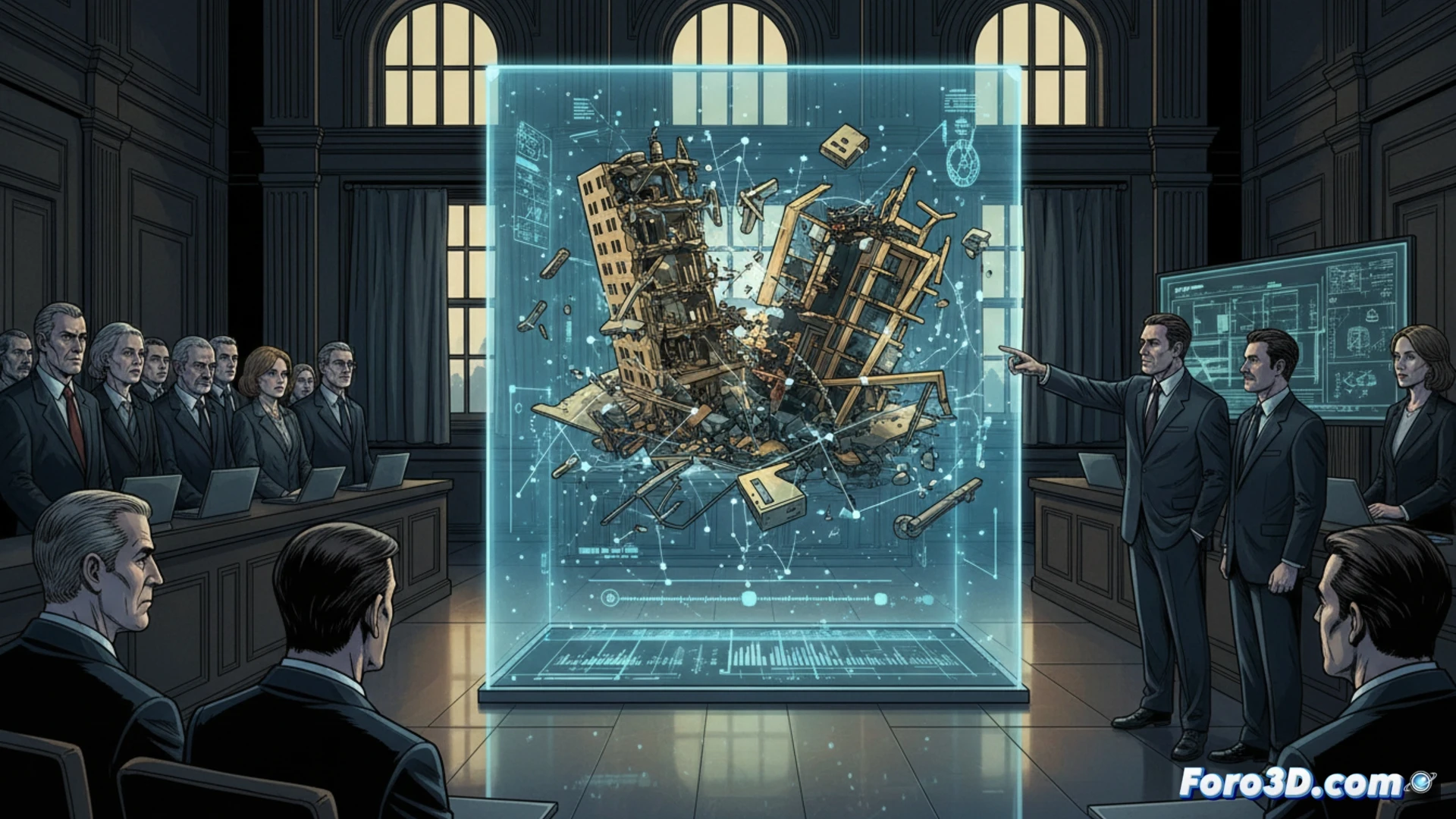
Technical Tools for an Objective Evaluation 🔬
Documenting a scene using photogrammetry or laser scanning generates an exact and immutable digital model. This asset is vital in long trials where memory can fail. With this model, key forensic analyses can be performed: simulate approach or escape trajectories, establish visual fields to verify what a witness could or could not see, and recreate the sequence of events dynamically. In cases like the one mentioned, these simulations could help evaluate whether the defendants' actions denoted prior coordination with terrorist intent or, on the contrary, a more circumstantial and uncoordinated intervention.
Beyond Recreation: Establishing the Degree of Guilt ⚖️
The true power of 3D reconstruction is not just showing what happened, but providing a spatial and temporal framework to interpret the evidence. It offers a neutral common ground where defense and prosecution can debate based on measurable data. This technical objectivity can be decisive in modulating sentences, helping the court weigh factors such as premeditation, awareness of the act, or proximity to the main event. In short, it is a powerful tool to approach judicial truth and more solidly substantiate the severity of penalties.
Would you place scale witnesses before scanning?