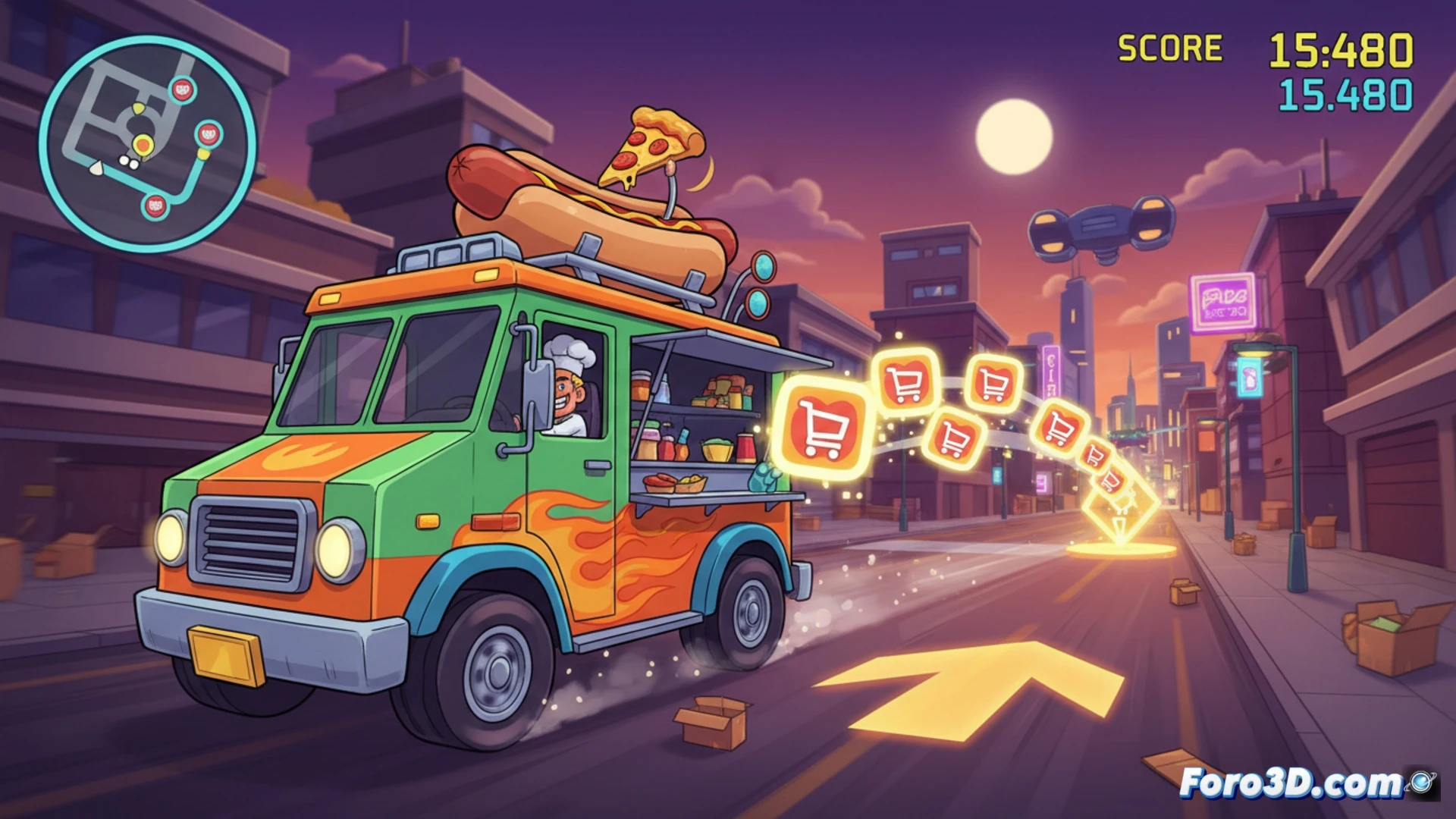
Steam continues to consolidate itself as a key platform for the distribution of independent video games, offering free titles to claim permanently. A recent case study is Food Drive: Race Against Hunger, a driving arcade developed by Gamers for Good. With a 93% positive reviews, this game demonstrates how a simple but well-executed concept can resonate with players, combining accessible gameplay with a charitable purpose integrated into its essence.
Arcade Mechanics and Free Distribution Strategy 🚚
From a development perspective, Food Drive is based on a proven arcade mechanic: four-minute timed missions to collect and deliver packages, evoking classics like Crazy Taxi. Its technical success lies in refining this formula, adding a vehicle customization system that fosters engagement. The decision to be permanently free-to-play on Steam is an analyzable publishing strategy. It not only maximizes visibility and player base, but also aligns the model with the charitable objective of the studio, Gamers for Good, which supports causes against hunger. This approach transforms the download into an act of direct participation in their cause.
The Impact of Purpose on Game Reception 🤝
The integration of a social cause at the core of the project goes beyond a mere note in the description. It functions as a cohesive element that influences player perception and the narrative around the game. The very positive reviews not only praise the addictive gameplay, but often highlight the charitable purpose. This suggests that, in the current ecosystem, players positively value developers who offer complete experiences with tangible added value, demonstrating that solid design and positive intent can be a successful duo in independent publishing.
How can a free arcade video game like Food Drive use simple mechanics and a charitable cause to achieve significant impact on visibility and engagement within the Steam community?
(P.S.: a game developer is someone who spends 1000 hours making a game that people complete in 2)