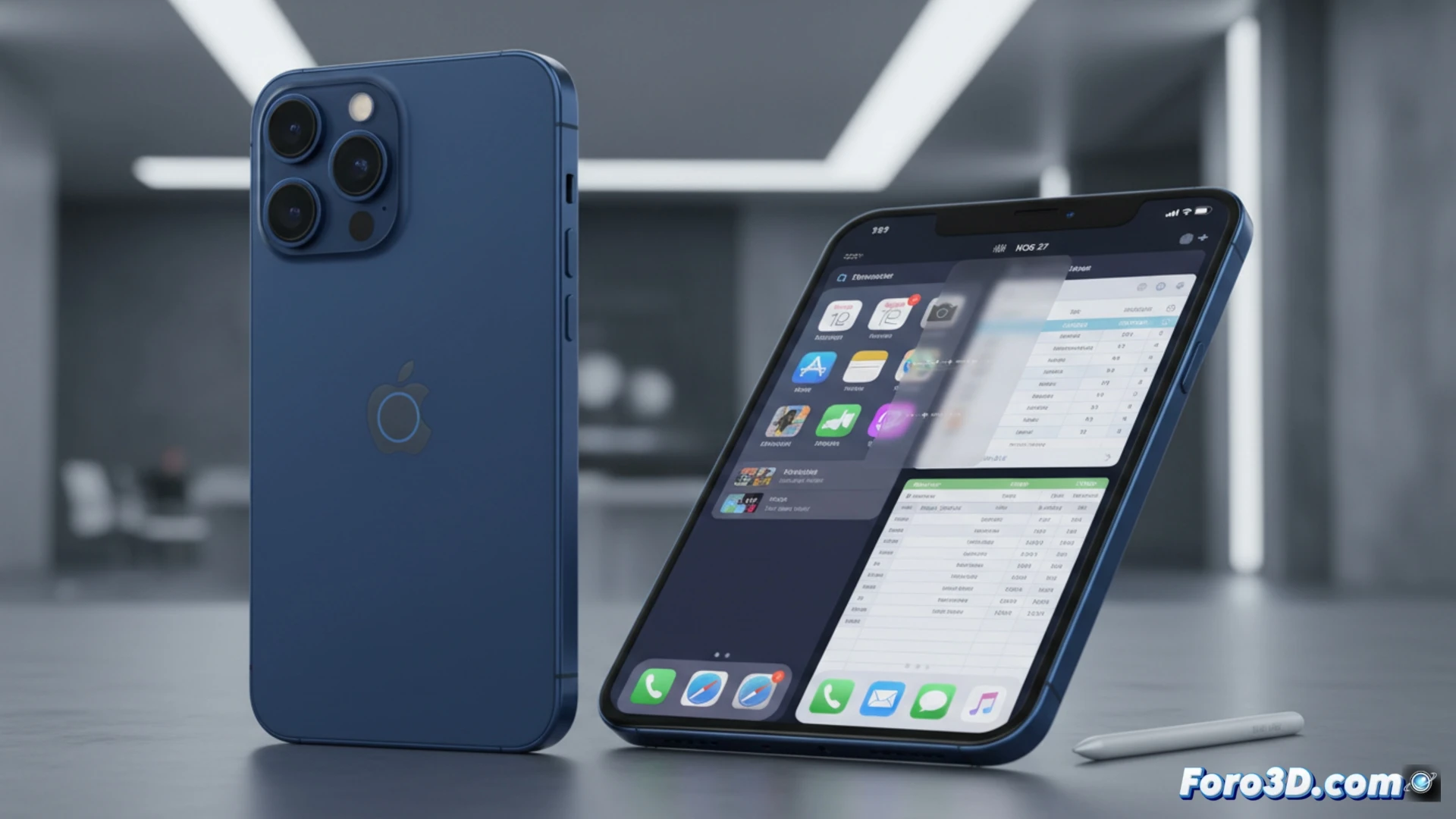
According to the latest rumors, Apple is preparing its entry into the foldable smartphones market for 2026. This iPhone, with a form factor similar to the Galaxy Z Fold, promises a total redesign with iOS 27, advanced productivity features, and a significant change: the return of Touch ID replacing Face ID. With an estimated starting price of $1999, its launch could redefine expectations for high-end mobile hardware. 📱
Specifications and challenges for creative hardware ⚙️
The announced technical keys pose challenges and opportunities. The large inner screen will require a chipset with extra graphics power to handle intensive multitasking and, potentially, 3D visualization applications with greater fluidity. The switch to Touch ID suggests a deep redesign of the front circuitry. The durability of the folding mechanism will be the critical factor for professional users who depend on the reliability of their tool. Compared to the current market, Apple will need to overcome the perceived fragility barrier in foldables and offer sustained performance in rendering or basic modeling tasks on the go.
Reflections on the future of mobile 3D 💭
This move by Apple validates the foldable format as a serious platform for productivity, which includes 3D creation software. A large and portable screen can boost more viable mobile sculpture or CAD applications. However, the high price could limit its mass adoption among creators, keeping it as a niche tool. Its success will depend on the iOS 27 software experience truly leveraging the unique hardware, opening new possibilities for on-the-go 3D workflows.
How could the foldable screen and the hypothetical A19 chip of a 2026 iPhone revolutionize the visualization and editing of 3D models on mobile devices?
(P.S.: remember that a powerful GPU won't make you a better modeler, but at least you'll render your mistakes faster)