Conventional radiotherapy may be nearing its end thanks to FLASH, a revolutionary technique developed by Theryq and CERN. This innovation delivers the complete radiation dose in less than a tenth of a second, instead of over multiple sessions. The amazing thing is that, despite its high power, preliminary studies indicate that it destroys tumors with significantly less damage to surrounding healthy tissue, promising more effective treatments with fewer side effects.
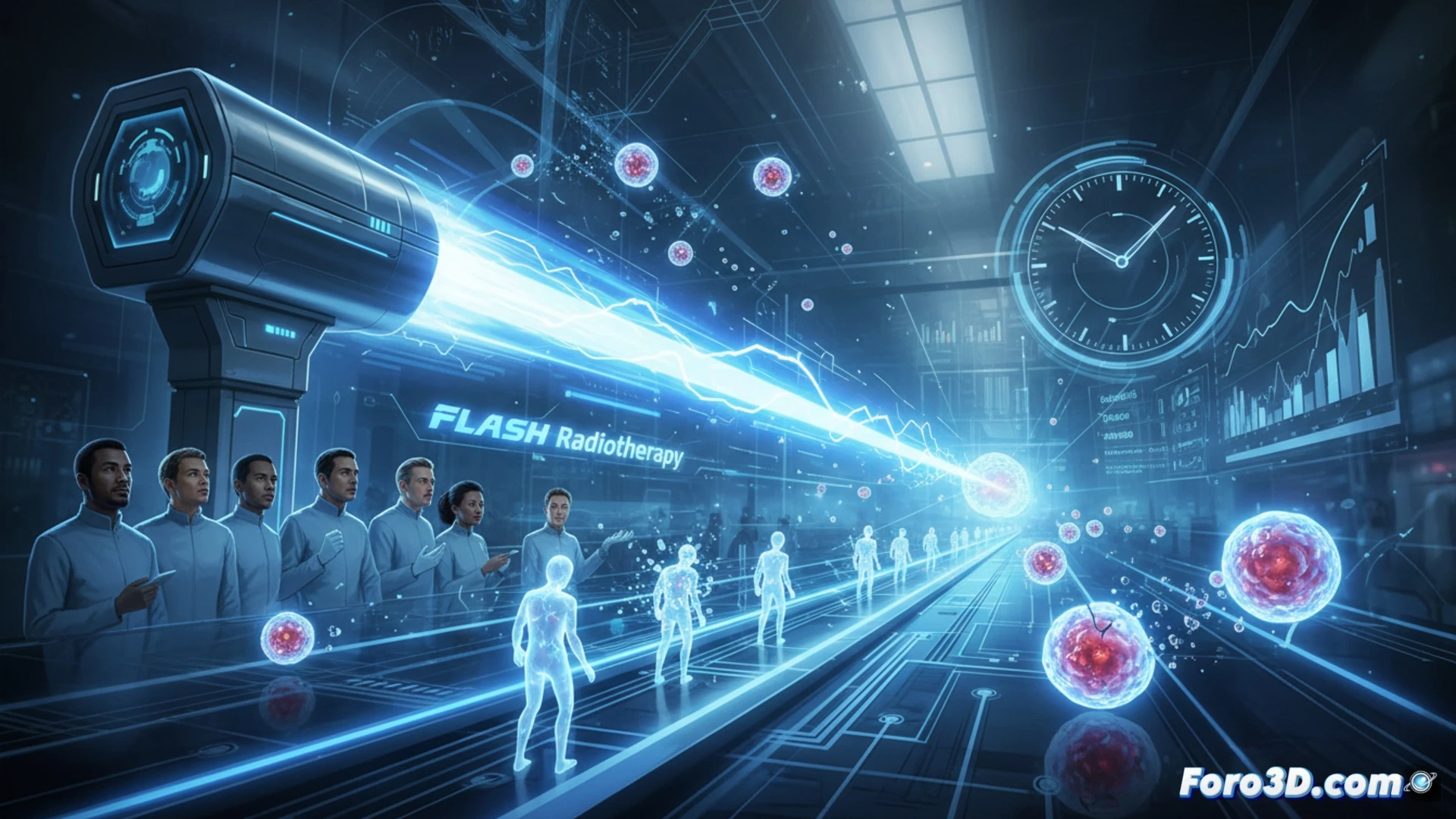
3D Modeling and Simulation: The Invisible Pillars of FLASH 🔬
The success of FLASH does not lie solely in the ultra-high-power electron beam. This is where 3D biomedicine becomes crucial. Before any treatment, precise 3D anatomical modeling of the tumor and the patient's adjacent tissues is essential. On this model, sophisticated computational simulations accurately predict how the radiation dose will be deposited in microseconds. This virtual planning allows optimizing the beam's energy and direction to maximize impact on the tumor while protecting healthy organs, a process impossible without these advanced visualization and simulation tools.
From Particle Physics to the Treatment Room ⚛️
FLASH is a paradigmatic example of how technologies created for fundamental research, such as CERN's particle accelerators, find direct social impact. The transition of this knowledge to a medical system like Theryq's FLASHKNiFE underscores the importance of interdisciplinary collaboration. If ongoing clinical trials confirm its efficacy, we will not only have a more powerful treatment, but also the possibility of democratizing access to elite radiotherapies, reducing the logistical burden for patients.
How can 3D printing of phantoms and customized positioning devices optimize the precision and validation of the novel FLASH radiotherapy?
(PS: and if the printed organ doesn't beat, you can always add a little motor... just kidding!)