Adeje, in Tenerife, hosts a pioneering construction project: the first house in the area with walls made using 3D printing. A local company has used this technology to build the structure layer by layer with a cementitious material. The initiative aims to demonstrate the advantages of the method, such as reduced timelines and waste, along with greater freedom for customized designs. It is a step towards more efficient construction models.
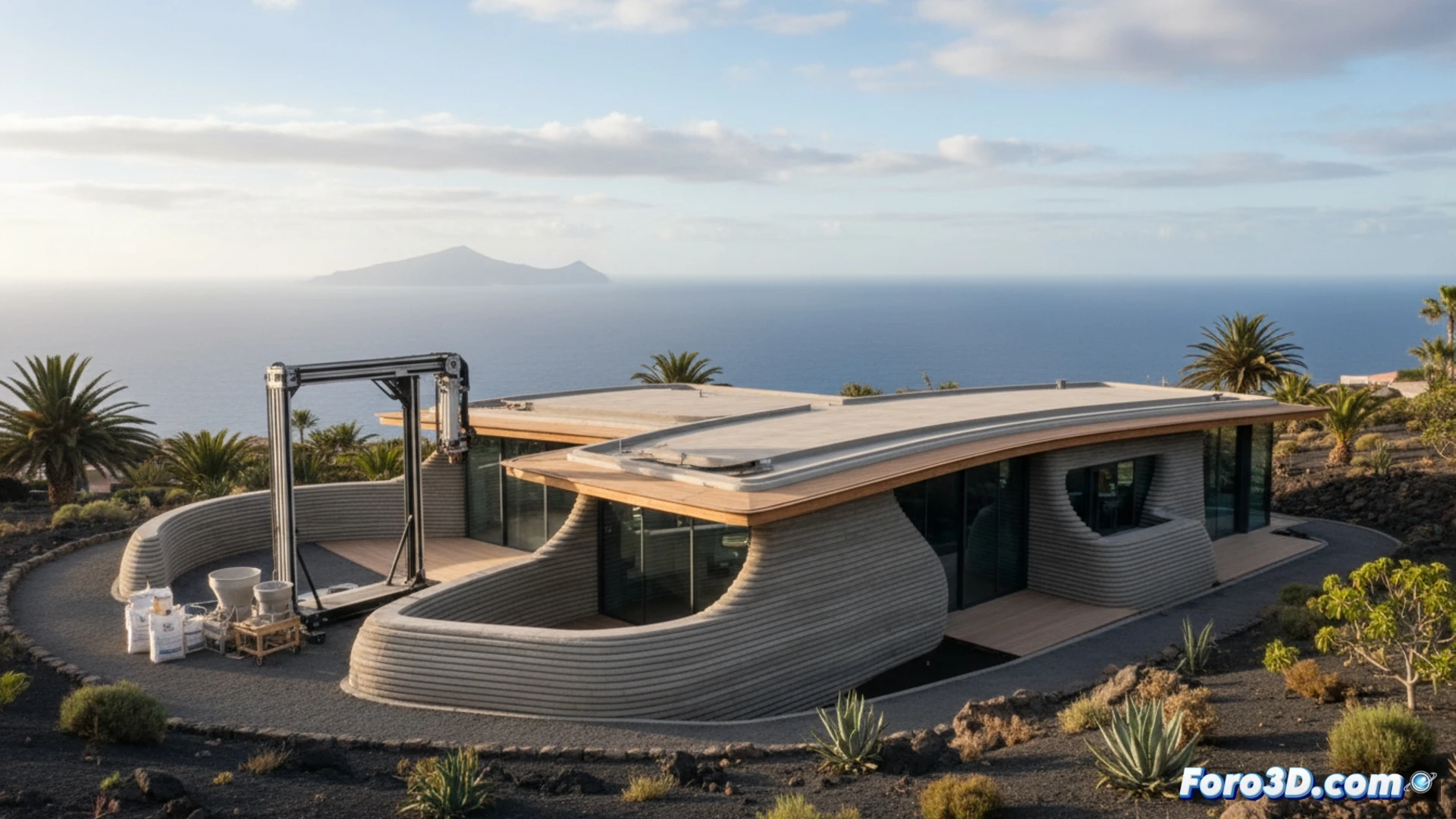
How 3D printing works applied to construction 🏗️
The process is based on a large-format 3D printer that deposits a special cement-based material with additives following a digital design. The machine automatically traces the outlines of the walls, superimposing successive layers until completing the load-bearing structure. This technique allows for executing complex curved shapes that would be costly with traditional formwork. Digital control minimizes errors and material waste, as only what is strictly necessary is used.
Goodbye to brick, hello to the cement cartridge 🧱
With this, the mason's trade could be updated: instead of leveling rows, it will be necessary to watch that the printer doesn't run out of ink or that a software error doesn't decide to add an octagonal window in the bathroom. We can already imagine future discussions on site: Have you restarted the printer? instead of Do you have the wrench?. That said, the classic this wasn't in the plans will still be valid, even if a machine says it now.