The Firefly Petunia, a genetically modified ornamental plant that glows with its own light, is not just a milestone in bioengineering. It represents a unique challenge and opportunity for scientific visualization. In the 3D niche, this living organism becomes the perfect subject for creating interactive models that break down, layer by layer, the complex biological processes that enable its constant green glow, transferring research from the laboratory to the digital sphere.
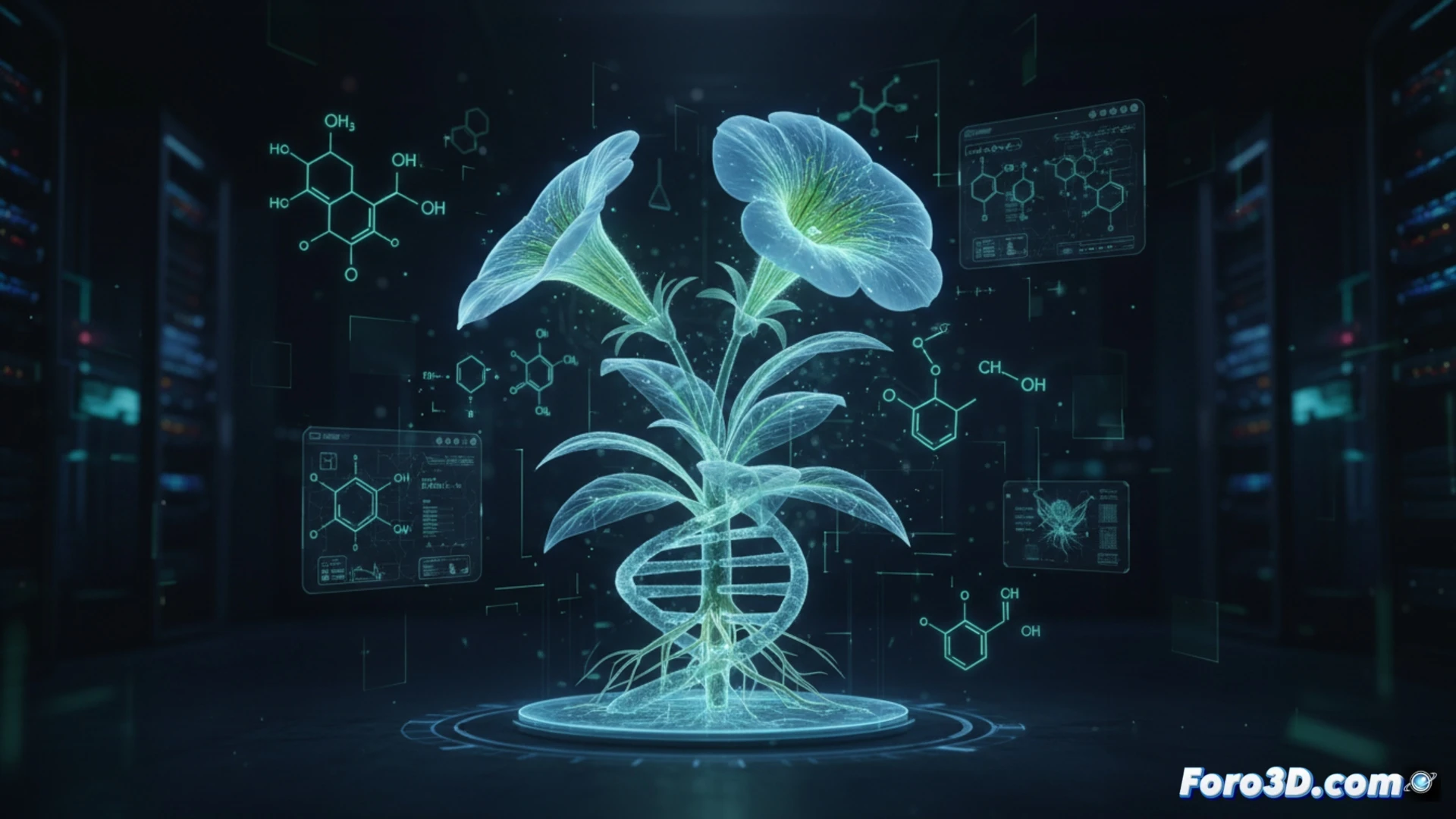
From biology to 3D mesh: visualizing genetic engineering 🔬
The true understanding of this advance lies in the microscopic details. Here, 3D modeling and animation are indispensable tools. An interactive anatomical model of the plant can be built, from the macroscopic scale to the cellular. The core would be a precise representation of the bioluminescence mechanism: a molecular model of the integrated fungal luciferin, the enzymes involved, and a simulation of the biochemical reaction that emits photons. This visualization allows researchers and students to observe gene expression and metabolic flow in an intuitive and spatial way, impossible with flat diagrams.
Beyond the image: simulation as a outreach tool 💡
These 3D models transcend the illustrative to become platforms for virtual experimentation. By allowing modification of parameters such as substrate concentration or gene expression rate in a simulated environment, effects on light intensity can be predicted without touching a real plant. Thus, the Firefly Petunia stands as a perfect bridge between advanced science and public communication, using 3D to make the invisible tangible and foster an informed debate on biotechnology applications.
How can 3D modeling and material simulation help visualize and quantify light emission in complex plant structures like the Firefly Petunia?
(P.S.: fluid physics to simulate the ocean is like the sea: unpredictable and you always run out of RAM)