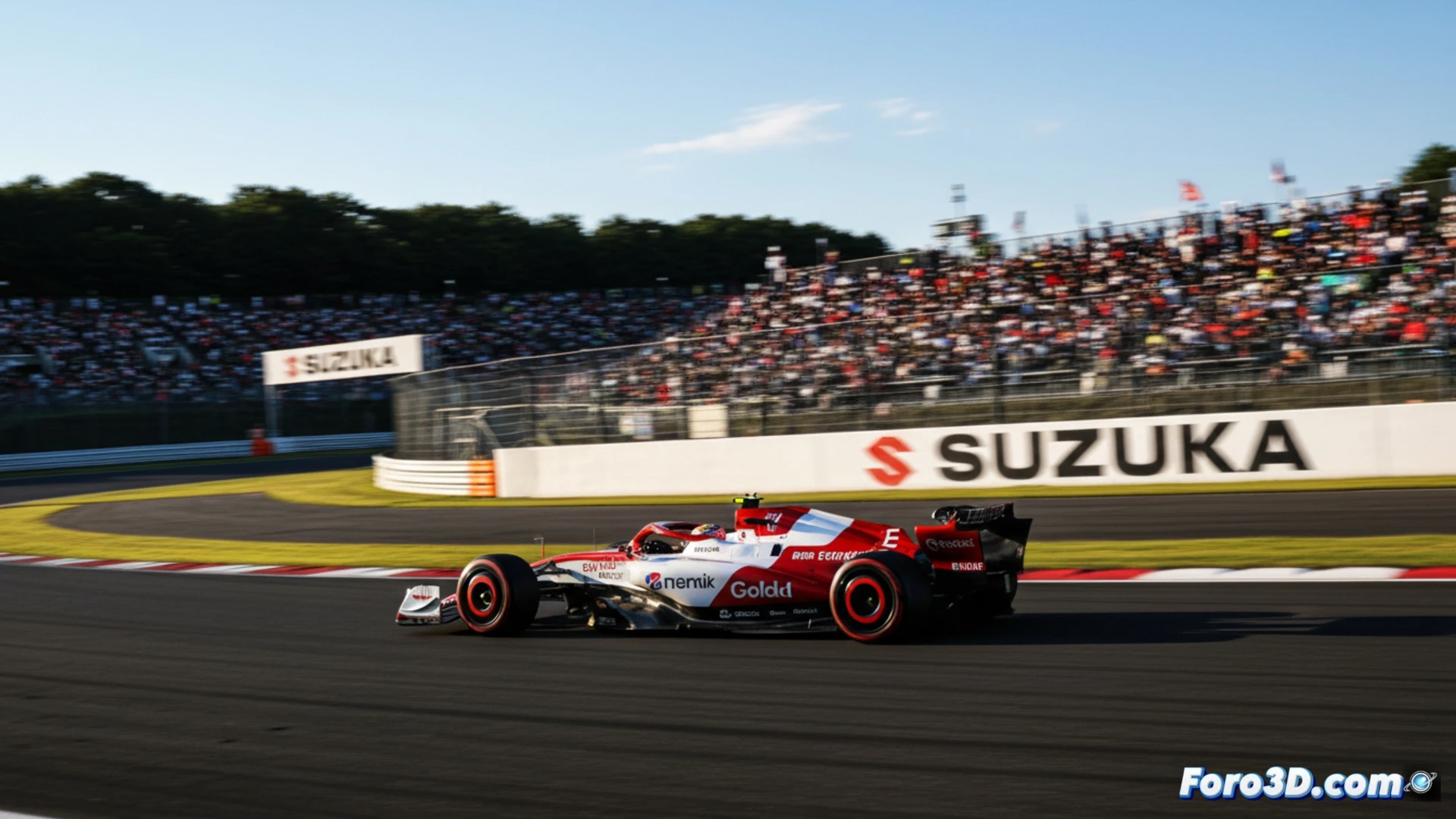
Formula 1 introduces a last-minute technical change for the Japanese Grand Prix. The FIA, with unanimous agreement, has reduced the maximum energy recharge allowed in qualifying from nine to eight megajoules. This decision responds to what happened in Australia, where energy management, not pure talent, dictated the pace. On circuits with little recovery like Suzuka, drivers were forced to lift unnecessarily. The objective is clear: rebalance the scales between technical strategy and driving skill.
The Energy Challenge on High-Commitment Circuits 🏎️
To visualize the change, we must understand the ERS system. On circuits like Suzuka, with fast and linked corners, opportunities to recover energy by braking are minimal. Each megajoule in the battery is a precious resource for extra boost. Reducing the maximum from 9 to 8 MJ increases the pressure. A 3D model of the circuit could simulate the energy flow, showing how the driver must now be more selective: does he use the boost on the exit of the Spoon curve or save it for the main straight? This restriction forces more precise driving and a meticulous strategy, penalizing any management error.
Living Regulations and the Spirit of Qualifying ⚙️
This adjustment demonstrates that the 2026 regulations are a living organism. The FIA does not seek to punish innovation, but to preserve the essence of the show: that qualifying be a drivers' battle, not just software engineers'. By subtly limiting the energy resource, the human factor is brought back to the forefront. The change, though technical, has a deeply sporting objective: to ensure that the fast lap depends on bravery in the fast corners, not on a consumption calculation.
Technical Development 🔧
To visualize the change, we must understand the ERS system. On circuits like Suzuka, with fast and linked corners, opportunities to recover energy by braking are minimal. Each megajoule in the battery is a precious resource for extra boost. Reducing the maximum from 9 to 8 MJ increases the pressure. A 3D model of the circuit could simulate the energy flow, showing how the driver must now be more selective: does he use the boost on the exit of the Spoon curve or save it for the main straight? This restriction forces more precise driving and a meticulous strategy, penalizing any management error.
Living Regulations and the Spirit of Qualifying ⚙️
This adjustment demonstrates that the 2026 regulations are a living organism. The FIA does not seek to punish innovation, but to preserve the essence of the show: that qualifying be a drivers' battle, not just software engineers'. By subtly limiting the energy resource, the human factor is brought back to the forefront. The change, though technical, has a deeply sporting objective: to ensure that the fast lap depends on bravery in the fast corners, not on a consumption calculation.
How does the MGU-K energy reduction affect the simulation strategy and 3D modeling of the single-seaters in the teams' simulators?
(PS: VAR in 3D: now with replays from angles that didn't even exist)