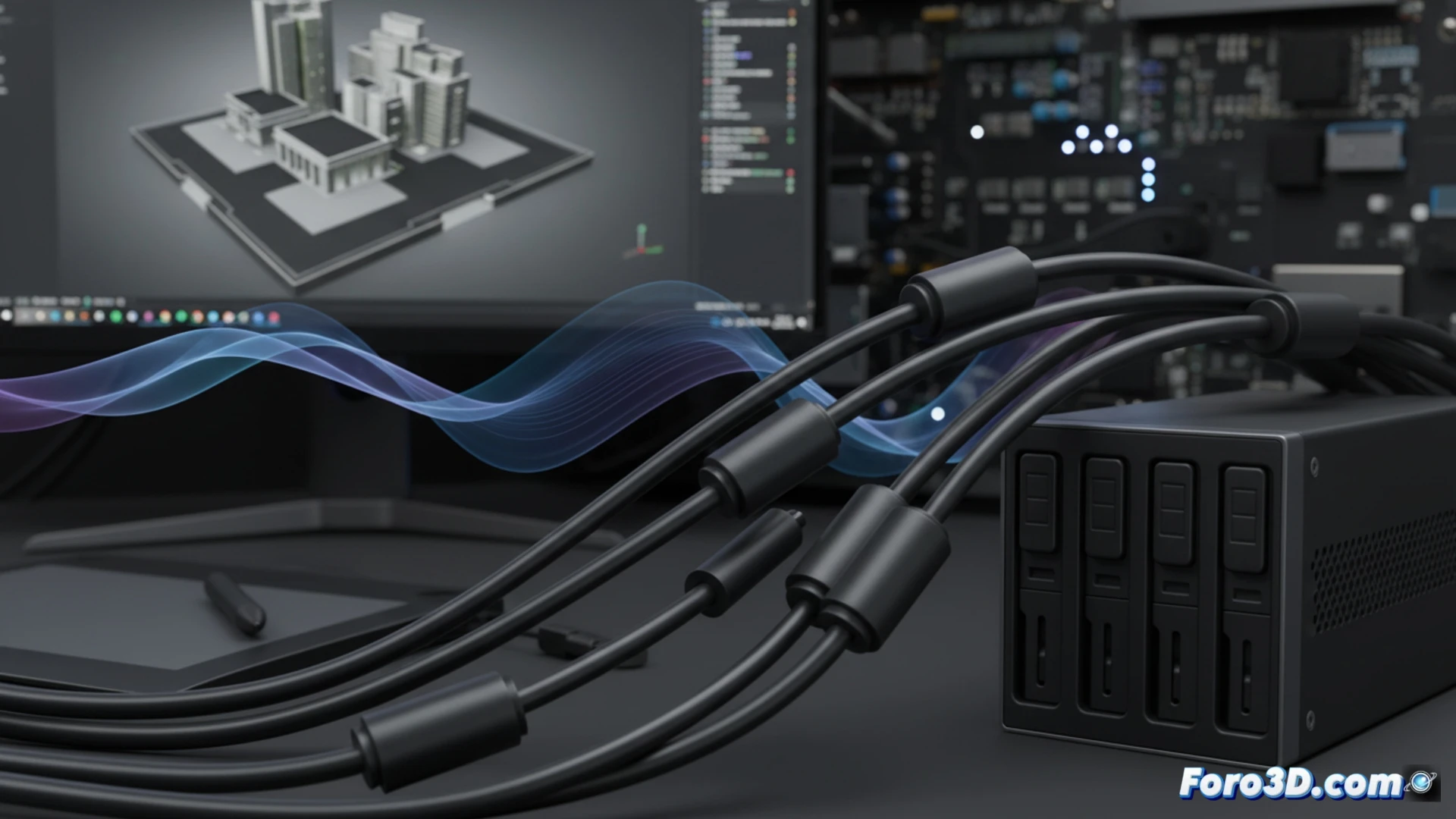
Those thick cylinders on some power, USB, or HDMI cables are not just a simple decoration. They are ferrite cores or filters, key components for suppressing electromagnetic interference. In a 3D work environment, where signal stability is vital for high-precision monitors, graphics tablets, and heavy data transfers, these filters act as guardians, preventing noise that could translate into visual artifacts, system instability, or render file corruption.
How these filters work and why they matter in 3D 🔬
Cables can behave like antennas, emitting or picking up high-frequency noise generated by sources such as power supplies, monitors, or even the PC itself. The ferrite core, made of a magnetic material, acts as a low-pass filter: it attenuates these unwanted high-frequency interferences without affecting the useful low-frequency signal or the direct current. In 3D hardware, this protects the integrity of the video signal to critically calibrated screens, prevents failures in input peripheral connections, and ensures stable transfers of large scenes or textures, contributing to a robust and reliable workflow.
Evolution and relevance in current professional systems ⚙️
Although today many cables integrate braided shielding and device circuits manage noise better, ferrite cores remain an effective and economical solution. Their presence indicates a conscious design for signal quality, something crucial when connecting professional-grade components. For the user assembling or optimizing a 3D workstation, recognizing these elements helps choose cables that provide extra reliability, especially in environments with many electronic devices where electromagnetic noise is high.
How do ferrite cores in cables affect the precision and stability of 3D printers and high-resolution 3D scanners?
(P.S.: If the computer starts smoking when opening Blender, you might need more than a fan and faith)