The announcement of a new FBI office in Ecuador marks a turning point in the fight against transnational organized crime. Amid the brutal territorial war between cartels that has plunged the country into a security crisis, technical cooperation becomes crucial. This scenario is the ideal testing ground for deploying the most advanced 3D documentation and analysis tools, transforming the way complex and high-violence crime scenes are investigated.
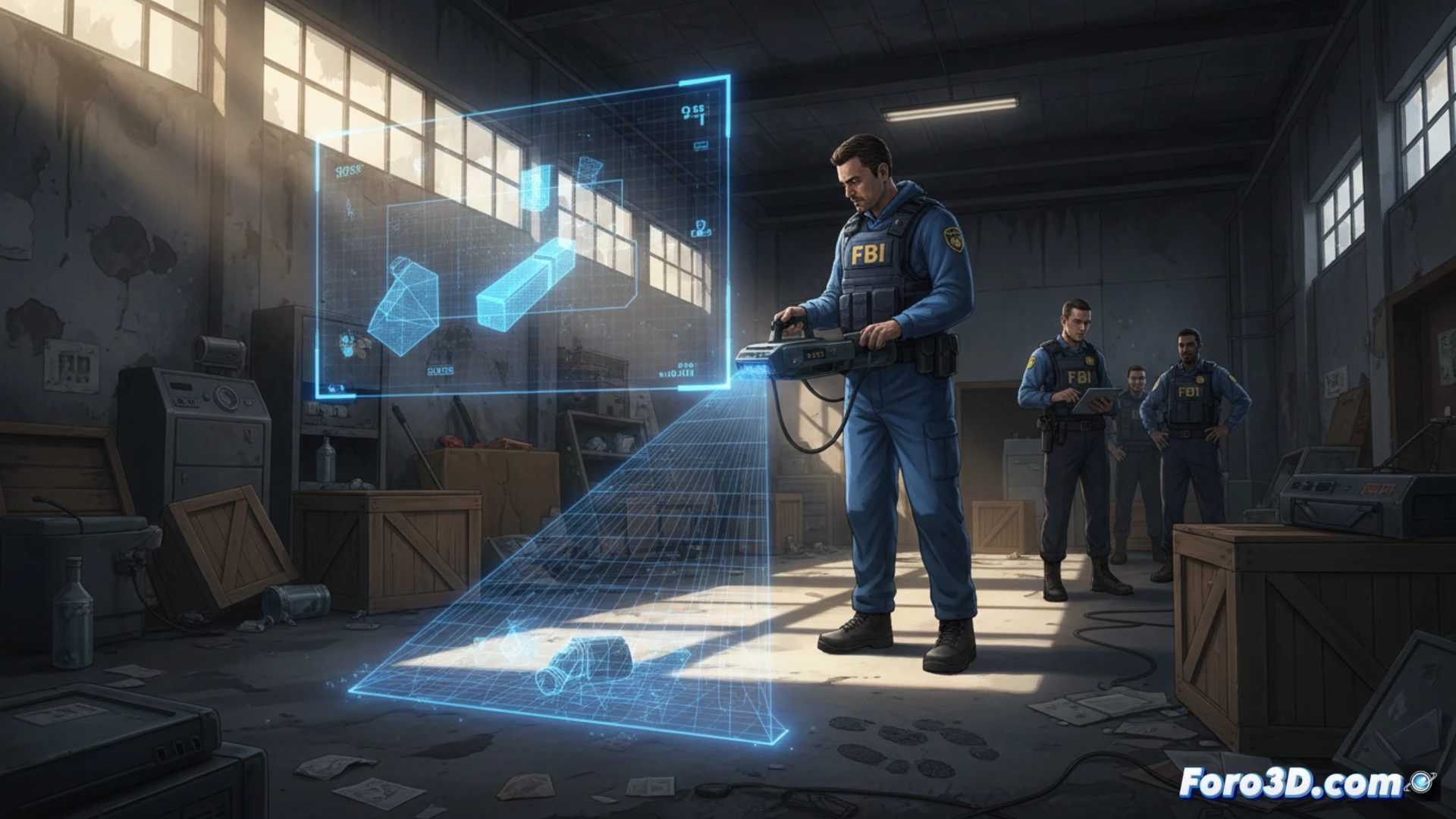
Photogrammetry and laser scanning: Preserving the crime scene in hostile environments 🔍
In operations against drug trafficking, scenes are ephemeral and dangerous: dismantled clandestine laboratories, safe houses, or execution sites. Photogrammetry and 3D laser scanning allow for quick and comprehensive capture of the entire spatial context and physical evidence in a precise digital model. This immutable documentation is vital for subsequent joint analysis between the FBI and the Ecuadorian police. Exact measurements can be performed, ballistic trajectories analyzed in a reconstructed environment, or explosive residue patterns examined, all from the safety of a laboratory, preserving an irrefutable forensic record for the courts.
Digital twins: Reconstructing the criminal chain for justice ⚖️
The true power of this 3D data emerges when integrating it into digital twins of investigations. These dynamic models can simulate events, connect geographically dispersed crime scenes, and visualize cartel logistics networks. For prosecutors and judges, an interactive 3D reconstruction of a homicide or criminal deployment is more eloquent than a technical report. This capability not only strengthens judicial cases but sets a new standard for international forensic collaboration based on objective and tangible evidence.
Would you combine scanning with photogrammetry?