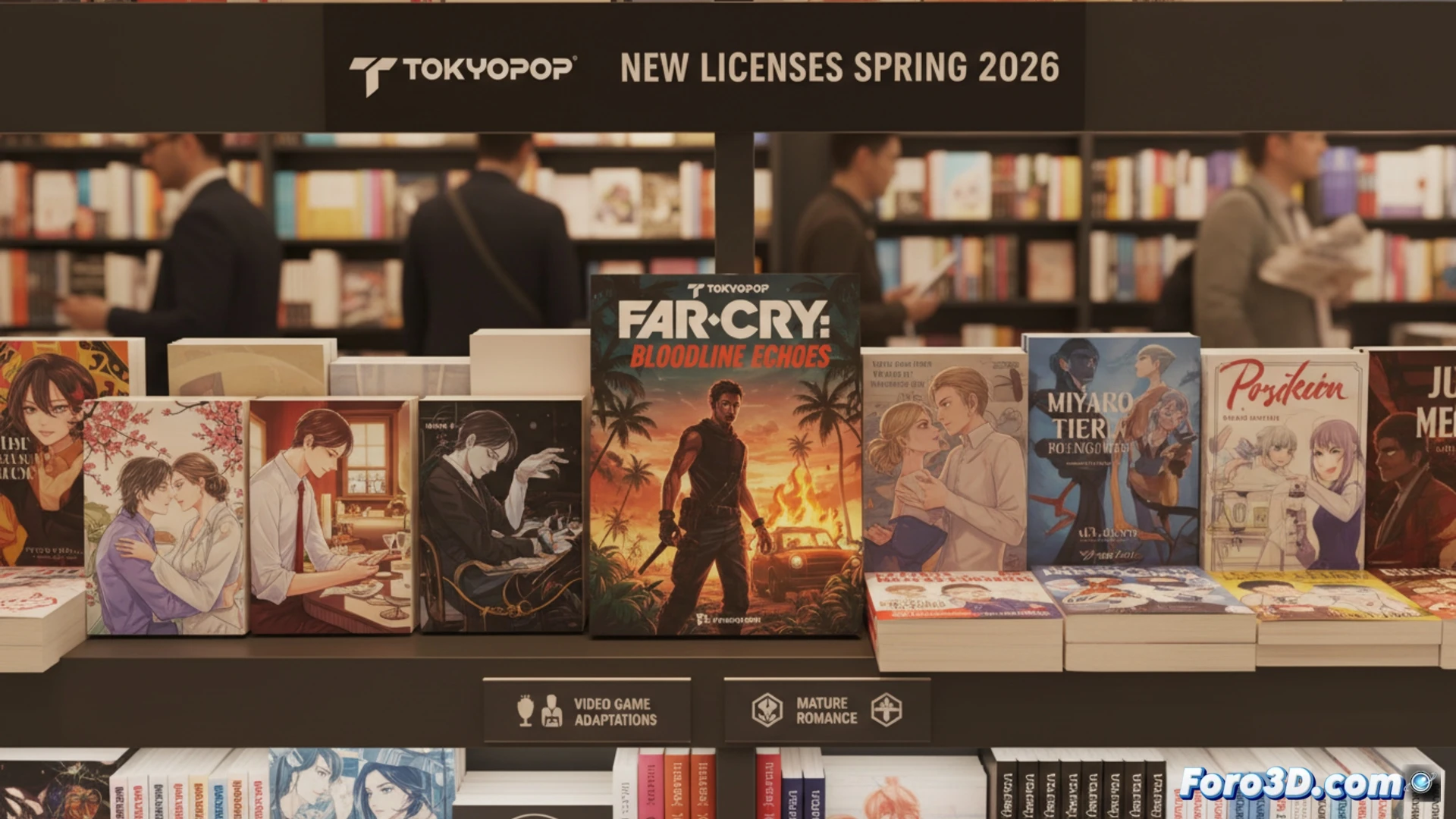
Tokyopop has announced its spring 2026 catalog, featuring 15 new licenses that stand out for their diversity. Among them, a Far Cry video game franchise manga spin-off resonates strongly. This move is not an isolated incident, but part of a clear strategy by publishers and IP holders to expand their narrative universes beyond the original medium, seeking to capture new audiences and offer complementary content to fans.
Adaptation as an extension of worldbuilding and narrative assets 📖
The adaptation of a video game like Far Cry into manga represents a case study in transmedia development. From the video game design perspective, this license allows exploring secondary plots, delving deeper into the backstory of characters or settings, and expanding the worldbuilding without the technical limitations of the graphics engine. It becomes a derived narrative asset that enriches the intellectual property. For developers, it is a way to maintain engagement with the community between releases, testing concepts and expanding the lore in a relatively agile manner and with a cost different from that of a DLC or a new installment.
The multiplatform future of gaming franchises 🎮
The inclusion of Far Cry in a catalog dominated by adult romance series evidences a mature and diverse target market. This reflects how video game franchises seek to establish themselves as pillars of integral entertainment, transcending gameplay. The role of publishers like Tokyopop is crucial as a cultural bridge, adapting the visual and narrative language for a reading audience. This phenomenon consolidates an ecosystem where the video game is the core, but its story is experienced in multiple formats.
How can the transmedia strategy of adapting video games like Far Cry into manga influence the narrative and character design of future development sagas?
(P.S.: game jams are like weddings: everyone happy, no one sleeps, and you end up crying)