In video game development, creating original characters and assets is fundamental. Many artists start by making fan art, but the professional leap comes from reinterpreting those influences with your own identity. This article collects methods from experts to transform admiration for an IP into a unique design exercise, essential for your portfolio or indie project. You'll learn to capture the essence of a well-known character and redirect it with your style, a key process in concept art and 3D modeling.
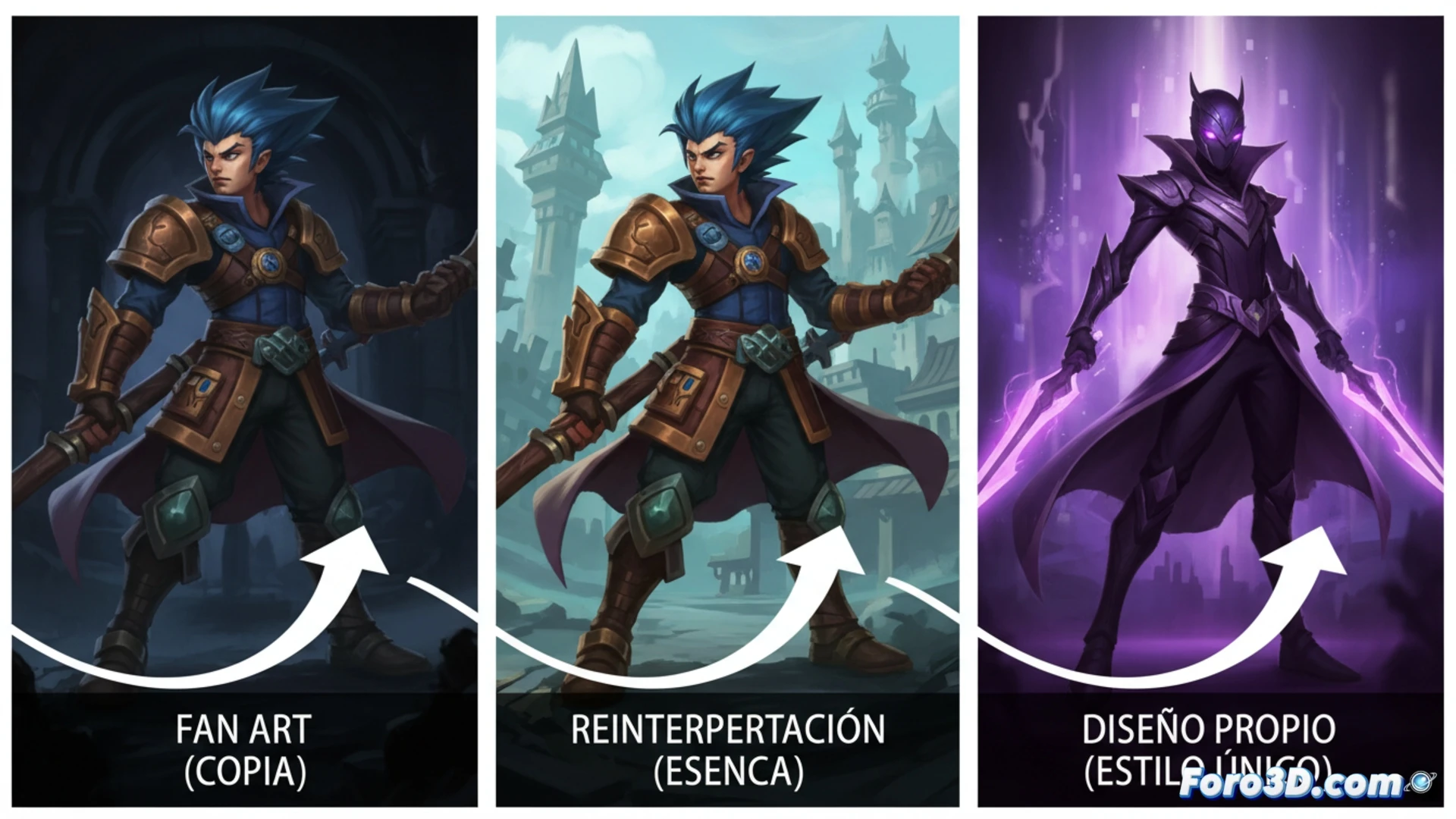
Reinterpretation Techniques for Assets and Characters 🎨
The key is to go beyond literal copying. First, capture the vibe or essence of the original: its attitude, role in the story, or emotional palette. Then, reinterpret that essence intuitively, with a loose stroke that allows the design to evolve during the process. For innovative details, use unexpected references: underwater light for armor textures, or animal anatomy for creature silhouettes. In 3D modeling, this translates to sculpting or retopologizing starting from your own concept, not a screenshot. Ask yourself: how would this character be in another game genre? With different technology? This exploration generates unique variants and demonstrates your design capability.
Fan Art as a Laboratory for Personal Style 🔬
This process turns fan art into a professional laboratory. By forcing yourself to connect someone else's universe with your creativity, you develop a work method and a recognizable style. It's no longer about replicating a model, but understanding its rules to then break them with judgment. The result is a fresh piece that, although inspired, shows your artistic voice. For a video game artist, this ability to iterate and personalize references is what separates a technician from a creator of assets with true value and personality.
How can a video game artist use fan art as a learning tool to develop their own visual style and apply it to the design of original characters and assets?
(P.S.: shaders are like mayonnaise: if they curdle, start everything over again)