The F-22 Raptor, backbone of U.S. air superiority, is preparing for a crucial upgrade in 2026. The incorporation of external fuel tanks and sensor pods aims to extend its range and sharpen its infrared vision. However, this improvement poses a fundamental technical paradox: how to add capabilities without degrading the stealth that defines its essence. Through analysis and 3D simulation, we can break down this tactical challenge and visualize its real impact on the battlefield.
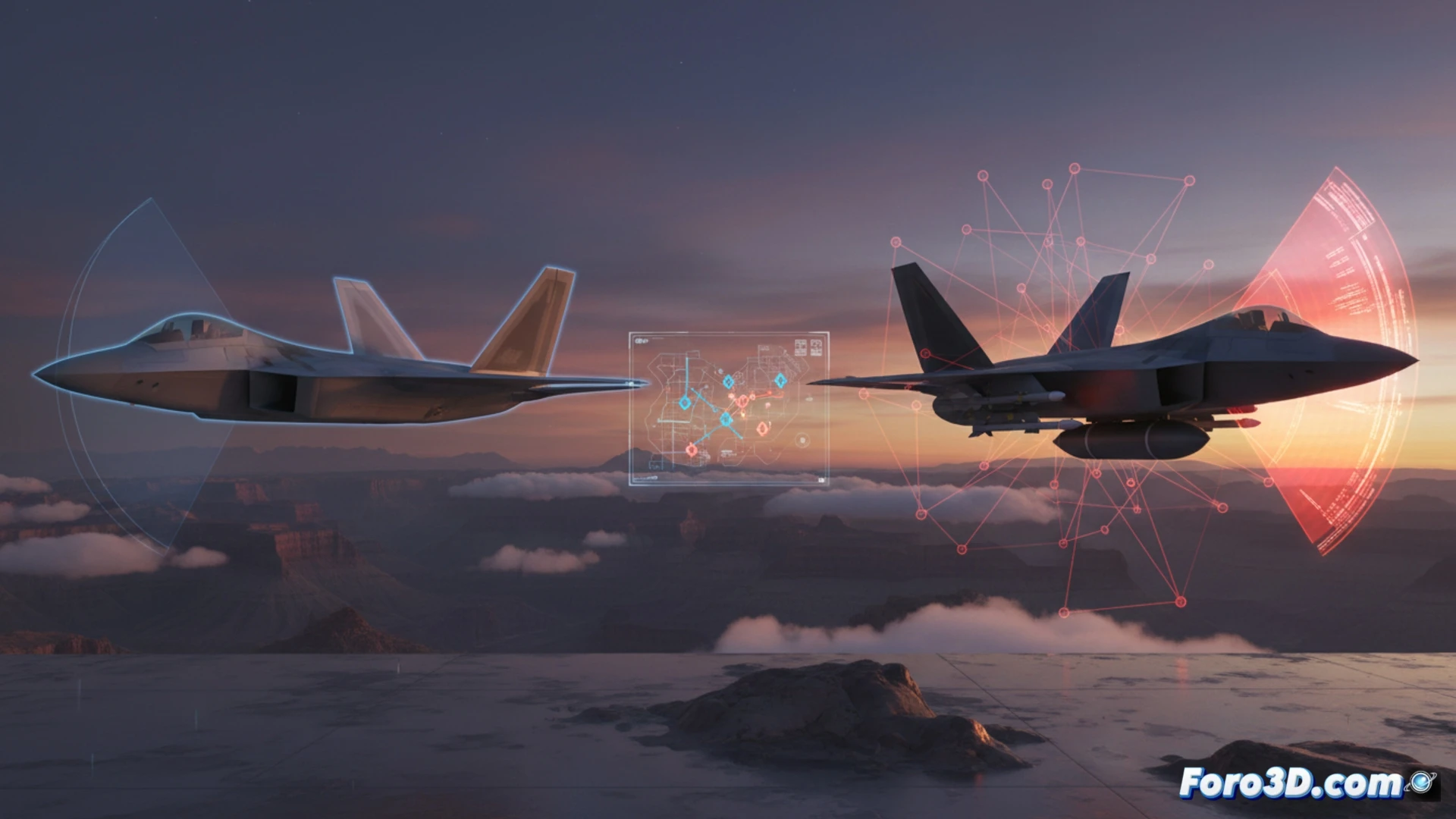
3D Modeling of the Impact on Radar Signature (RCS) 🛰️
The key to understanding the dilemma lies in the radar signature or RCS. An accurate 3D model of the F-22 allows simulating how external tanks and pods, with their angular shapes and non-absorbent materials, create critical radar reflection points. By rendering the aircraft in specialized software, the increase in its radar cross-section from different angles can be quantified. These simulations show that, although the components are removable, during the mission they turn the Raptor into a more detectable target, especially for low-frequency radars or enemy IRST systems, compromising its initial penetration advantage.
Tactical Lessons from a Necessary Simulation 🎯
3D visualization not only illustrates a technical problem but reveals a strategy. These upgrades reflect a doctrinal shift: in the face of proliferating stealth threats and dense anti-air environments, range is prioritized to operate from a distance and situational awareness over absolute stealth. The model shows that the Raptor will likely use these systems in initial phases or in lower-risk theaters, jettisoning them before close combat. This upgrade, although it contradicts its pure design, is a pragmatic adjustment to an era where total invisibility is increasingly elusive.
How can 3D modeling and analysis of radar and thermal signatures quantify the real impact of external fuel tanks on the F-22 Raptor's stealth capability in its next modernization?
(P.S.: 3D war maps are like renders: the more realistic they are, the more time you need to process them)