Fernando Alonso's retirement from the Chinese GP due to excessive vibrations in his Aston Martin is a clear example of how a physical problem can neutralize a driver's talent. Alonso described a loss of sensitivity in his hands and feet after 20 laps, comparable to prolonged use of gym vibrating machinery. This incident opens the door to a deep analysis using 3D tools, which allow going beyond the anecdote to understand the technical causes and their physiological effects in a virtual environment.
Digital twins and simulation: diagnosing the origin of vibrations 🔍
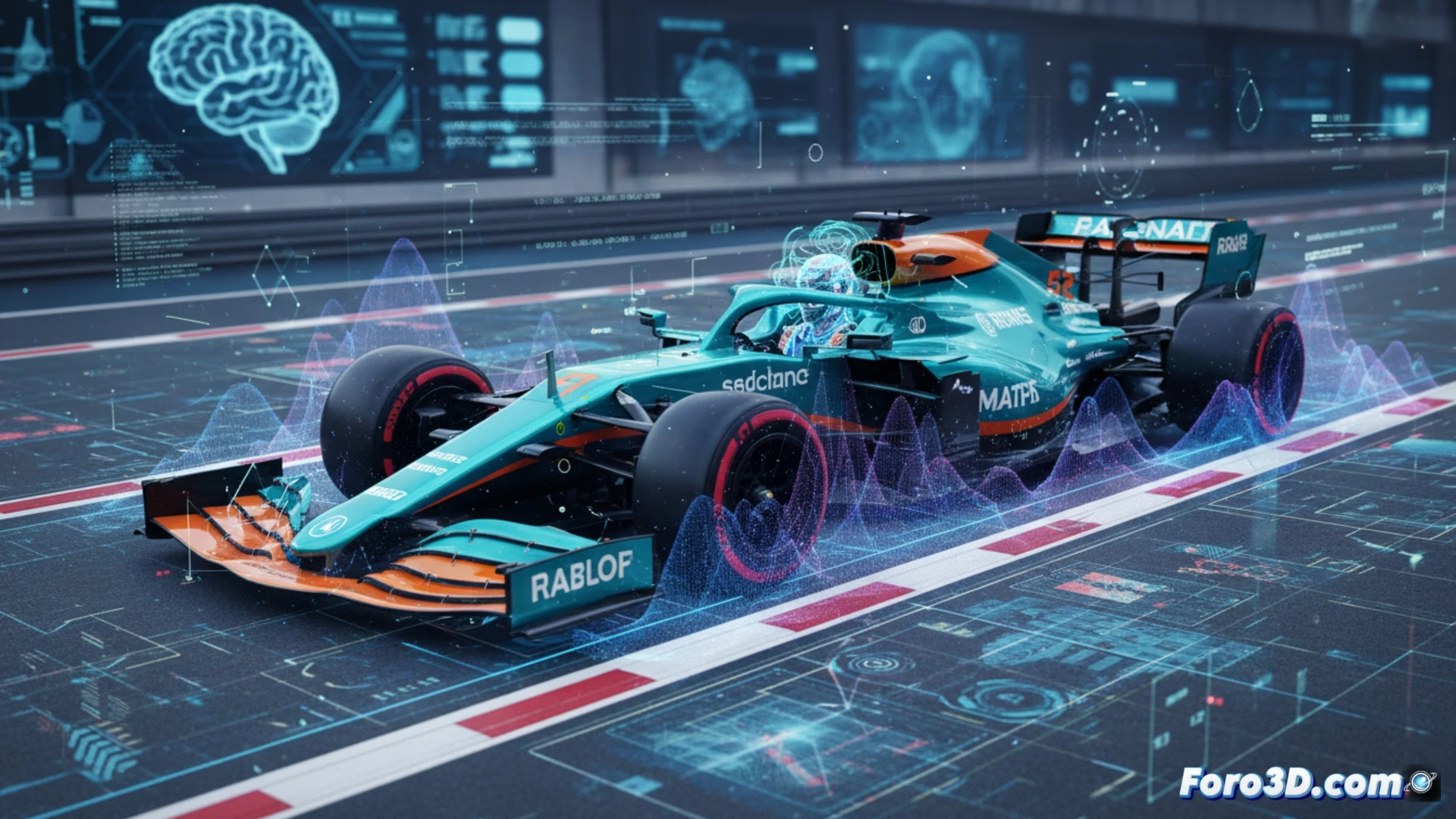
Investigating a problem like this begins with the digital twin of the single-seater. Using CAD models and simulations of computational fluid dynamics and finite element analysis, engineers can virtually recreate the conditions of the Shanghai track. The behavior of the suspension, tires, and aerodynamics under stress can be simulated to identify unwanted resonances. 3D technology allows isolating and visualizing specific components, such as the pedal assembly or steering column, to analyze their fatigue and vibration modes, transforming sensor data into a visual and interactive representation of the failure.
Biomechanical modeling: visualizing the impact on the driver 🧑🚀
Alonso's explanation of the loss of sensitivity finds its technical correlate in 3D biomechanical modeling. Digital avatars of the driver can be created to simulate the transmission of vibrations from the chassis to the body, analyzing critical pressure points and muscle fatigue. This visualization not only helps understand the athlete's physical limit but also guides ergonomic design and the selection of damping materials. Thus, 3D technology closes the loop, connecting the mechanical failure with its human consequence to seek comprehensive solutions.
How can vibration analysis using 3D models and finite element simulation prevent structural failures like the one suffered by Alonso in the Chinese GP?
(PS: at Foro3D we know that a 3D simulated penalty always goes in... unlike in real life)