While the community focuses its efforts on combating heat in PCs, the opposite extreme often goes unnoticed. Low temperatures represent a silent threat to the integrity of a 3D workstation. Operating or storing the equipment in cold environments can trigger serious problems such as condensation and physical contraction of components, compromising the stability essential for long-duration renders and complex simulations. Understanding these risks is key to protecting the investment in critical hardware.
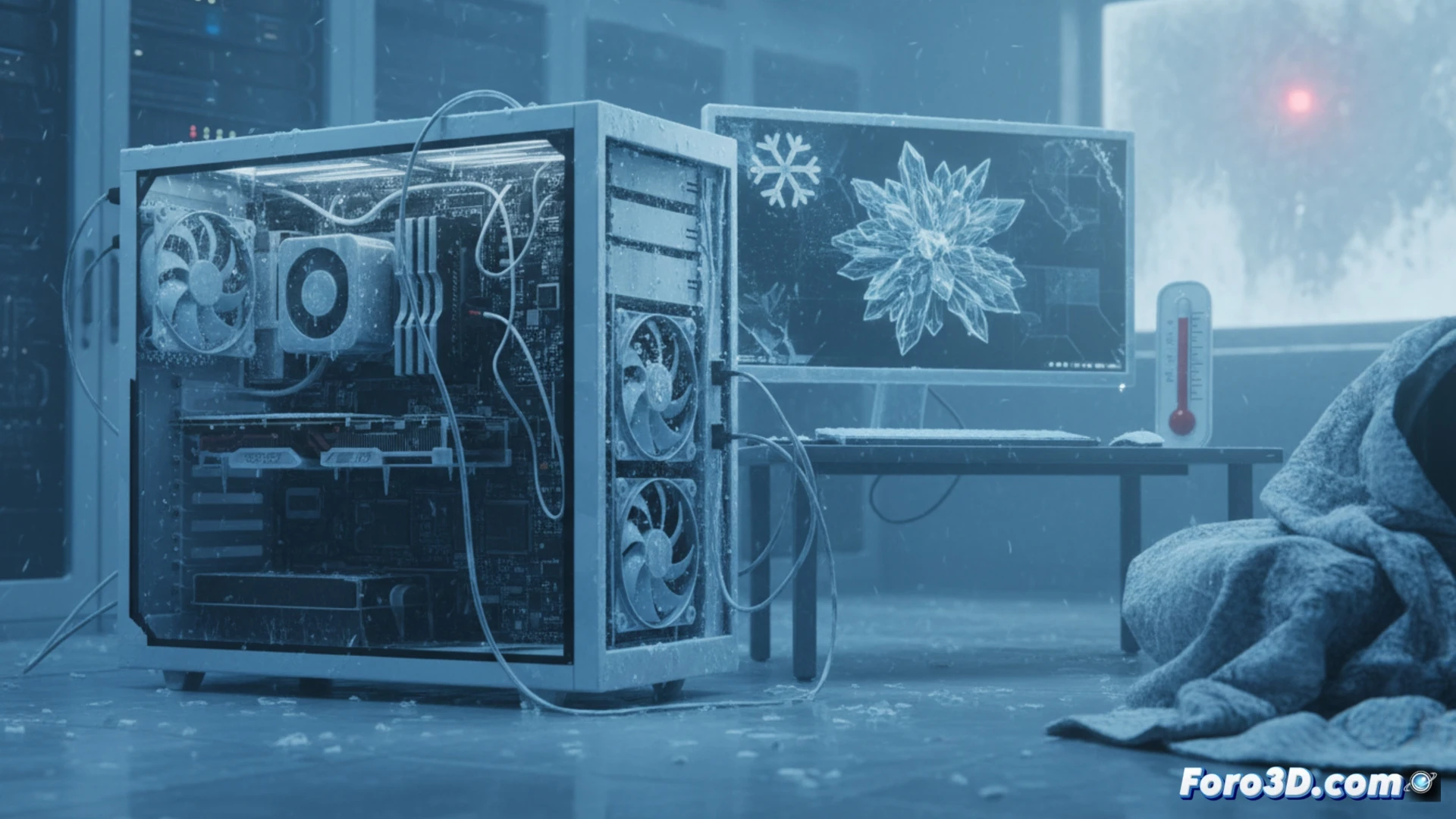
Condensation and contraction: enemies of precision ❄️
The immediate risk when turning on a cold machine in a warm environment is condensation. Moisture deposits on boards, connectors, and circuits, increasing the risk of catastrophic short circuits. Additionally, materials undergo thermal contraction. Solders under BGA or in memory modules can crack, causing intermittent failures that are difficult to diagnose. The lubricating fluid in GPU and CPU fans, and in mechanical hard drive bearings, thickens, increasing friction, noise, and reducing their lifespan. For a render system, a failure due to any of these reasons can mean the loss of days of work.
Thermal stability: the foundation of the professional workflow 🔥
The conclusion is clear: environmental stability is another component of the setup. The safe operating range, between 10°C and 30°C, is not a suggestion, but a requirement for the precision demanded by professional 3D. It is recommended to gradually acclimate the equipment for hours before turning it on if it comes from a cold environment. Investing in a workspace with controlled temperature is not a luxury, but a protection measure for the hardware that supports our productivity and reliability in critical projects.
How does extreme cold affect the reliability and performance of critical components in a 3D workstation, such as graphics cards and storage units?
(PS: Your CPU heats up more than the debate between Blender and Maya)