The President of the European Commission, Ursula von der Leyen, has admitted a strategic error: reducing nuclear energy left Europe vulnerable. In a context of war affecting refineries and key oil routes, dependence on volatile fossil fuel imports reveals itself as a structural disadvantage. The statement, along with Macron, marks a shift toward nuclear as a pillar for energy independence and decarbonization, announcing funds and concrete objectives for modular reactors.
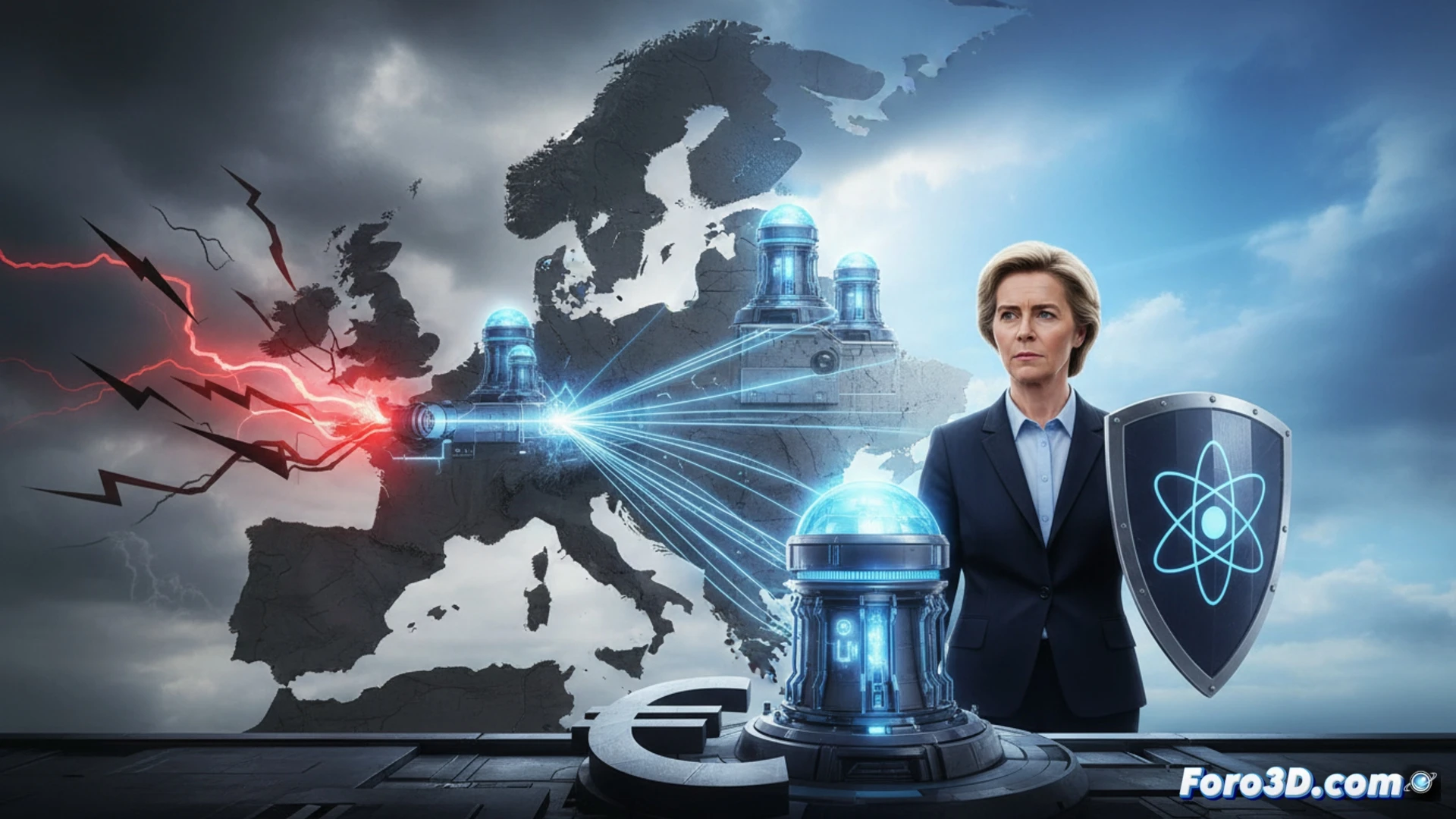
From the vulnerable supply chain to the autonomous grid: modeling the transition ⚙️
Let's visualize the current European energy supply chain: an extensive and fragile network of ships and gas pipelines bringing fossil fuels from unstable regions, crossing critical points like the Strait of Hormuz. Each link is a geopolitical risk. The proposed alternative model is a distributed network of nuclear reactors, especially SMRs. It contrasts the concentration of existing plants, with France as the core, against the German decline. The new SMRs would allow decentralized placements, reducing exposure to global crises and creating a resilient, low-emission energy matrix.
The 3D map of risks and energy sovereignty 🗺️
A three-dimensional map of risks would show energy umbilical cords under the threat of conflicts, like the current one between the US, Israel, and Iran. Over that landscape of uncertainty, the bet on nuclear erects infrastructures of sovereignty within its own borders. The 200 million fund and regulatory harmonization are the first steps to materialize this map. The final decision is not only technical, but deeply geopolitical: choosing between being a hostage to global volatility or building one's own energy fortress.
How would you model in 3D the global supply routes for electronic components?