The EU has sanctioned 19 Iranian entities and individuals for human rights violations, freezing assets and banning visas. Beyond the political condemnation, this decision is a geopolitical vector that alters economic flows. In an interconnected world, any restriction generates shockwaves in supply chains, affecting everything from energy prices to the availability of critical components. We analyze its real impact. 🔍
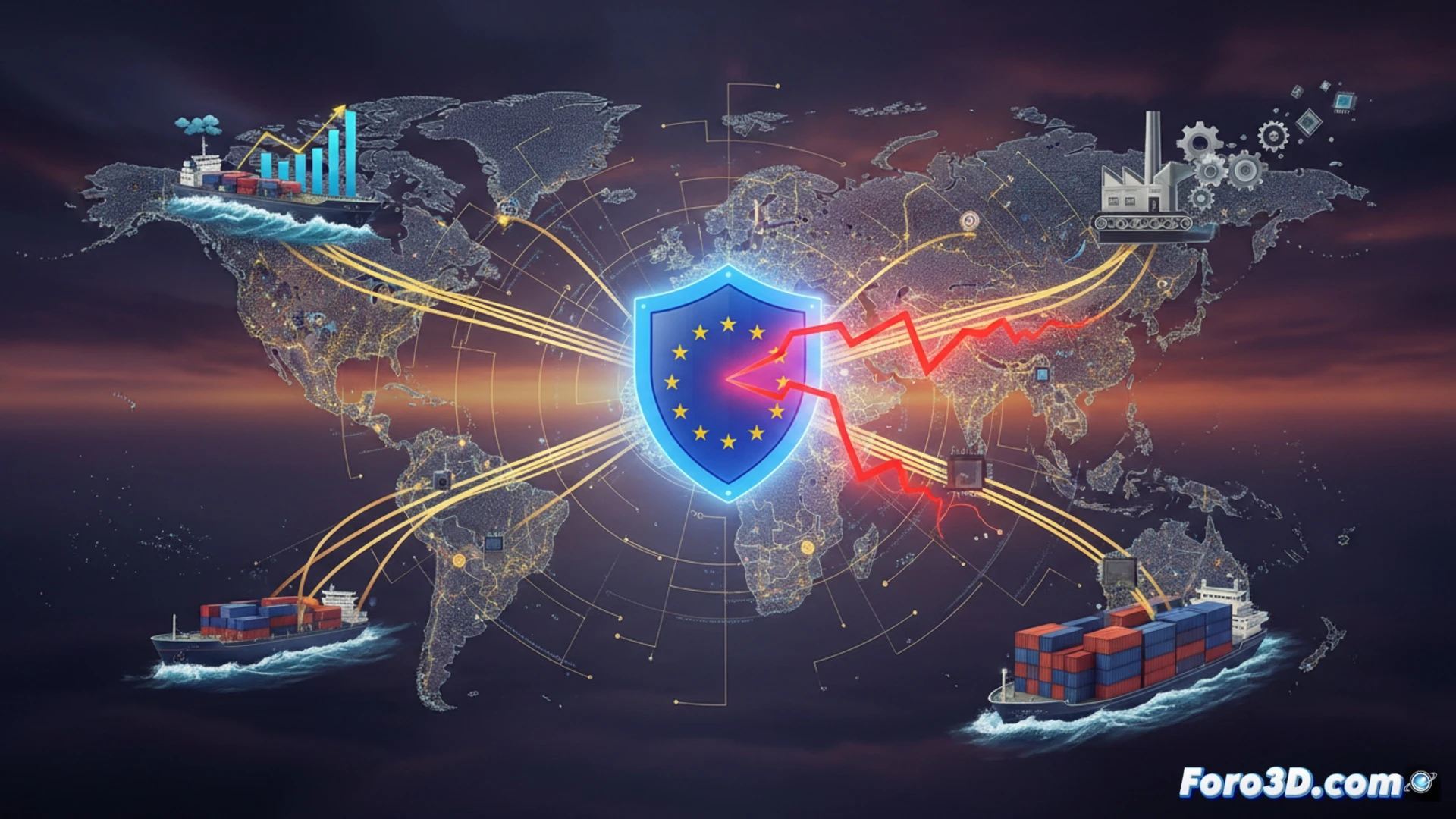
3D Mapping of Vulnerabilities and Cross-Dependencies 🗺️
Visualizing these sanctions in interactive 3D maps reveals their true scale. Caspian and Persian Gulf trade routes are highlighted, showing disrupted flows of petrochemicals, minerals, and Iranian agricultural products. A node diagram would connect sanctioned Iranian sectors, such as finance or aviation, with European companies that still maintain indirect dependencies. The paradox becomes visible: sanctioning a regime can, in the short term, strangle supply chains of European SMEs that depend on those links, forcing a costly and urgent reconfiguration.
Economic Coercion as Variable Geometry of Power ⚖️
This case exemplifies how current geopolitics is exercised through the manipulation of interdependencies. Sanctions are network design tools, forcing the redefinition of global connections. Spatial and economic analysis demonstrates that the goal is not only to isolate Tehran, but to reconfigure the supply corridors around it, incentivizing third countries to divert their routes. The final message is clear: in geoeconomics, those who control the connectivity maps control a decisive form of power.
Do you think 3D visualization can help in strategic decision-making?