The European Commission has launched an unprecedented regulatory offensive in a single day, marking child protection as its top priority. Under the umbrella of the Digital Services Act (DSA) and the AI Act, it has opened a formal investigation against Snapchat for grooming and drug risks, and has issued preliminary findings against porn giants like Pornhub and XVideos for insufficient age verification. In parallel, the European Parliament voted to ban AI that generates sexual images without consent. This coordinated move sends a resounding message about mandatory regulatory compliance. 🔍
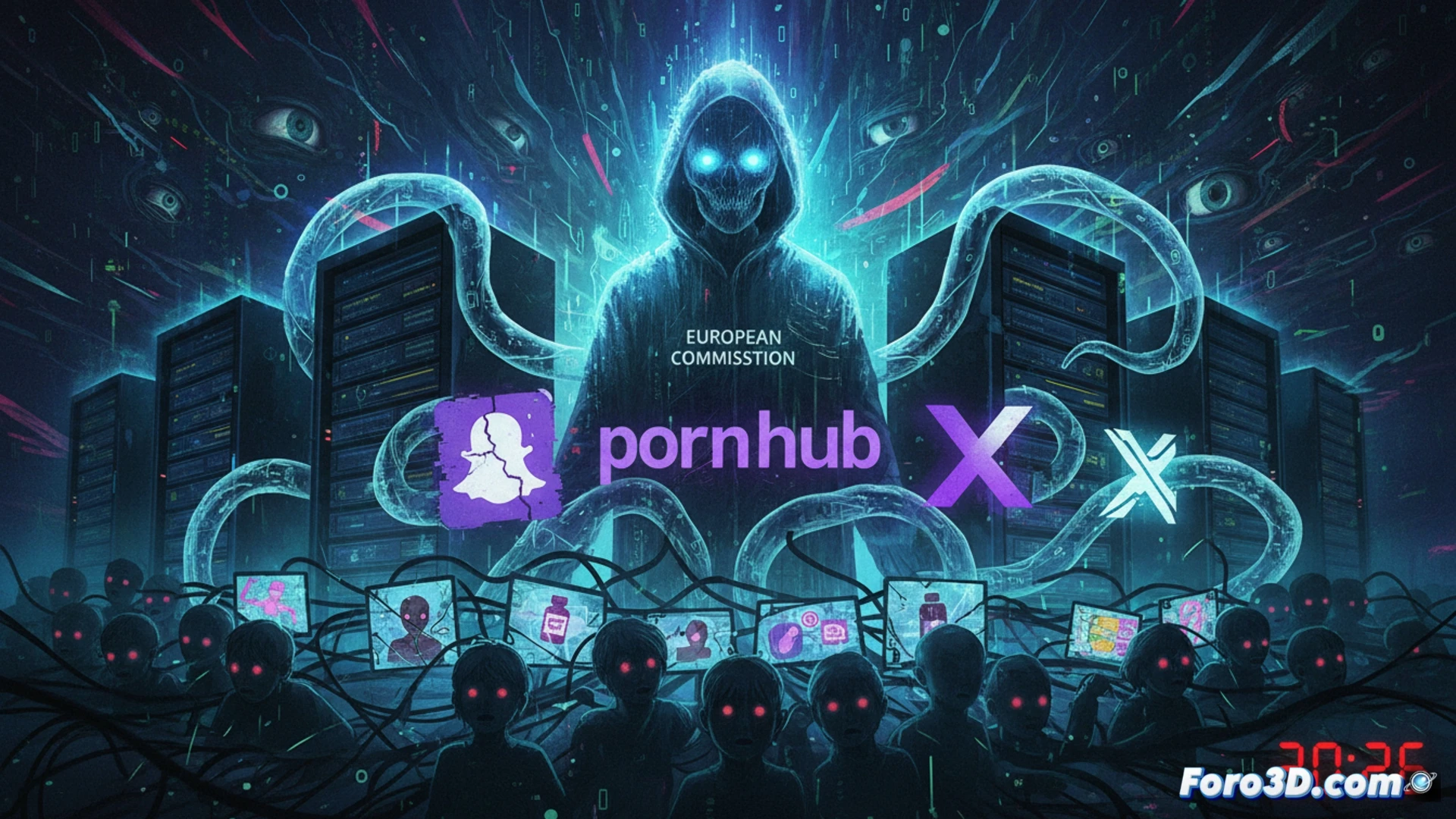
3D Visualization and Simulation for Proactive Compliance Audits 🛡️
These sanctions underscore the need for platforms to proactively demonstrate the robustness of their control systems, such as age verification. Here, 3D and simulation technology emerges as a strategic tool for compliance. Companies can digitally model their user architectures and verification flows, simulating attacks or evasions to identify weak points before the regulator does. An interactive 3D model of the minor user's journey can be audited and presented as evidence of due diligence. Additionally, complex risk scenarios can be recreated, such as the spread of non-consensual AI-generated content, allowing mitigation mechanisms to be tested and adjusted in a safe environment before real-world implementation.
From Reaction to Demonstrable Prevention ⚖️
The EU offensive shifts the burden of proof to the platforms. Reacting to investigations is no longer enough; demonstrable prevention is required. 3D simulations offer a universal visual language to communicate to regulators how risks are managed, transforming abstract protocols into auditable processes. By 2026, integrating these tools into digital governance frameworks will not be an extra, but an essential component for operating in the EU, enabling a culture of transparent and verifiable compliance that anticipates and withstands the most severe legal scrutiny.
How will the EU's new regulatory offensive on digital child safety affect the compliance processes and legal risk management of digital platforms and online services?
(P.S.: At Foro3D, we know that the only compliance that works is the one tested before, not after)